
Reviewed · HERAKLION CITY TOURS
Tastings of Heraklion city – sightseeing walking tour
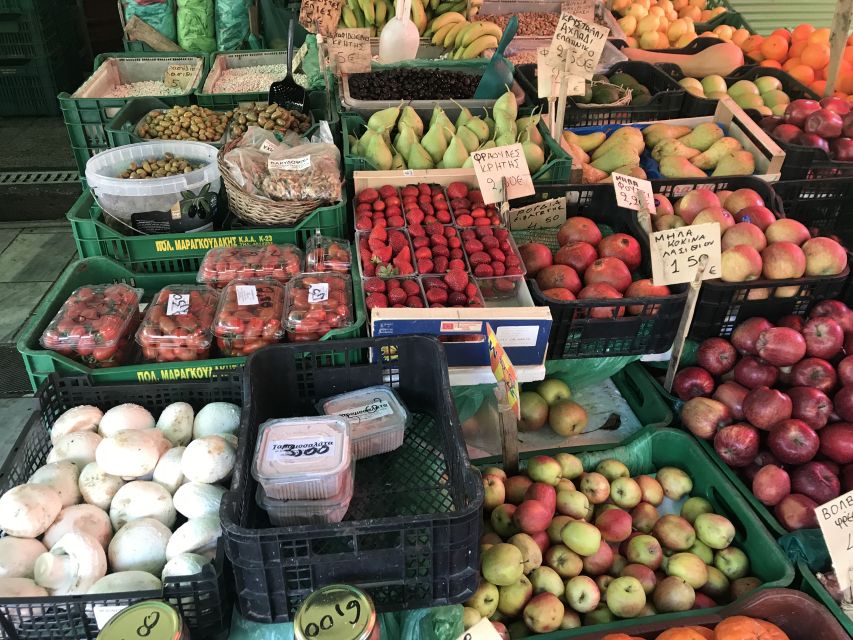
Heraklion’s food culture makes the city easier to understand, and this tour connects the two in a very edible way. You’ll walk from Eleftherias Square through the historic center, pausing at three hand-picked local shops for a generous spread of Cretan food and drink.
I like the mix of major sights and everyday eating, especially the family bakery, where Greek coffee comes with kalitsounia, raisin pies, and cinnamon cookies. I also like the private format, which gives you a better chance to ask questions about olive oil, cheese, herbs, and local habits. The main drawback is the price: at $119 per person for two hours, it suits you best if you want a focused food experience rather than a low-cost sightseeing walk.
Key points to know
- Three food stops: Visit a family bakery, a traditional Cretan shop, and another local food stop for a broad tasting of Heraklion flavors.
- Twelve tastings included: Expect coffee, pastries, cheese, olives, dakos, fruit, souvlaki, wine, raki, and a traditional herbal drink.
- Historic center included: See Lions Square, Saint Titos Cathedral, Agios Minas Cathedral, the Venetian Walls, and central Heraklion streets.
- Private English-language tour: You’ll have a private group and a live guide rather than joining a large public walk.
- Come hungry: The tasting list is substantial, and one guest specifically advised skipping breakfast before the tour.
- Walking conditions matter: Comfortable shoes, sunglasses, and a sun hat are useful. The experience is not suitable for wheelchair users or people with mobility impairments.
Why food is the best way into Heraklion
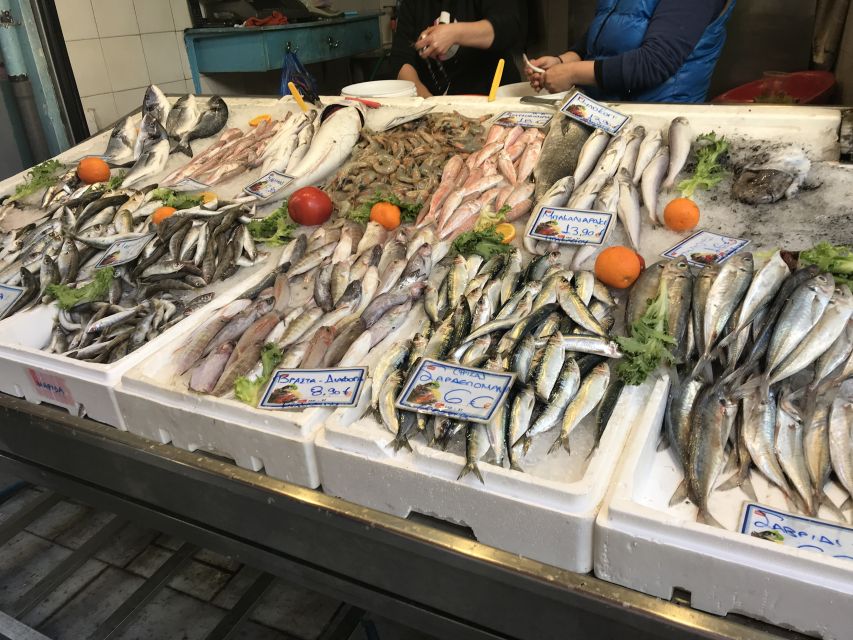
Cretan cooking is often presented as a list of healthy ingredients, but this walk gives you a clearer picture of how those ingredients fit into daily life. You’ll see food as part of the city’s routine, not just as something placed on a restaurant plate for visitors.
The tour links the Mediterranean diet with Cretan habits: olive oil used generously, local cheese, fresh fruit, herbs, bread, vegetables, and modest portions of meat. It also gives you a chance to ask how Cretans eat and how the island’s food traditions developed alongside its long history.
That connection matters. A visit to a cathedral or Venetian wall tells you about Heraklion’s past. A stop at a bakery or food shop shows you how people use the city today. In two hours, you get both.
The pace should feel more like a guided walk with regular tastings than a formal meal. You’ll be moving between sights and shops, so this is a good choice if you enjoy variety. If you want to sit down for a long lunch, it will feel too active.
More Heraklion city walks:
- Crete: Knossos Palace & Heraklion Guided Tour
★ 4.4 · 1,127 reviews - From Rethymno: Knossos Palace and Heraklion Guided Tour
★ 4.7 · 240 reviews - Day Trip To Heraklion City Center & Market & CretAquarium
★ 4.5 · 205 reviews
Meeting at Eleftherias Square
The tour starts at the front door of the Capsis Astoria Hotel on Eleftherias Square, Heraklion’s main square. The Archaeological Museum is nearby, which makes the location easy to identify if you are already exploring the center.
Arrive with time to spare. Late arrivals cannot join at a later point, so this is not an activity to approach casually after a delayed bus or a last-minute museum visit. The end point is back at the same meeting location.
You should leave luggage and large bags behind. Bring comfortable shoes, sunglasses, and a sun hat instead. Heraklion’s center is made for walking, but sun and hard paving can make unsuitable footwear unpleasant before the food stops even begin.
The experience lasts two hours. Starting times vary, so check availability when you book. Since this is a private group, your pace may feel more personal than a standard group tour, though the short duration still means the route has to keep moving.
The family bakery and Cretan breakfast flavors
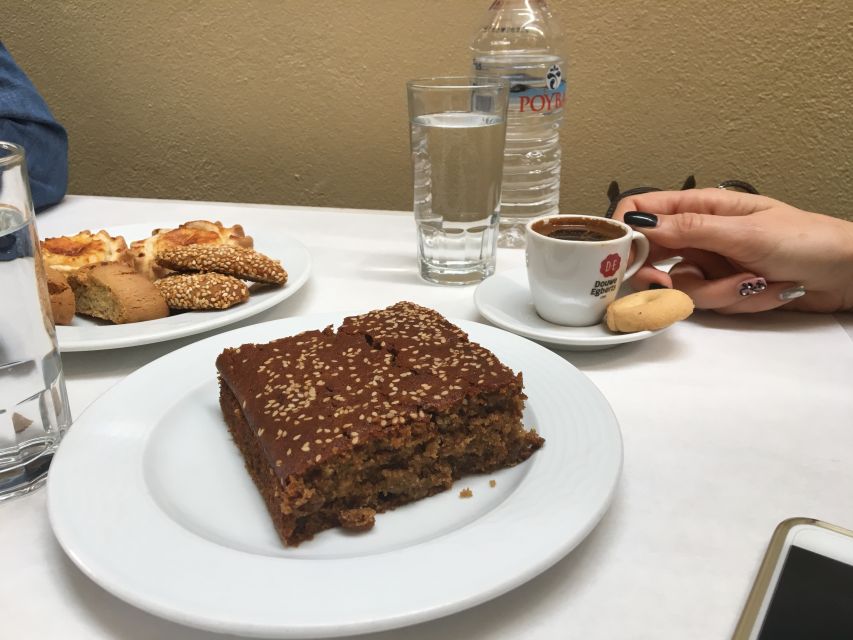
The first major food encounter is a Cretan family bakery, described as a daily meeting point for local residents. That detail gives the stop its appeal. You are not simply being handed a souvenir snack. You are seeing the kind of place where people gather around familiar foods and coffee.
Here you’ll taste Greek coffee with several sweet bites. Kalitsounia are small traditional pies filled with soft cheese. You’ll also try raisin pies and cinnamon cookies. Together, these give you a useful introduction to the island’s fondness for combining pastry, cheese, fruit, and warm spices.
Bougatsa is also included among the tastings. The exact order of the foods may vary, but you should expect a pastry-heavy opening that pairs well with coffee. If you have a strong sweet tooth, this will likely be one of the most enjoyable sections. If you prefer savory food, remember that the later stops include cheese, olives, dakos, and souvlaki.
The bakery is also a good place to ask your guide about how Cretans use pastries in everyday life. Greek coffee is not just a caffeine delivery system here. It is part of the social rhythm of the city, and the bakery provides a practical setting for that idea.
Herbs, spices, and Cretan mountain tea
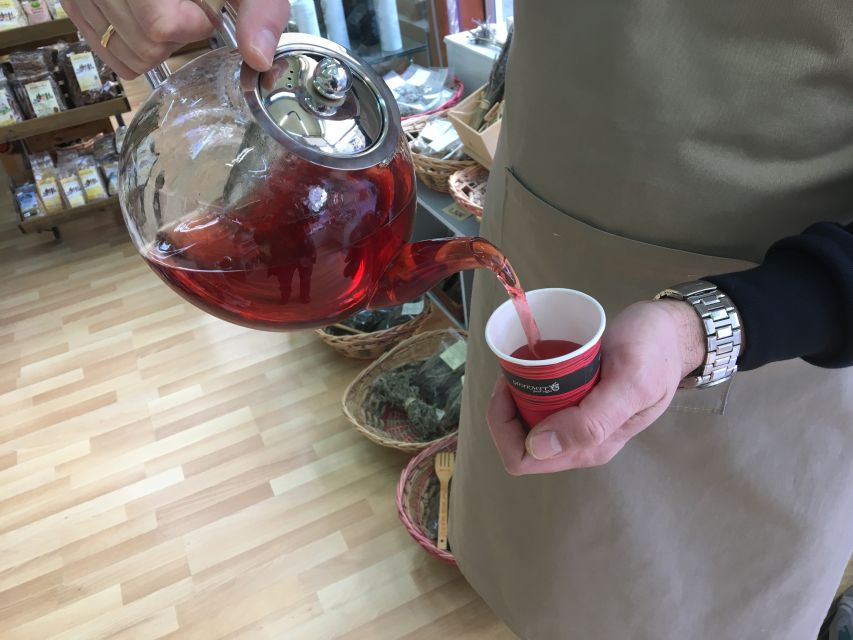
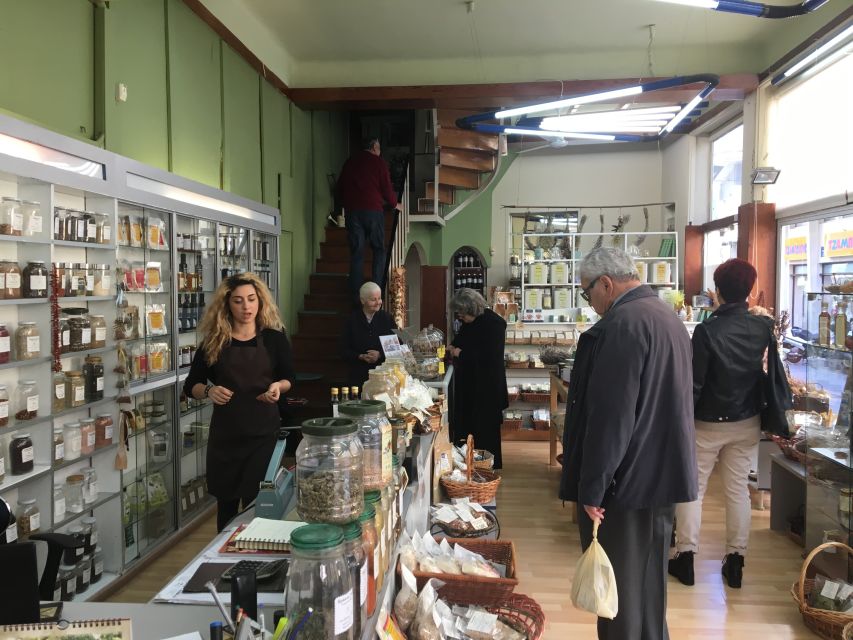
The next food stop takes you to a traditional Cretan shop where herbs and spices are part of the display. This is one of the more useful stops if you want to understand why Cretan food can taste distinctive even when the basic ingredients seem simple.
You’ll sample Cretan mountain tea, a nonalcoholic herbal drink, and learn about the place herbs hold in local food and drink. The experience does not turn into a formal cooking lesson, but the guide can help connect what you taste with the wider Cretan diet.
The tea also gives the tour a welcome change of pace after the pastries. It is lighter, less sweet, and closer to the island’s plant-based traditions. If you are buying edible souvenirs, a traditional shop may also help you recognize the herbs and spices you’ll see elsewhere in Crete.
The supplied information does not specify every herb or spice served, so you should not expect a fixed tasting list beyond the mountain tea. That small uncertainty is normal for a food walk, where shop stock and local availability can affect the exact presentation.
More walking tours in Crete:
- Knossos: Knossos Palace Skip-the-Line Guided Walking Tour
★ 4.8 · 1,380 reviews - Walking “Food tasting tour” in the town of Chania
★ 5.0 · 297 reviews - Heraklion: Food Tastings Walking Tour
★ 5.0 · 136 reviews - PRIVATE Walking Tour with Lunch and Wine Tasting by a Sommelier
★ 5.0 · 113 reviews
Olive oil, cheese, olives, and yogurt
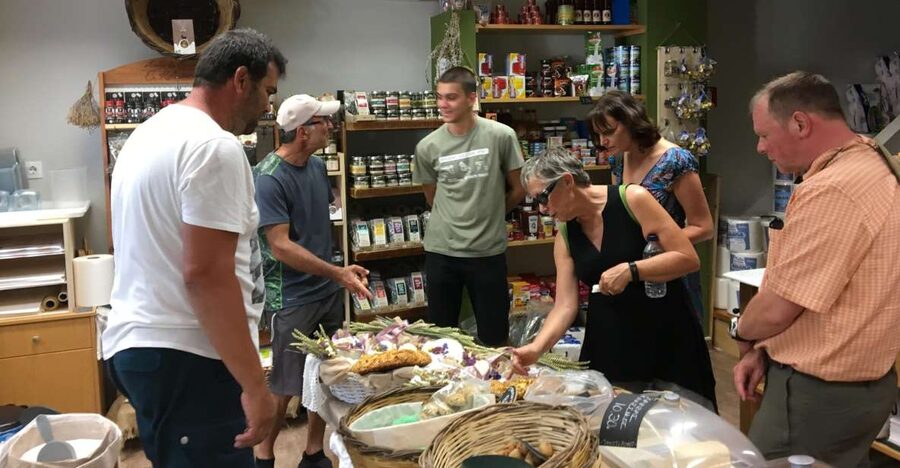
The olive oil tasting is central to the experience. Cretan extra virgin olive oil is presented as one of the finest in the world, and you’ll taste oil made from varieties of table olives. The important point is not just the claim about quality. It is learning to pay attention to the oil itself, rather than treating it as a background ingredient.
You’ll also taste several types of cheese, including goat and sheep cheese, Gruyere, Parmesan, soft cheese, and natural yogurt with honey. This makes the stop more substantial than a quick sample of one local product.
The range is useful because Cretan cheese does not have one single flavor or texture. Goat and sheep cheeses can offer a more distinctly local taste, while Gruyere and Parmesan provide familiar points of comparison. Soft cheese and yogurt with honey shift the tasting toward a gentler, creamier finish.
Fresh fruit and different types of olives are also included. These foods help balance the pastries and cheese, and they show how the Cretan table moves between sweet, salty, sour, creamy, and herbal notes.
You may want to take notes or ask your guide what you are tasting as you go. Twelve food and drink samples in two hours can blur together, especially when several cheeses and olives appear close together.
Dakos, souvlaki, wine, and raki
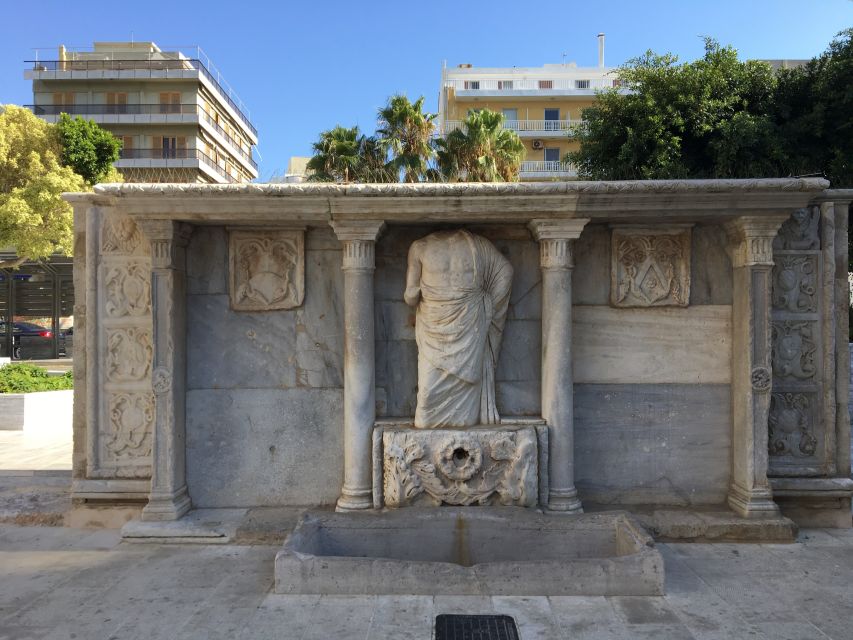
The later tastings bring in some of the foods most closely linked with casual Cretan eating. Dakos is included, giving you a chance to try a traditional combination built around dried or crisp bread, tomato, cheese, and olive oil. It is simple food, but it shows how good local ingredients can carry a dish without a long recipe.
Souvlaki adds a meatier, more filling element. Since the tour also includes cheese, bread, pastries, fruit, and yogurt, you should think of the experience as a substantial grazing meal rather than a light snack break.
Wine and raki are part of the tasting list. Raki is a traditional Cretan spirit, and it is often served as a social drink. You do not need to treat the tasting as a drinking tour, but you should be prepared for alcohol alongside the food.
A traditional herbal drink is included as a nonalcoholic option. Local refreshments are also listed, so the selection is not limited to alcohol, coffee, and tea. If you do not drink alcohol, tell your guide at the start so you can understand which parts of the tasting are suitable for you.
Because the tour is only two hours, portions may be tasting sizes rather than full restaurant servings. Still, the number of samples adds up quickly. The practical advice is simple: skip breakfast or eat very lightly beforehand. You’ll want room for the full range.
Heraklion sights between the bites
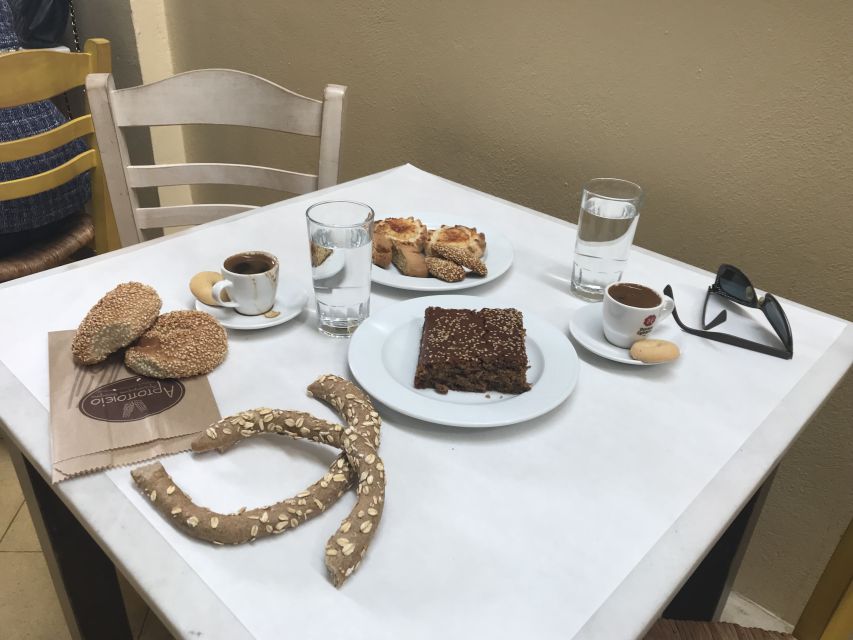
The food is the main reason to book, but the walking route gives the tastings a sense of place. You’ll pass through Heraklion’s historic center and see several important landmarks.
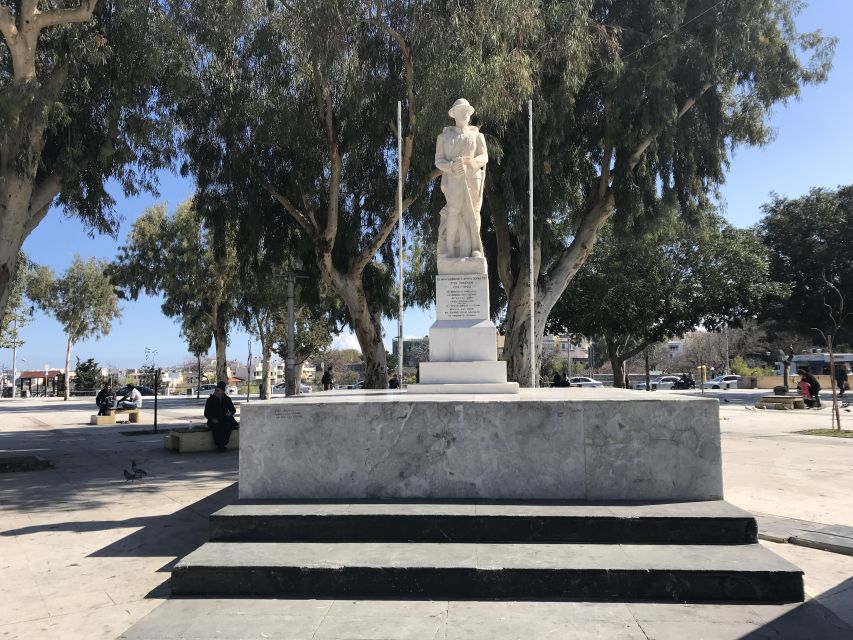
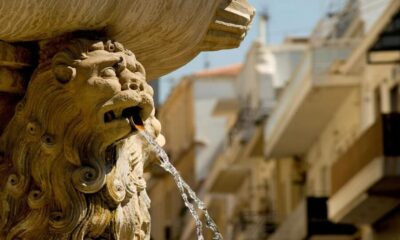
Lions Square is one of the city’s central reference points and a natural place to understand how Heraklion’s public life works. Saint Titos Cathedral adds another layer, linking the modern center with the city’s religious and political past.
Agios Minas Cathedral provides a second major church stop. The route also includes the Venetian Walls, a reminder that Heraklion was shaped by powerful Mediterranean empires and long periods of defense.
You should not expect a full historical tour of every monument. Two hours, especially with twelve tastings, leaves limited time for extended architectural explanations. Instead, the guide uses the sights as part of a broader introduction to the city.
That balance is a strength if you are new to Heraklion. You can get your bearings, see the main central landmarks, and learn what to eat without spending half a day on a formal history walk. If monuments are your main interest, pair this tour with a separate visit to the Archaeological Museum or a longer city tour.
What the private guide adds
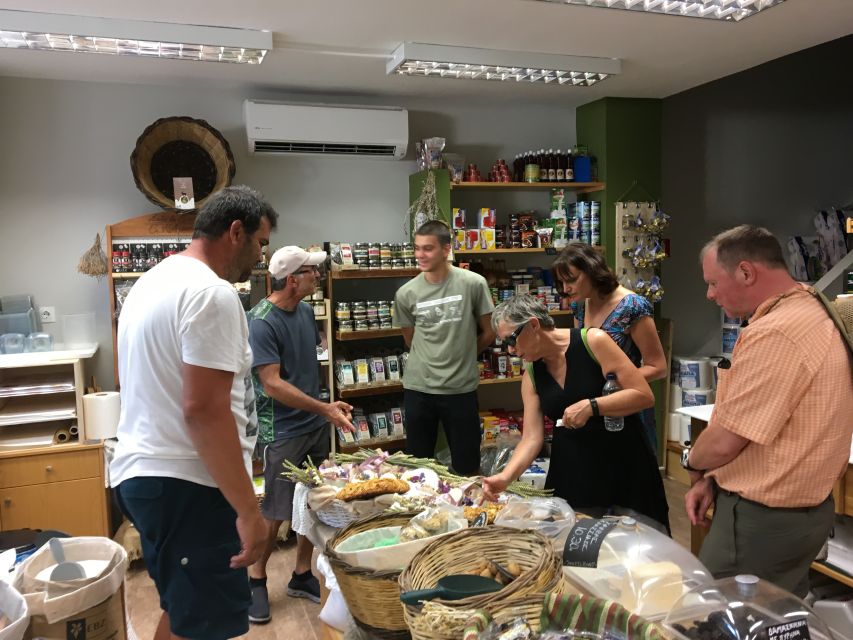
The private group format is important here. Food questions are personal and practical: Which cheese should you buy? How is raki served? What does a local family eat in a normal week? In a large group, those questions can get lost. A private guide gives you more room to ask.
The guide speaks English. Heraklia is one guide associated with the experience, and the strongest praise centers on the guide’s warmth, friendliness, and ability to make the walk feel easy and personal. The guide is described as feeling more like a very well-informed friend than a lecturer.
That tone suits a food tour. You want clear explanations, but you also want help noticing small differences between a sweet pie, a cheese, an olive, and an herbal drink. A friendly guide can make the tasting feel like a conversation instead of a sequence of samples.
You should still keep expectations realistic. The tour is not a cooking class, and the supplied details do not promise recipes, market shopping, or a hands-on demonstration. Its value is in tasting, walking, and making connections between food and the city.
Is $119 per person good value?
At $119 per person, this is not a bargain food walk. The price makes more sense if you value a private English-language guide, a compact introduction to Heraklion, and a large tasting selection in one booking.
You are paying for more than snacks. The tour combines three food stops, twelve listed tastings, a city walk, and explanations of Cretan food culture. For a first day in Heraklion, that combination can save you from guessing where to eat and what to order.
The value is weaker if you mainly want a cheap meal. You could spend less at a local bakery or taverna, and a standard sightseeing walk may cost less as well. This experience is best seen as a guided orientation with food included, not as the cheapest way to fill your stomach.
Private tours also tend to work best for couples, families, or small groups who want to ask their own questions. If you are traveling alone, the price may feel harder to justify unless food is a major priority.
Free cancellation up to 24 hours before the start and the option to reserve now and pay later add useful flexibility. Gratuities are optional, and personal expenses are not included.
Who should book this Heraklion food walk?
I would recommend it to you if you want an easy first look at the city and prefer tasting local food to sitting through a long lecture. It suits curious eaters, couples, families with older children, and anyone who wants a guide to explain what appears on a Cretan table.
It is also a good choice if you are staying in Heraklion for a short time. The two-hour length leaves room for the Archaeological Museum, a meal later in the day, or further sightseeing around the center.
You should think twice if you have mobility limitations. The activity is not suitable for wheelchair users or people with mobility impairments. Large bags and luggage are not allowed, and comfortable walking shoes are essential.
The tasting list may also be difficult for strict dietary needs, since it includes dairy, meat, alcohol, pastries, and other varied foods. The supplied information does not promise vegetarian, vegan, allergy-friendly, or alcohol-free substitutions, so ask before booking if that matters to you.
Should you book it?
Book this tour if you want a private, food-led introduction to central Heraklion and you are ready to eat a lot in two hours. The family bakery, local herbs, olive oil, Cretan cheeses, dakos, souvlaki, wine, and raki give you a broad first taste of the island.
Skip it if your priority is the lowest possible price, a slow sit-down meal, or a detailed monument tour. For most visitors who like local food and want a friendly guide, the combination is strong. Just arrive early, wear sensible shoes, and do not eat a large breakfast first.
FAQ
Where does the tour start?
It starts at the front door of the Capsis Astoria Hotel on Eleftherias Square, the main square of Heraklion, near the Archaeological Museum.
Where does the tour finish?
The activity finishes back at the meeting point.
How long does the experience last?
The walking and tasting experience lasts two hours. Starting times vary, so check availability when booking.
What language is the tour offered in?
The live tour guide speaks English.
Is this a private tour?
Yes. The activity is arranged for a private group.
How many food and drink tastings are included?
Twelve local food and drink tastings are included.
What foods and drinks can I expect?
The tasting list includes bougatsa, coffee, local refreshments, kalitsounia, fresh fruit, several types of cheese, olives, dakos, a traditional herbal drink, souvlaki, raki, and wine.
Should I eat before the tour?
It is recommended that you arrive hungry because there are many tastings. One practical suggestion is to skip breakfast or eat very lightly beforehand.
What should I bring?
Bring comfortable walking shoes, sunglasses, and a sun hat. Do not bring luggage or large bags.
Is the tour suitable for wheelchair users?
No. The activity is not suitable for wheelchair users or people with mobility impairments.
Newest Crete write-ups
- Heraklion – Walking city tour with food tasting★ 4.5 · 25 reviews
- Private Full-Day Elafonisi★ 5.0 · 4 reviews
- Mirabello Luxuries with Spinalonga & Agios Nikolaos from Iraklion★ 4.5 · 7 reviews
- Cretan Flavors – Cooking Lessons and Wine Olive Oil Tasting★ 5.0 · 9 reviews
- Private Trekking Rouvas Gorge★ 4.5 · 4 reviews
- Ecobike All inclusive – 2 Day tour – Discover the real Crete★ 5.0 · 4 reviews
- Truffle Hunting, Culinary & Wine Celebration from Heraklion★ 5.0 · 6 reviews
- Secrets of West Crete & Rethymno Town Private Tour from Heraklion★ 5.0 · 9 reviews
Heraklion City Tours, compared.
Day Trip To Heraklion City Center & Market & CretAquarium
Read our review →
Knossos Palace, Heraklion City, Market Guided Tour
Read our review →
Knossos Palace, Museum & Heraklion City Tour From Chania
Read our review →
Knossos Palace guided tour – Heraklion City tour + market
Read our review →
Knossos Palace: E-ticket with Audio and Heraklion City Tour
Read our review →Browse the lists this tour appears in