

Reviewed · HERAKLION ARCHAEOLOGICAL MUSEUM TOURS
Chania: Archaeological Museum Entry Ticket and Audio Guide
The most memorable part of this visit is the small collection of standout objects that give Chania’s past a human face: necklaces from Kydonia, Roman mosaics, a painted larnax, and mysterious discs linked to the weighing of souls. With your ticket and phone audio guide, you move at your own pace rather than following a group.
I like the offline audio content, since you can download the text, narration, and maps before entering. I also like the freedom to pause, replay, or return to the tour later. The main drawback is value: at about $28 per person, the package costs far more than the museum’s reported on-site admission of 6 euros, so you are paying a sizeable premium for convenience and the audio tour.
Key points to know
- Kydonia necklaces and Roman mosaics give the visit its strongest visual moments.
- The English audio tour works offline, so you do not need mobile data inside the museum.
- You visit independently, with no live guide, group, or fixed meeting time.
- The discs for weighing souls offer one of the museum’s most unusual stories.
- A charged Android or iPhone and headphones are essential, and the app needs about 100 to 150 MB of storage.
- The museum is wheelchair accessible, with interior spaces free of architectural barriers.
What this Chania museum ticket actually includes

This is a combination of two products: an adult admission ticket to the Archaeological Museum of Chania and a self-guided audio tour delivered through an app.
You receive an email with instructions and an activation link. Before setting out, download the app and the tour to your phone. That preparation matters. The audio, written material, and maps can be stored offline, so you are not relying on a strong signal or using roaming data while inside.
The tour is in English. It is not a live commentary service, and no guide meets you at the door. You enter the museum at Skra 15 in Chania, put on your headphones, and begin the tour from the entrance.
The content is built around short stories and historical explanations rather than a continuous lecture. That format suits a museum visit well. You can stop to look closely at an object, pause the narration, or skip ahead if a section does not hold your attention.
You can also use the audio tour before or after your visit. I would not listen to the whole thing in advance, since some of its value comes from hearing a story while looking at the object. But a quick check of the tour beforehand can help you recognize the main pieces once you are inside.
More museum visits in Heraklion:
- Knossos & Archaeological Museum Shared Guided Tour from Chania
★ 5.0 · 41 reviews - Private Tour Knossos Palace-Archaeological Museum-Heraklion Town
★ 4.5 · 11 reviews - Chania Archaeological Museum E-Ticket and Audio Tour
★ 4.5 · 6 reviews
Entering the Archaeological Museum at Skra 15
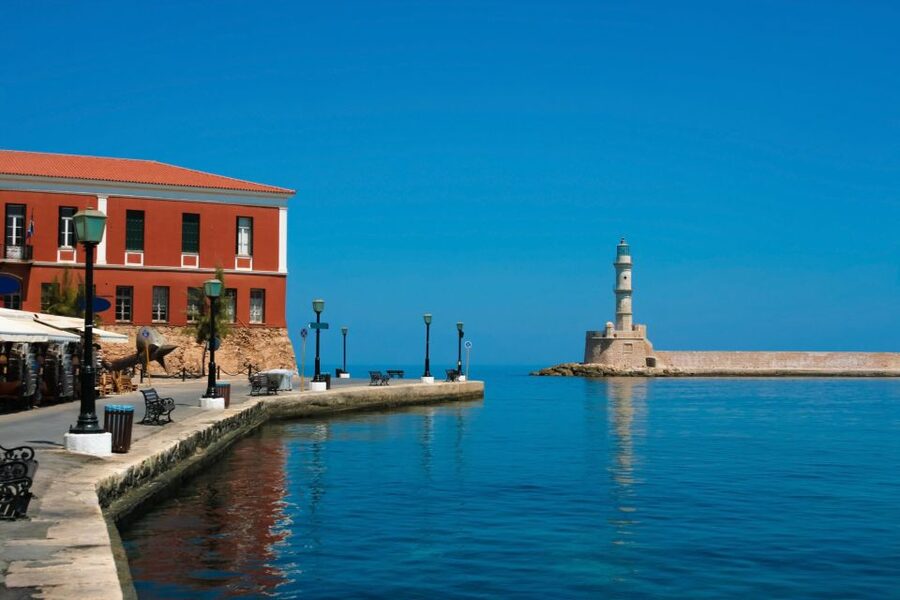
The meeting point is simply the museum entrance at Skra 15, Chania 731 33. There is no transport, hotel pickup, or group departure to worry about, so you make your own way there by car or other local transport.
Your ticket is valid for one day. The material says to check availability for starting times, but this is not a timed walking group with a guide leading you from room to room. The important practical step is getting the access email before your visit and making sure the activation link works.
I would download everything while you have Wi-Fi. Check your spam folder if the instructions do not appear in your inbox. Bring a fully charged phone, since the audio tour is only useful if your battery can handle both the app and the visit.
The app requires about 100 to 150 MB of free storage. It works on Android version 5.0 and later and on iOS, but not on Windows phones. Older devices are also excluded, including iPhone 5 and 5C models, older iPod Touch and iPad models, and the first iPad Mini.
Kydonia necklaces and the first look at ancient Chania
The necklaces from Kydonia are among the objects singled out for special attention. They are a good opening point because jewelry is easy to connect with. You are not just looking at an anonymous fragment of pottery or stone. You are looking at adornment made for people who wanted to display status, taste, or personal identity.
Kydonia was the ancient settlement beneath modern Chania, and these pieces help place the museum in the story of the city itself. The audio guide gives you a reason to slow down and consider how a small object can reveal social habits that written records often leave out.
The museum’s collection covers several periods, so the tour is useful for keeping the chronology from becoming a blur. Without some explanation, a visitor can move from one era to another and remember only a series of attractive objects. The audio gives the displays a stronger thread.
One limitation is that the supplied information does not promise an audio track for every single item in the museum. Think of it as a selected route through important objects, not a full spoken catalogue of every case.
The House of Dionysus mosaics

The mosaics from the House of Dionysus are another major stop. They bring domestic Roman life into the museum through pattern, decoration, and mythological imagery.
Mosaics can be deceptively quiet displays. From a distance, you see a large design. Up close, you notice how many small pieces create figures and scenes. The audio commentary helps explain why these floors mattered and what they suggest about the house where they were found.
This is one place where the self-guided format works well. You can stand in front of the mosaic for as long as you wish without worrying about holding up a group. Pause the narration, inspect the details, then continue when you are ready.
The museum building itself also adds to the visit. One visitor described it as beautiful, with well-presented exhibits and a good physical space for viewing the collection. That matters here because mosaics need room around them. Crowded displays would make it harder to understand their scale and design.
More museums and sites in Chania:
- Minoans World 3D Museum & 9D Cinema
★ 4.5 · 315 reviews - Knossos Palace, Museum & Rethymno city Private Tour from Chania
★ 5.0 · 69 reviews - Knossos Palace, Museum & Heraklion City Tour From Chania
★ 4.2 · 61 reviews - Minoan Crete from 3.000 BC: Knossos Palace & Museum with Wineries from Chania
★ 5.0 · 6 reviews
The Poseidon and Amymone mosaic
The mosaic from the house of Poseidon and Amymone gives you a second chance to see how mythological scenes were used in a private Roman home.
Its title points to the mythological figures represented, while the setting tells you something about the people who commissioned such decoration. A mosaic like this was not just practical flooring. It also signaled education, taste, and an interest in stories that circulated across the ancient Mediterranean.
The audio guide is most helpful when it links an image to its wider story. You do not need to arrive already familiar with Poseidon or Amymone. The narration is designed to supply the background in short sections.
If you prefer a detailed academic account of every artistic technique, this will feel light. The audio is aimed at a general museum visit, with brief original stories and historical facts rather than a specialist lecture. For most people, that keeps the pace comfortable.
The Master Impression clay sealing
The Master Impression clay sealing is one of the more intriguing objects on the route because it seems modest at first glance. A clay sealing is small, but it can preserve the mark of authority, administration, or ownership.
This is exactly the sort of object that benefits from explanation. A mosaic announces itself with color and size. A clay impression asks you to understand what it did and why its image mattered. The audio guide gives you the story behind the object, helping you look at it as evidence rather than just a piece of baked earth.
I especially like that the tour includes objects of different sizes and purposes. The visit is not built only around the largest or prettiest displays. The necklaces and mosaics provide visual appeal, while the sealing shows how a small administrative object can carry a larger story.
The Chania larnax and the weighing of souls
The larnax from Chania is another featured object. A larnax is a chest or coffin used for burial, so it shifts the mood of the visit from household decoration and personal jewelry to death and memory.
The audio guide gives you context for the object rather than leaving you to guess what you are seeing. Details about burial customs can make a museum collection feel less distant. You begin to see the people behind the artifacts, not just the people who made them.
The discs for weighing souls are perhaps the most unusual stop in the tour. Their name immediately raises questions about belief, judgment, and the fate of the dead. One visitor particularly enjoyed this part of the collection, and I can understand why. It is a striking idea, and the audio format lets the story unfold while you examine the objects.
These displays also show the range of the museum. You move from jewelry to domestic mosaics, then to sealing practices, burial objects, and ideas about the afterlife. The route is not just a parade of beautiful things. It offers several ways to think about ancient life.
What the audio guide sounds like
The audio is in English and uses short, original stories based on historical research. You should expect a pre-recorded voice, not an expert standing beside you to answer questions.
The guide has been praised as useful for following and understanding the collection. That is its main strength. It gives you a clear path through selected pieces and adds anecdotes that a label may not include.
The main criticism concerns pronunciation and voice style. The narration has a noticeably American accent, and the pronunciation of Chania has bothered some English-speaking listeners. If you are sensitive to accents or prefer a locally recorded voice, this may irritate you.
You can reduce the problem by treating the audio as an optional layer rather than the entire visit. Read the labels, look at the objects, and use the narration when you want more context. The written content is also available offline, so you are not forced to listen to every track.
Headphones are not supplied. Bring your own, and test them before entering. Sharing one pair can make the experience awkward, especially if two people want to look at different objects at different speeds.
Is $28 good value for this museum visit?
The listed cost is $28 per person. That price deserves careful thought because the museum admission alone has been reported as 6 euros when purchased on-site. Admission prices can change, and free or reduced tickets are obtained at the museum, but the comparison still shows how much of the package price goes toward the app, advance booking, and convenience.
If you only want to see the collection, buying entry directly may be the better deal. You can then read the museum labels at your own pace and decide if you need an audio guide.
The package makes more sense if you value preparation and structure. You receive an entry ticket in advance, a downloadable English tour, offline maps and narration, and the freedom to visit without joining a group. For a visitor who wants a little help making sense of the objects, those features can justify paying extra.
It is also useful for a short stay in Chania. You do not have to search for a guide on arrival or arrange a separate museum tour. The tradeoff is simple: you pay for convenience, not for exclusive access or a personal expert.
This is not a good choice if you expect hotel pickup, transportation, a live guide, food, or drinks. None of those are included.
How long to allow and how to use the day well
The activity is valid for one day, but no exact visit length is provided. Your pace will depend on how carefully you listen and how long you spend with the objects.
I would avoid rushing through the museum simply because the ticket is valid for one day. Listen to a section, stop the audio, and look closely. The self-guided format gives you permission to spend extra time on the necklaces or mosaics and less time on objects that do not interest you.
You can also return to the audio after leaving. That is helpful if the museum becomes tiring or if you want to revisit the stories later. The content remains available for repeated use.
A coffee shop with views and a gift shop add useful finishing touches to the visit. The coffee stop gives you a place to rest after the galleries, while the shop offers museum-related purchases. These extras are not part of the ticket price, so plan to pay separately if you use them.
Accessibility and practical limits
The museum interior is described as free of architectural barriers and wheelchair accessible. That makes the physical visit easier for visitors who need step-free access.
The main limits are digital. You need a compatible Android or iOS phone, enough storage, a charged battery, and headphones. The app does not work with Windows phones or several older Apple devices.
Free and reduced admission tickets are acquired on-site rather than through this package. If you qualify for one, check the museum’s current rules before paying for the adult ticket.
The course of the visit can change, and site rules may impose temporary restrictions. Follow the museum’s instructions once you arrive.
Who should book this Chania museum experience?
I would choose this package if you want a quiet, independent museum visit with a bit more explanation than the wall labels provide. It suits solo visitors, couples, and families who do not want to match the pace of a group.
It is also a practical choice if you like having the tour ready on your phone before you leave your hotel. The offline maps and narration remove some small but real hassles.
I would skip it if the $28 price feels high compared with direct museum admission. I would also skip it if you strongly prefer a live local guide or dislike recorded narration with an American accent.
Should you book it?
Book it if the English audio stories, advance ticket, and independent pace are worth the added cost to you. The strongest parts are the Kydonia necklaces, the two Roman mosaic displays, the Master Impression clay sealing, the Chania larnax, and the unusual discs for weighing souls.
For the lowest-cost museum visit, buy admission directly and use the labels. For the most convenient self-guided option, download this tour in advance, bring headphones, and arrive with a fully charged phone. That is the clearest way to decide: you are paying for a ready-made explanation and convenience, not a live guide or special access.
FAQ
Where does the audio tour begin?
The self-guided tour begins at the entrance of the Archaeological Museum of Chania at Skra 15, Chania 731 33.
Is there a meeting point?
No. There is no group meeting point or live guide. You start at the museum entrance on your own.
What language is the audio guide in?
The audio guide is available in English.
Do I need to bring headphones?
Yes. Headphones are not included, so bring your own if you want to listen to the narration comfortably.
Do I need a smartphone?
Yes. You need a compatible Android or iOS smartphone to download and use the audio tour. The phone is not included.
Does the audio tour work without mobile data?
Yes. The tour includes offline text, audio narration, and maps. Download the content before your visit to avoid roaming charges.
Which exhibits are highlighted?
The tour highlights the necklaces from Kydonia, mosaics from the House of Dionysus, the mosaic from the house of Poseidon and Amymone, the Master Impression clay sealing, the larnax from Chania, and the discs for weighing souls.
Is the museum wheelchair accessible?
Yes. The interior spaces are described as free of architectural barriers, and the museum is wheelchair accessible.
How long is the ticket valid?
The activity is valid for one day. Check availability for the current starting times.
Can I get a free or reduced admission ticket through this booking?
No. Free and reduced admission tickets are acquired on-site.
More Self-Guided Routes in Chania
- Chania’s Clash of Empires: A Self-Guided Audio Tour
★ 4.5 · 28 reviews - Crete: Knossos Palace Entry Ticket with Optional Audio Guide
★ 3.9 · 2,251 reviews - Crete: Palace of Knossos E-Ticket and Audio Guide
★ 3.8 · 1,540 reviews - Crete: Knossos Palace and Museum E-Tickets with Audio Guides
★ 4.0 · 828 reviews
Newest Chania write-ups
- Private transfer from Heraklion airport to Chania★ 5.0 · 5 reviews
- From chania : Knossos Palace & Archeological Museum Tour★ 4.0 · 4 reviews
- Highlights of Crete -2 Days Tour Knossos Lasithi Rethymno&Chania★ 5.0 · 3 reviews
- CHANIA RETHYMNON KOURNAS, full day professional guided coach tour★ 3.5 · 8 reviews
- Private tasting of 6 cretan wines in Fres village, Chania★ 5.0 · 4 reviews
- Wine Tasting Walking Tour in Old Town Chania★ 5.0 · 20 reviews
- Small-Group Wine Tasting Activity in West Chania★ 5.0 · 4 reviews
- Chania Area: Cooking Class at a Farm in Stylos Village (organic)★ 5.0 · 19 reviews
Heraklion Archaeological Museum Tours, compared.
Heraklion Archaeological Museum Ticket & Audio Guide
Read our review →
Knossos & Archaeological Museum Shared Guided Tour from Chania
Read our review →
Archaeological Museum of Heraklion: Guided Walking Tour
Read our review →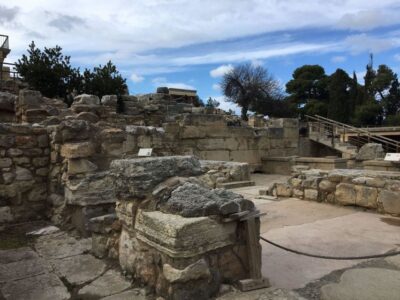
Knossos Palace & Archaeological Museum Private Tour
Read our review →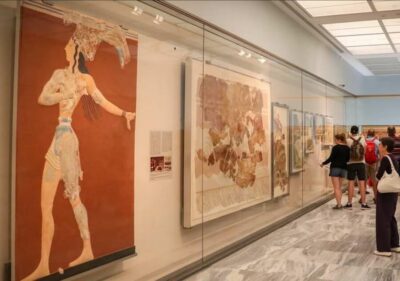
Archaeological Museum Ticket with City Audio Tour
Read our review →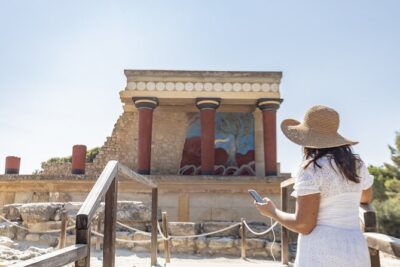
Knossos Palace & Archeological Museum: E-Tickets with Audio Tours
Read our review →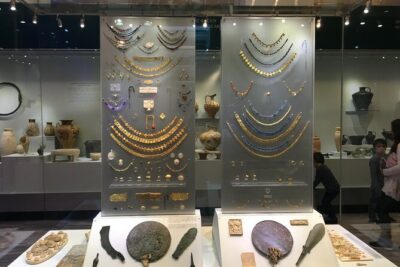
Private Tour Knossos Palace-Archaeological Museum-Heraklion Town
Read our review →Browse the lists this tour appears in