Reviewed · HERAKLION TOURS
Orthodox Crete: In the Footsteps of the Apostle Paul from 55 AD
The most unusual part of this day tour is its blend of Orthodox Christianity and ancient Crete. You move from a saint’s cave and healing spring to Bronze Age ruins, fortified monasteries, and the old port at Matala. It is not a standard beach-and-palace outing.
I like the private format, which lets your guide shape the day around your interests. I also like the setting: central Crete’s mountain roads and the broad Messara Plain give you a feel for the island beyond Heraklion. The main drawback is distance. Seven stops in about eight hours make for a full day, and Phaistos Palace admission costs extra.
Key points to know before booking
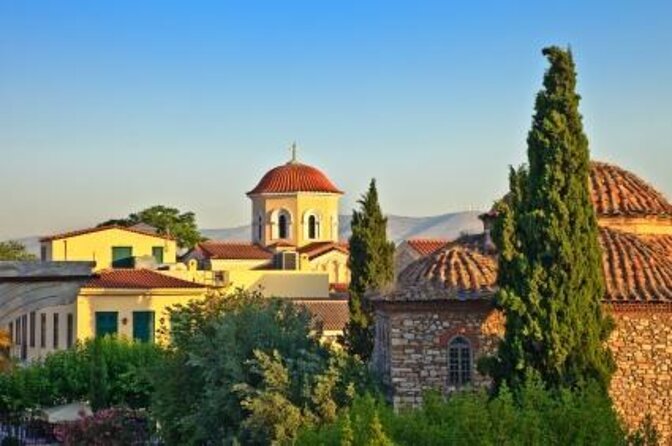
- Apostle Paul connection: The tour presents Crete through the early Christian tradition linked with Paul’s visit in 55 AD.
- Two very different monasteries: Paliani offers an ancient sacred myrtle tree, while Odigitria has a fortified form and links to the Agiofarango area.
- A saint’s cave at Agios Myronas: You can see the cave of Agios Myron and the spring where water still flows from the rock.
- Phaistos adds Bronze Age archaeology: The palace visit brings a strong prehistoric contrast to the Christian sites.
- Matala gives the day a relaxed finish: You have about two hours for the beach, caves, and a possible seafood meal.
- Private comfort matters here: Pickup is flexible, and the chauffeured vehicle includes water, snacks, Wi-Fi, USB sockets, and hygiene supplies.
A faith-focused route through central Crete
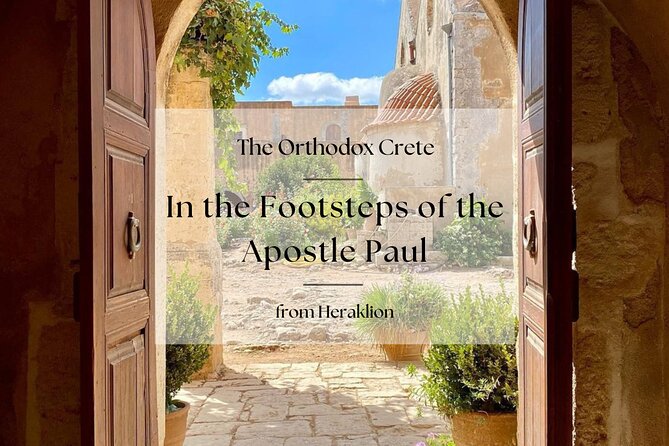
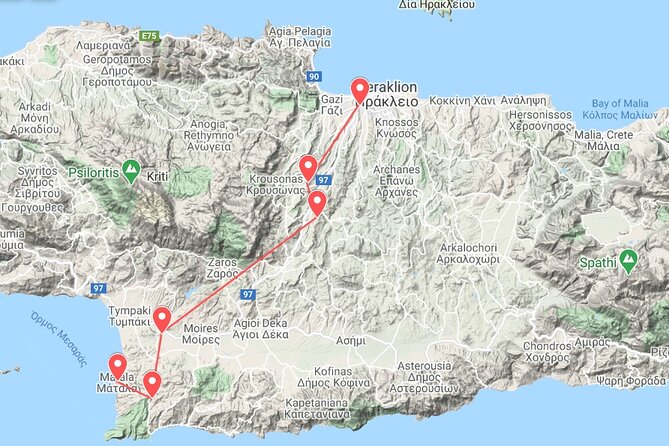
This is a private tour from Heraklion that follows a broad religious and historical theme. The route reaches south through the center of the island, combining Christian sites with older Cretan places that existed long before Christianity.
Your guide is central to the experience. Guides named in the tour’s feedback include Gethsemane, Ioanna, Alex, and Nektar. Their strengths differ, but the pattern is clear: you should expect a day built around explanation and conversation, not simply a driver dropping you at a series of stops.
That matters most if you care about Christian history, biblical connections, monastic life, or archaeology. One guide was especially praised for making the past understandable to young children, while another shaped the day around a family’s specific religious interests. You can ask for that same personal approach when you book.
The route is also useful for people who want to see central Crete without arranging several separate trips. You get a private vehicle, a guide, pickup and return, and assistance with admissions and restaurant planning. The tradeoff is that the day covers a lot of ground. Some stops are short, so you should not expect long, unhurried visits everywhere.
A few more Heraklion trips worth weighing up
- Heraklion: Dia Island Sailboat Cruise with Swimming and Meal
★ 4.8 · 2,579 reviews - Heraklion Area: CRETAquarium Admission Ticket
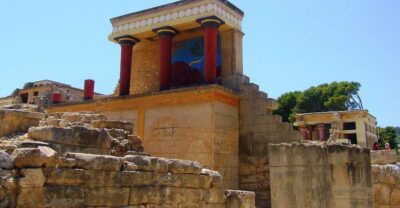
★ 4.4 · 2,055 reviews - Crete: Palace of Knossos E-Ticket and Audio Guide
★ 3.8 · 1,540 reviews
Agios Myronas and the spring inside the rock
The first distinct stop is Agios Myronas, a village at about 400 meters above sea level. The visit lasts around 35 minutes and centers on the cave associated with Agios Myron, an ascetic saint.
The most striking detail is the water. A spring still flows from inside the rock, giving the cave a physical feature that helps explain why the site remains important to Orthodox believers. This is more memorable than a church visit where the meaning is entirely contained in paintings or architecture.
You will want sensible shoes and a little patience here. The provided information does not describe the exact surface or access conditions, so the tour should not be treated as a demanding hike, but a cave and spring are not the same as a flat museum floor. The time is brief, too. Think of Agios Myronas as a focused spiritual stop rather than a long village exploration.
Crossing the Messara Plain by local roads
The Messara Plain gives the day room to breathe. You spend roughly 45 minutes seeing this fertile central valley and the surrounding countryside from a local point of view.
This part of the route is valuable because it connects the individual sites. Instead of experiencing monasteries and ruins as isolated attractions, you see the countryside that links them. The open views also make the drive feel purposeful, especially after the tighter setting of a cave or monastery.
I would pay attention during this section rather than treating it as dead time in the car. The tour is designed to explain the spiritual and less-developed side of Crete, and this valley is where that wider picture comes together.
Still, the Messara visit is not a formal attraction with a ticketed entrance or a long walking program. If you want constant action, this stretch may feel quiet. If you enjoy scenery, local context, and a slower look at central Crete, it is one of the better parts of the day.
Paliani Monastery and the sacred myrtle tree

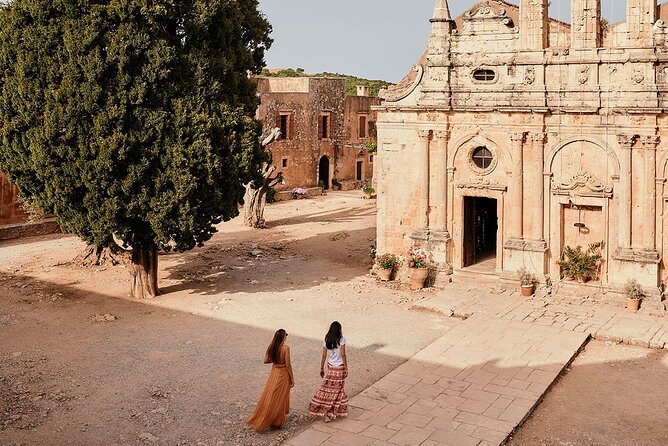
Moni Palianis is one of the oldest monasteries in Crete, dedicated to the Assumption. The visit takes around 35 minutes, so your guide will need to keep the explanation focused.
The monastery is known for a sacred myrtle tree, presented as a surviving link to the older religious traditions of Crete. The connection with Minoan tree worship gives this stop an unusual layer. You are not looking only at a church or an active religious site. You are also encountering a place where older customs and later Orthodox devotion are discussed side by side.
That contrast is one of the tour’s strongest ideas. Crete’s religious story did not begin in the Christian era, and Paliani helps you see how sacred places can gather meaning across very different periods.
Because Paliani is a working monastery, visitors should dress and behave respectfully. The tour information does not set out a formal dress code, so modest clothing is the sensible choice. Your guide can provide the context, while you should allow the setting to speak for itself.
Same island, a completely different kind of day:
- Full-Day Land Rover Safari from Heraklion with Lunch
★ 5.0 · 1,351 reviews - Heraklion: Sailboat Cruise to Dia Island with Drinks & Lunch
★ 4.9 · 1,287 reviews - Heraklion: Finikia Horse Riding Tour with Lunch or Dinner
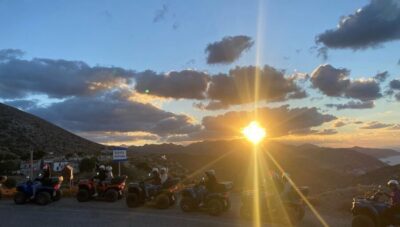
★ 4.9 · 1,231 reviews - Crete: Sunset or Morning Quad with Local Products Tasting
★ 4.9 · 1,135 reviews
Phaistos Palace brings in the Bronze Age
Phaistos Palace is the tour’s main archaeological stop. The visit lasts about 35 minutes, and admission is not included.
Phaistos gives you a clear change of subject. After the saint’s cave and Orthodox monasteries, you are looking at a prehistoric center connected with Bronze Age Crete. The tour describes ancient cities appearing along the deeper roads of the island, and Phaistos is the strongest place to see that earlier world directly.
The short visit is both a strength and a limitation. It keeps the full day moving, but it will not satisfy someone who wants a long archaeological study. If Phaistos is your main reason for booking, ask in advance how much time can be devoted to the palace and whether the schedule can be adjusted.
The admission fee is extra, as are meals and drinks. The company offers help buying tickets and VIP skip-the-line assistance, which can reduce friction on a busy day, but you should still budget for the entrance separately. Since no tour price is provided here, value depends on how much you would otherwise spend arranging a private car, guide, transport, and several admissions yourself.
Odigitria Monastery and the fortified south
Odigitria Monastery is described as a jewel of monastic Crete, and its appeal is easy to understand from the basic facts. Its fortified architecture points to a time when religious buildings also needed to protect the people and objects within them.
The visit lasts about 45 minutes. That gives your guide enough time to discuss the monastery’s religious role and its wider cultural setting, while still leaving room for Matala later in the day.
The connection with Agiofarango adds another reason to pay attention. This southern area is tied to an important monastic tradition, and the monastery’s walls make the setting feel more substantial than a quick roadside chapel. You get a sense of organized monastic life, not just a single devotional object.
This stop will mean more to you if you enjoy architecture and religious history. If you prefer galleries, shopping, or food stops, it may feel serious and quiet. The private format helps here because you can tell the guide how much explanation you want.
Matala Beach gives you two hours to slow down
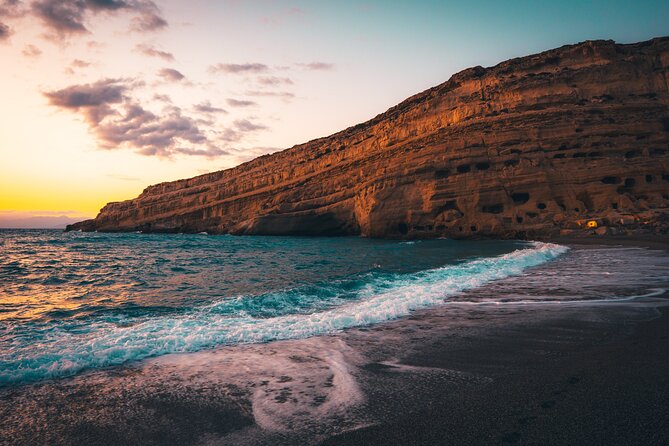
The final major stop is Matala Beach, with about two hours set aside. The bay is known for caves cut into the rock, with use reaching back to the Neolithic period, and it was the prehistoric port of Gortyna.
Matala is a smart ending. After a day of religious sites, mountain roads, and ancient ruins, you get time near the sea. You can look at the caves, walk along the beach, or arrange a seafood meal with help from the tour company.
Food is not included, but the company offers restaurant advice and reservations. That is useful because your meal becomes part of the day’s design rather than an afterthought. You should confirm what you want before arriving, especially if you have a tight return schedule.
The two-hour stop is generous compared with the shorter visits earlier. It also creates the clearest choice of the day: stay active around the beach and caves, or simply sit down and let the route catch up with you. The tour information does not promise swimming conditions or beach equipment, so treat the seaside time as flexible rather than as a guaranteed water activity.
What the private vehicle and guide change

Pickup and drop-off are available from a hotel, villa, cruise point, or another location on Crete. The final pickup time is flexible and confirmed after booking. The activity ends back at the meeting point.
For a route this long, private transport is more than a luxury. It saves you from linking rural villages and southern sites by bus, and it lets your group stay together. The chauffeured premium vehicle includes mineral water, Cretan fruit, snacks, Wi-Fi, USB sockets, and hygiene amenities.
The private setup also means only your group takes part. That is a major plus if you want to discuss Christian belief openly, keep children involved, or adjust the balance between archaeology, monasteries, and scenery. The tour company also provides concierge support before and during the day.
There are limits. A premium vehicle cannot remove the long driving time, and a private guide cannot make seven stops feel slow. If you dislike early starts, long road sections, or a planned schedule, you may prefer a simpler day focused on one monastery and one archaeological site.
Who will get the most from this day
I would recommend this tour most strongly to people with a clear interest in Orthodox Christianity, biblical history, monasteries, and ancient Crete. It also suits families who want a private guide able to explain difficult subjects in an engaging way. The feedback describes young boys staying involved, which suggests the conversational approach can work better than a formal lecture.
It is also a good choice if you are staying in Heraklion and want to reach the Messara area without renting a car. Cruise passengers may find the personal pickup especially useful, provided the timing fits the ship’s schedule.
You should think twice if your priority is a relaxed beach day, a long visit at Phaistos, or a specialist archaeological tour. The route has a clear Christian focus, and several stops are short. Matala provides rest, but it comes late.
The tour is described as suitable for most people, with service animals allowed and public transportation nearby. Since access details for the cave and monastery areas are not fully provided, anyone with mobility concerns should ask about the exact walking surfaces before confirming.
Is Orthodox Crete worth booking?
Book it if you want a private, guide-led day that connects Paul’s Christian tradition, Orthodox monasteries, Bronze Age Phaistos, and Matala. The route offers far more variety than a simple religious tour, while the vehicle and flexible pickup make a complicated day easier to manage.
The best reason to choose it is the guide. Gethsemane, Ioanna, Alex, and Nektar are named in the available feedback, and each is associated with strong personal explanation and tailored touring. Ask for a guide suited to your interests, especially if your group includes children or wants a serious Christian focus.
Skip it if you want to linger at every site or spend most of the day by the water. For everyone else, this is a thoughtful way to see central Crete, with enough variety to keep the day moving and enough private time to make it your own.
FAQ
How long does the Orthodox Crete tour last?
The tour lasts approximately eight hours.
Where can pickup and drop-off take place?
Pickup and drop-off are available from your hotel, villa, cruise point, or another location on Crete. The activity ends back at the meeting point.
Is the pickup time fixed?
No. The pickup time is flexible and is confirmed after your booking.
Is this a private tour?
Yes. Only your group participates in the activity.
Is the tour offered in English?
Yes. The tour is offered in English.
Is Phaistos Palace admission included?
No. Admission fees are not included. The company offers assistance with purchasing tickets and VIP skip-the-line support.
Are meals and drinks included?
No. Meals and drinks are not included. The company can help with restaurant recommendations and reservations, including options near Matala Beach.
Can service animals join the tour?
Yes. Service animals are allowed.
Newest Heraklion write-ups
- Heraklion – Walking city tour with food tasting★ 4.5 · 25 reviews
- Private Full-Day Elafonisi★ 5.0 · 4 reviews
- Mirabello Luxuries with Spinalonga & Agios Nikolaos from Iraklion★ 4.5 · 7 reviews
- Cretan Flavors – Cooking Lessons and Wine Olive Oil Tasting★ 5.0 · 9 reviews
- Private Trekking Rouvas Gorge★ 4.5 · 4 reviews
- Ecobike All inclusive – 2 Day tour – Discover the real Crete★ 5.0 · 4 reviews
- Truffle Hunting, Culinary & Wine Celebration from Heraklion★ 5.0 · 6 reviews
- Secrets of West Crete & Rethymno Town Private Tour from Heraklion★ 5.0 · 9 reviews
Heraklion Tours, compared.

Dia Island Sailboat Cruise with Swimming and Meal
Read our review →

Full-Day Land Rover Safari from Heraklion with Lunch
Read our review →
Sailboat Cruise to Dia Island with Drinks & Lunch
Read our review →
Finikia Horse Riding Tour with Lunch or Dinner
Read our review →