Reviewed · TOURS
WWII – The Battle of Crete Day Tour
The most memorable part of this Battle of Crete tour is the way it connects maps and military decisions with real places. You visit Maleme and Tavronitis, stand in two very different war cemeteries, and see the ground where the 1941 invasion unfolded. A private collection of battlefield objects may also be included, giving the day a more personal edge.
I like the small-group format, with no more than 15 people and often far fewer, and I like the guides’ ability to explain the story without assuming you are a military expert. Guides including Yannis, Babis, Giannis, Ioannis, and Stelios are praised for clear English, warmth, and strong subject knowledge. The main drawback is that six hours is a short time for a complicated battle, and one stop may leave you wanting a clearer step-by-step view of how the fighting moved.
Key points to know
- Maleme and Tavronitis put you close to the main battle area, rather than keeping the story inside a museum.
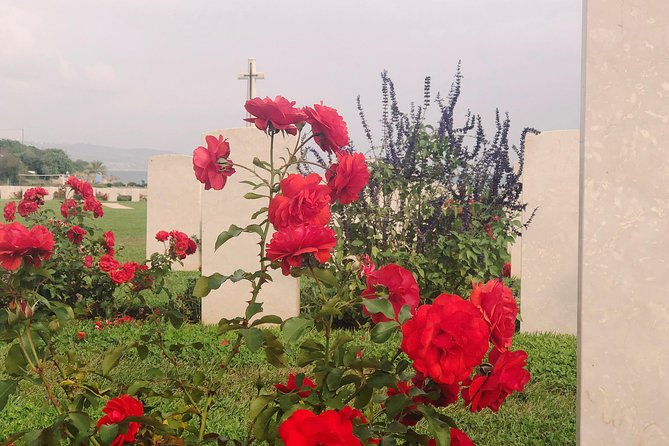
- The German and Commonwealth cemeteries show both sides of the conflict with a quiet, respectful pause.
- A private military collection can be a highlight, with battlefield memorabilia and, according to the experience details, opportunities to see historic weapons.
- The guides make the tour work, especially for visitors who want context, family-history help, or answers to detailed questions.
- Hotel pickup, air conditioning, water, snacks, and entrance fees are included, which makes the $114.89 price easier to assess.
- You should prepare for a fast-moving history lesson, since the tour covers a large subject in about six hours.
Why Crete’s 1941 battle is best understood on the ground
The Battle of Crete was not just a set of dates and troop movements. It involved German forces, Greek defenders, Cretan resistance groups, and Allied troops, including British Commonwealth forces. This tour gives you a way to connect those groups to particular places around western Crete.
I find that especially useful if you have read about the battle but still struggle to picture it. A map can show positions, but a guide standing beside a bridge or cemetery can explain why that location mattered and how the events affected local people.
You do not need to arrive as a military historian. Several guides are described as able to make the subject accessible to beginners while still offering detail to people who know the campaign well. If you have read about Crete beforehand, the visit should help you place names and movements. If you have not, expect a serious but approachable introduction.
The tour also treats the battle as part of Crete’s wider story. Guides discuss the invasion, the local resistance, the Allied role, and the suffering experienced by Cretans. That broader view is important. You are not simply ticking off military sites, but considering how occupation and conflict affected the island.
Other Crete outings travellers line up next to this one:
- From Kissamos Port: Boat Cruise to Balos Lagoon & Gramvousa
★ 4.2 · 6,755 reviews - Crete: Day Trip to Agios Nikolaos and Spinalonga Island
★ 4.6 · 4,416 reviews - From Chania: Full-Day Samaria Gorge Trek Excursion & Guide
★ 4.6 · 3,191 reviews
Maleme: starting where the battle comes into focus
The tour begins at Maleme, with about 50 minutes allocated here. Maleme is one of the key locations in the Battle of Crete, and starting here gives the rest of the day a clear anchor.
Expect your guide to set out the basic situation before moving into smaller details. This is where a good guide earns the price of the tour. The names, dates, and troop movements can pile up quickly, so listen for the explanation of who was trying to achieve what, and why the area mattered.
The stop is not designed as a long museum visit. You are using the place itself as a reference point. That makes comfortable shoes useful, even though the tour is conducted by minivan and is not described as a strenuous walk.
I would pay close attention to the map work here. One criticism of the experience is that the battle’s three-day flow can be hard to follow. If your guide uses maps or points out the surrounding positions, ask questions early. Once you understand the basic sequence, the later stops become easier to place.
Tavronitis Bridge and the value of seeing a real location
The visit to Tavronitis Bridge lasts about 40 minutes and includes admission. This is one of the more distinctive stops because a bridge is easy to overlook when reading about a campaign. On site, it becomes a physical reference point for the events being discussed.
Your guide can connect the bridge with the military action and explain why it belongs in the story. The value here is not simply looking at an old structure. It is hearing how a specific piece of infrastructure fitted into the wider battle.
This is also a good point to ask for clarification if the opening explanation felt too fast. The guides are described as willing to answer many questions, including questions about the battle and Crete more generally. A small group gives you a better chance to do that without holding up a large coach.
The stop lasts less than an hour, so do not expect an extensive archaeological visit. The strength is context, not a large display or long independent exploration. You are there to understand the place, then continue following the story.
The German Military Cemetery: a quieter view of the conflict
The German Military Cemetery receives about 30 minutes. This is a solemn stop, and the tone changes from battlefield explanation to remembrance.
Seeing a cemetery for German forces alongside the Commonwealth cemetery later in the day gives you a fuller view of the conflict. The tour does not reduce the Battle of Crete to one national story. Instead, you are asked to consider the people who died on different sides, while keeping sight of the invasion and occupation that caused the suffering.
I would treat this as a place for a slower pause. The guide may continue explaining the setting and the people connected to it, but you also have time to take in the atmosphere. The cemetery visit is likely to matter most to people interested in military history, family research, or the human cost of war.
You should also expect the day to be emotionally serious at times. The accounts from the guides focus on both Cretan and Allied experiences, and the cemeteries make those losses tangible. This is not a light sightseeing outing with a few war facts added on.
Same island, a completely different kind of day:
- Agios Nikolaos: Boat Trip to Spinalonga with Swim Stop
★ 4.4 · 3,031 reviews - Heraklion: Dia Island Sailboat Cruise with Swimming and Meal
★ 4.8 · 2,579 reviews - Crete: Knossos Palace Entry Ticket with Optional Audio Guide
★ 3.9 · 2,251 reviews - Heraklion Area: CRETAquarium Admission Ticket
★ 4.4 · 2,055 reviews
Souda Bay War Cemetery and the Allied story
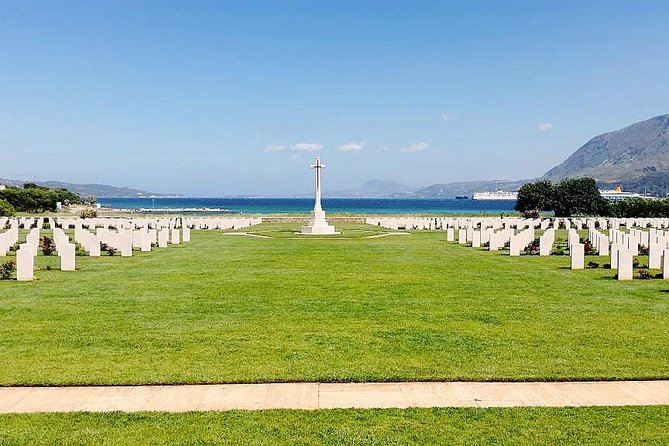
The final listed cemetery stop is the Souda Bay War Cemetery, where you spend about 30 minutes. It is a British Commonwealth cemetery and helps balance the earlier visit to the German site.
Souda Bay also has personal meaning for some people tracing family history. The tour can help you understand the area connected with Allied evacuation and departure from Crete. One participant used the visit to connect the location with a grandfather who escaped the island by ship, while another focused on the role of New Zealand forces. Those details show why the stop can feel more personal than a standard military sightseeing visit.
The guide may also explain the wider roles of Britain, Germany, Italy, Greece, and Commonwealth forces. That wider frame is useful because the battle was not experienced by one army alone. You get a chance to ask about national units, movements, and individual stories.
A flypast by Greek Air Force fighters was arranged for one group, but you should not book this tour expecting that to happen. It was a fortunate extra, not a listed feature. The dependable part is the cemetery visit and the explanation provided by your guide.
The private collection adds a personal touch
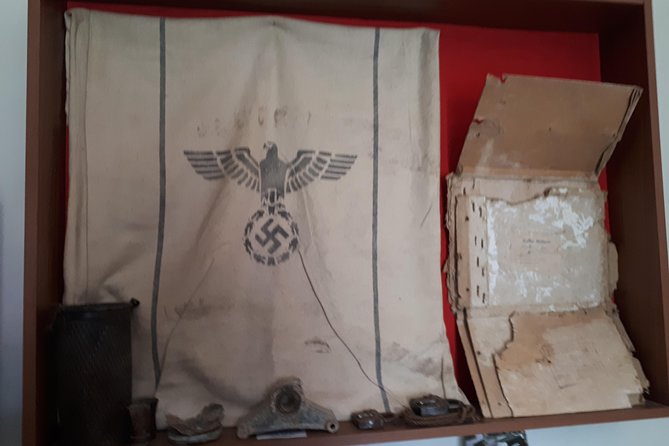
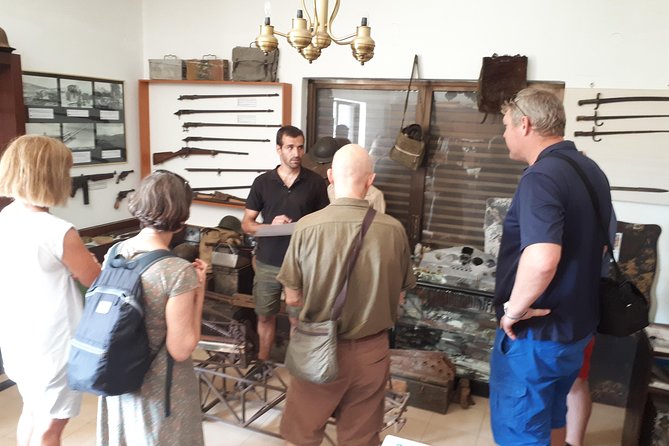
Several accounts of the day describe a visit to a private collection of WWII memorabilia. The collection is associated with Stelios, who is described as having a strong grasp of the period and its objects. This stop is not included in the short itinerary summary, so you should confirm the exact schedule when booking if it is especially important to you.
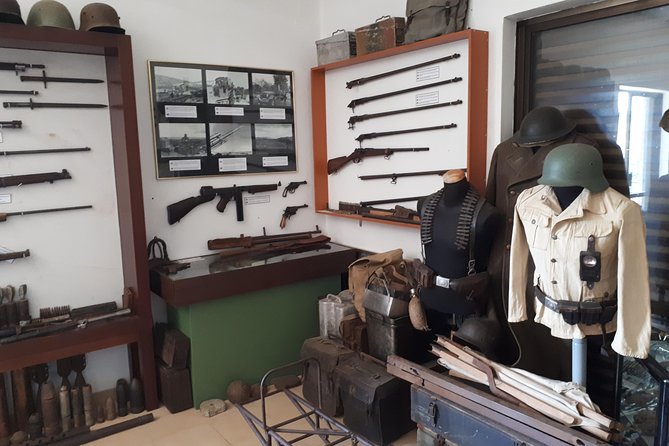
When included, the collection gives the tour a different feel from the outdoor sites. You may see battlefield artifacts and military equipment collected from the area. One account describes handling Lee Enfield rifles with bayonets and Tommy guns, but you should follow the guide’s instructions and not assume every item will be available on every departure.
I like this part because objects can make an abstract story easier to grasp. A uniform, weapon, or field item can lead to a discussion about the people who carried it and the conditions in which it was used. The visit also brings in the local side of the story, rather than presenting Crete as a remote stage for foreign armies.
The collection may be the most unusual feature of the experience. It is also the part most dependent on the day’s arrangements, so do not judge the tour solely on the assumption that a particular object or demonstration is guaranteed.
Guides are the main reason this tour works
The listed escort is an English-speaking local driver and guide, but the guide’s name may vary. Names connected with this experience include Yannis or Yiannis, Babis, Giannis, Ioannis, Stelios, and Nikos. Some guides combine driving and guiding, while other departures may involve a separate driver.
The most praised qualities are clear English, enthusiasm, patience, and the ability to answer questions. Yannis is repeatedly described as passionate and engaging, while Babis is noted for explaining both military strategy and the experiences of Cretan, German, and Allied forces. Giannis is praised for answering even wide-ranging questions about the battle and the island.
That variety matters because this tour is not just transport between sites. You are relying on the person in the minivan to organize a complicated story. A warm guide who can adjust the explanation to your interests will make the six hours much more useful.
I would tell your guide at the beginning how much you already know. If you have read Anthony Beevor or Patrick Leigh Fermor, say so. If you are new to WWII history, say that too. The best use of the limited time is to signal whether you need the main sequence first or want more detail about tactics and personalities.
A small minivan makes the day easier
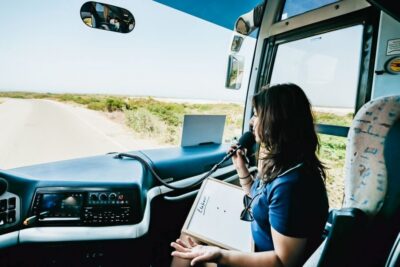
The tour uses an air-conditioned minibus or minivan and has a maximum group size of 15. Groups can be much smaller, with some departures described as having only two or three participants. That changes the feel of the day considerably.
A small vehicle is easier for a conversation than a full-size coach. You can ask questions, hear the guide, and stop for photographs without the same crowd-management issues. The vehicle also matters in Crete’s hot weather. Air conditioning, bottled water, and snacks are included, and some accounts also refer to lunch or a pleasant meal.
Pickup and drop-off are included from specific places in the Chania region. Check that your accommodation falls within the service area rather than assuming every address is covered. The tour starts at 9:00 a.m. and returns to the meeting point after roughly six hours.
The early start is sensible for a day with several stops, but it leaves no room for a leisurely morning. Be ready at the confirmed pickup point and keep the day flexible around the return time. The operator says confirmation is provided at booking, and the experience is near public transportation if you need to reach the meeting point yourself.
Is $114.89 good value?
At $114.89 per person, this is not the cheapest way to spend half a day around Chania. I think the price is reasonable if you value interpretation, transport, and access to several sites more than independent sightseeing.
The cost includes the air-conditioned vehicle, English-speaking local escort, entrance fees, snacks, bottled water, hotel pickup and drop-off from specified Chania locations, taxes, and handling charges. You are also paying for someone to connect the sites into one story. That is the part you cannot easily reproduce by hiring a taxi and looking at the locations on your own.
The value is strongest for people without a car, visitors who want to avoid researching every site, and anyone with a family connection to the battle. The small-group setup adds value too, particularly when it allows detailed questions or a more tailored route.
The value is weaker if you want long periods alone at each site, a formal museum program, or a precise military simulation of every movement. One careful account found it hard to follow the three-day flow and wished the tour spent more time directly on the battlefields. You should see the experience as an informed field trip, not a full military staff ride.
Who should book this Battle of Crete tour?
I would recommend it to WWII readers, military-history enthusiasts, family researchers, and anyone who wants to understand how the war affected Crete. It also suits a history novice traveling with a serious enthusiast because the guides can explain the basics while handling more detailed questions.
The tour is also a good choice if you want more than beaches and villages during your stay. It shows a side of Crete that is easy to miss, including the local resistance, the Allied presence, and the lasting memory of occupation.
I would be more cautious if your priority is a slow, relaxed day. The tour covers several important sites in about six hours, and the subject carries a lot of information. You may find the pace brisk, especially if you want to read every cemetery inscription or spend time photographing each location.
Free cancellation is available up to 24 hours before the 9:00 a.m. start. Changes or cancellations inside that window are not refunded, and poor weather or insufficient numbers can lead to a different date or a full refund. The experience is listed as suitable for most people, but anyone needing specific accessibility arrangements should confirm them before booking.
My verdict: book it for context, not just monuments
I would book this tour if I wanted a clear introduction to the Battle of Crete and did not have a car. The combination of Maleme, Tavronitis Bridge, the two cemeteries, and the possible private collection gives you a meaningful spread of places and perspectives.
The strongest reason to go is the guide. Yannis, Babis, Giannis, Ioannis, and the other local escorts are described as friendly, passionate, and able to make the subject understandable. The main thing to manage is your expectation: six hours cannot explain every movement of a complicated battle with perfect clarity.
Read a short account beforehand, bring questions, and ask your guide to explain the sequence of the fighting in simple stages. Do that, and the tour should help you see Crete not just as a holiday island, but as a place where ordinary people endured a major wartime crisis.
FAQ
How long is the Battle of Crete tour?
The tour lasts approximately six hours. It begins at 9:00 a.m. and ends back at the meeting point.
Where does the tour visit?
The listed stops are Maleme, Tavronitis Bridge, the German Military Cemetery, and Souda Bay War Cemetery. The experience may also include a private collection of WWII memorabilia.
Is hotel pickup included?
Pickup and drop-off are included from specific places in the Chania region. You should confirm that your accommodation is within the covered area.
What language is the tour offered in?
The tour is offered in English and includes an English-speaking local driver or escort.
How many people can join the tour?
The maximum group size is 15 people. Some departures may be much smaller.
What is included in the price?
The price includes entrance fees, transport in an air-conditioned minibus or minivan, snacks, bottled water, taxes, handling charges, and pickup and drop-off from specified Chania locations.
Can I cancel for a full refund?
You can cancel at least 24 hours before the start time for a full refund. Cancellations or changes made less than 24 hours before the start time are not refunded, and the experience may be rescheduled or refunded if poor weather or insufficient numbers cause cancellation.
Newest Crete write-ups
- Heraklion – Walking city tour with food tasting★ 4.5 · 25 reviews
- Private Full-Day Elafonisi★ 5.0 · 4 reviews
- Mirabello Luxuries with Spinalonga & Agios Nikolaos from Iraklion★ 4.5 · 7 reviews
- Cretan Flavors – Cooking Lessons and Wine Olive Oil Tasting★ 5.0 · 9 reviews
- Private Trekking Rouvas Gorge★ 4.5 · 4 reviews
- Ecobike All inclusive – 2 Day tour – Discover the real Crete★ 5.0 · 4 reviews
- Truffle Hunting, Culinary & Wine Celebration from Heraklion★ 5.0 · 6 reviews
- Secrets of West Crete & Rethymno Town Private Tour from Heraklion★ 5.0 · 9 reviews
Tours, compared.
Full-Day Samaria Gorge Trek Excursion & Guide
Read our review →
Knossos Palace Skip-the-Line Guided Walking Tour
Read our review →
Finikia Horse Riding Tour with Lunch or Dinner
Read our review →
Full-Day Small-Group Tour in Crete with Zeus Cave Visit
Read our review →