
Reviewed · CRETE OLIVE OIL TOURS
Cretan Cooking Class and Olive Oil Tasting
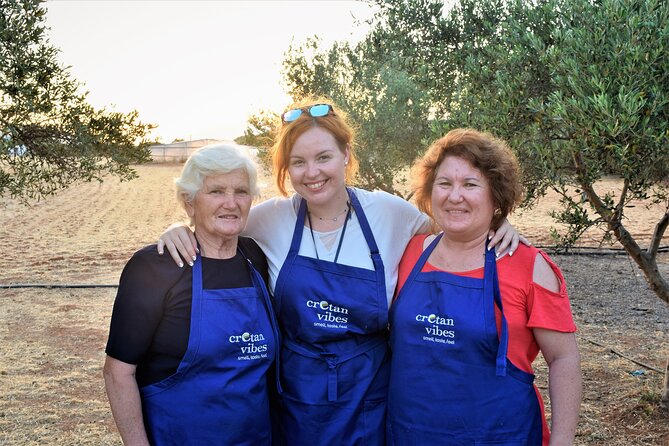
The best part of this four-hour Cretan cooking class is the setting: you cook beside olive trees in a family farm kitchen, then sit down with Marianna and her mother, Stella, to eat what you made. I like the fully hands-on format and the chance to learn how Cretans use olive oil, herbs, vegetables, cheese, and slow cooking in everyday food.
I also like the personal touches. Stella brings family recipes and homemade refreshments, while Marianna keeps the class organized and easy to follow. You can gather ingredients from the garden, watch a video of the family olive harvest, and take home recipes and packed leftovers. The main consideration is transport: private transportation is not included, so you need to arrange your own way to the farm.
Key points to know
- A real family kitchen: Marianna and her mother, Stella, lead the class, with family recipes and a warm welcome.
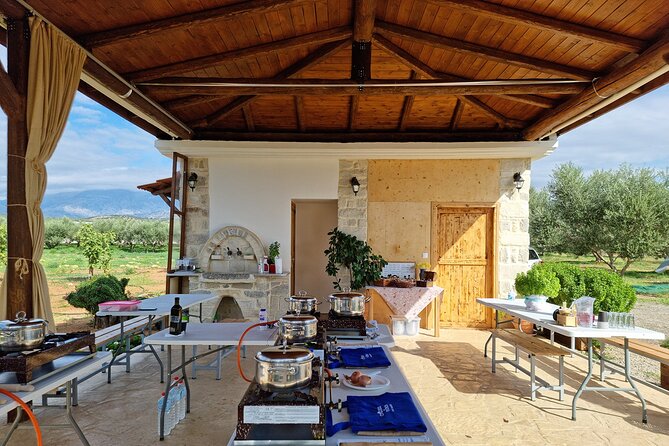
- Outdoor cooking among olive trees: The open-air kitchen and dining area make the setting part of the experience.
- Five Cretan dishes: You may prepare dishes such as dakos, stuffed grape leaves, zucchini flowers, lamb, beans, stifado, or sweet cheese pastries.
- Olive oil tasting included: Learn how to spot good extra virgin olive oil, recognize defects, and shop more wisely.
- Small-group feel: The maximum group size is 12, and some sessions are much smaller.
- A meal that keeps going: Local wine, homemade drinks, dessert, recipes, and leftovers are included in the $114.93 price.
Cooking with Marianna and Mama Stella
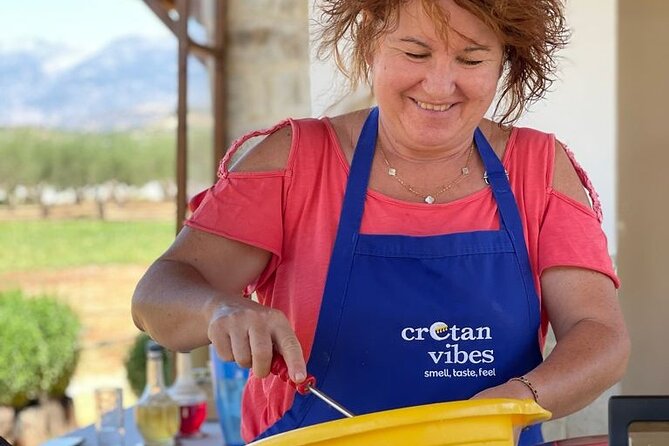
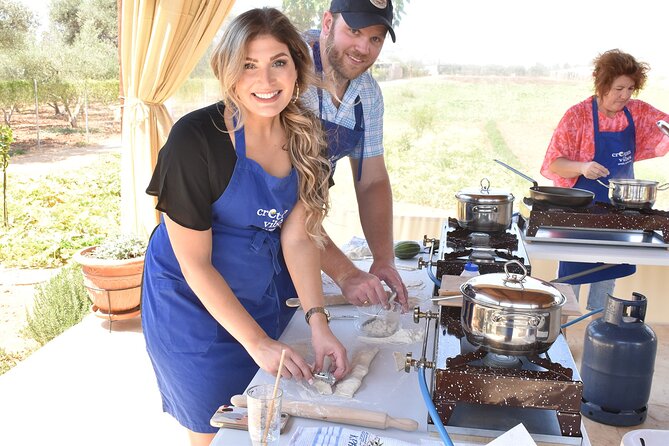
This is not a demonstration where you sit back and watch someone else chop onions. You receive an apron, ingredients, utensils, and your own place in the work. The goal is simple: prepare a full Cretan meal together, then eat it at the same farm where the ingredients were grown.
Marianna leads the class, while her mother, Stella, shares the family cooking methods. Their roles give the session a relaxed rhythm. You get clear instruction from Marianna and the feel of a family kitchen from Stella, who is closely tied to the recipes and homemade products.
The class is offered in English. You do not need serious cooking skills. The instruction is step by step, and the emphasis is on joining in rather than producing restaurant-perfect plates. That makes this a good choice for beginners, couples, families, and anyone who likes food but does not spend much time in the kitchen.
The atmosphere matters here. You are not simply learning how to make a dish. You are also learning why certain ingredients appear together, how Cretan families use what grows nearby, and how food becomes a social event rather than a task to finish quickly.
More Cretan cooking classes in Crete:
- Chania: Authentic Cooking Class in the White Mountains
★ 4.9 · 529 reviews - The Real Cretan Cooking Experience
★ 5.0 · 528 reviews - Chania Cooking Class-The Authentic Enjoy traditional Cretan meal
★ 5.0 · 339 reviews
A farm kitchen among Crete’s olive trees
The cooking takes place at Cretan Vibes, on the National Road near Moires in southern Crete. The cooking and dining area is open-air, modern, and clean, while still connected to the farm and olive trees around it.
Several details make the setting especially appealing. You may gather ingredients from the garden, see the family’s olive-growing operation, and watch a video showing the olive harvest. The property also has the kind of rural quiet that is hard to find in busy resort areas.
Timing can affect the feel of the class. Some sessions take place in the afternoon and run toward sunset, creating a particularly pleasant time to sit down for dinner. The outdoor setting also means weather matters. If poor weather forces a cancellation, you are offered another date or a full refund.
The rural location is also the chief practical drawback. Private transportation is not included, so check your route before booking. The meeting point is Cretan Vibes, Ethniki Odos, Moires 704 00. If you are staying near Heraklion, allow time to reach southern Crete and arrange your return.
Five dishes, prepared from the first cut
The exact menu can vary, but the class centers on five Cretan dishes and traditional methods. The menu offers a useful introduction to the island’s food because it covers crisp rusks, stuffed vegetables, slow-cooked meat, seasonal produce, cheese, herbs, and olive oil.
You might begin with dakos, one of Crete’s most recognizable foods. A barley rusk is topped with fresh tomato, Cretan mizithra cheese, oregano, and extra virgin olive oil. It is a simple dish, but it shows how much flavor can come from good produce and a few well-used ingredients.
Stuffed grape leaves, known as dolmadakia, give you a more hands-on task. You prepare the filling, place it in the leaves, and learn how to roll and cook them. Stuffed zucchini flowers offer another traditional technique, and their seasonal availability can make them feel like a special treat rather than a standard menu item.
For the main course, you may prepare a vegetarian or vegan version of giaxni, with green beans, potatoes, zucchini, tomato sauce, and ksinoxondros. This is a useful dish for understanding Cretan home cooking because vegetables are not treated as a side dish. They carry the meal, supported by olive oil, tomato, herbs, and a local grain product.
Meat dishes may include lamb with artichokes, potatoes, fennel, and tomato sauce, or lamb with stamnagathi, a local wild green. Other possible options include avgolemono with pork or free-range chicken, leek or lettuce, potatoes, dill, eggs, and lemon. Cretan stifado may be made with chicken, rabbit, or snails, depending on the menu and your willingness to try something less familiar.
The variety is a strength, but it also means you should not book expecting one fixed menu. The dishes may change with the season and available ingredients. That is a good thing for an authentic farm class, though it is worth asking about the planned menu if you have strong dietary preferences.
Seasonal produce and family-made cheese
Freshness is not just a selling point here. The class makes use of ingredients sourced from the farm, including vegetables and herbs when available. You may pick artichokes and learn how to prepare them, which connects the cooking lesson to the land around you.
Several recipes use cheese made by Stella’s family. Mizithra appears in savory dishes such as dakos and in desserts such as kalitsounia. This gives the meal a family signature that you will not get from a generic Greek cooking class using supermarket ingredients.
The farm setting also helps explain Cretan cooking better than a restaurant meal can. You see how seasonal vegetables, greens, olive oil, herbs, potatoes, and cheese work together. The food is not built around complicated equipment or hard-to-find ingredients. Much of its character comes from freshness and patient preparation.
More olive oil mills and tastings around Crete:
- Crete: Quad Safari, Olive Mill with Tasting & Ghost Village
★ 4.9 · 1,004 reviews - Knossos-Zeus Cave -Old Traditional Villages-Olive Oil Factory
★ 5.0 · 694 reviews - From Chania: Olive Oil, Wine, Cheese & Honey Tasting Tour
★ 4.6 · 490 reviews - Crete: Road-trip to Lasithi Plateau & Olive Mill Farm
★ 4.4 · 420 reviews
The olive oil tasting is more than a sample
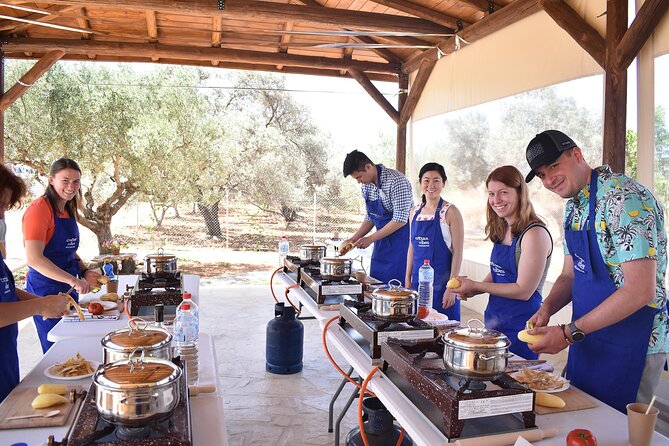
The olive oil portion adds real value to the class. Since this is an olive-growing family, the tasting is tied to the farm rather than added as a separate commercial stop.
You learn how to recognize authentic extra virgin olive oil, identify aromas and flavors, and understand the bitterness that can signal quality. You also learn how to detect defects in lower-quality oils and what to look for when buying olive oil at home.
That lesson can change how you shop. Many visitors know that extra virgin olive oil is preferable, but fewer know how to judge it by smell and taste. Here, the tasting gives you a practical reference point. You can compare what fresh, well-made oil should taste like with the flaws that suggest poor storage or lower quality.
The tasting also puts the cooking into context. Olive oil is not just the fat used to fry or dress a dish. It shapes the flavor of dakos, stuffed vegetables, beans, greens, and desserts. Once you taste a good oil on its own, you will understand why Cretan cooks use it so generously.
A long table and a very full meal
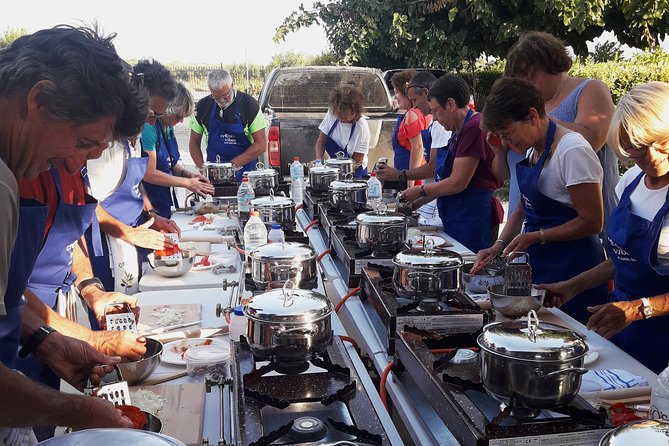
After the cooking, you sit down to eat the dishes you prepared. Local Cretan wine accompanies the meal, and coffee, tea, water, lemonade, and other homemade refreshments are provided.
The food is generous. The meal includes a full spread of starters, a main course, and dessert, although the exact combination depends on the class menu. Possible sweets include sarikopites or kalitsounia, pastries filled with fresh Cretan cheese and fried in the family’s extra virgin olive oil.
Do not plan a large dinner afterward. The portion sizes are substantial, and leftovers are packed for you to take away. That is a practical benefit, especially if you are continuing your trip or want a second taste the next day.
The shared meal is also where the class becomes most social. The group size can reach 12, but smaller groups are possible. One session had only two couples, while another included eight people ranging in age from 12 to 78. That range suggests the class can work well for mixed-age families, provided everyone is comfortable taking part in the kitchen.
Why the family approach works
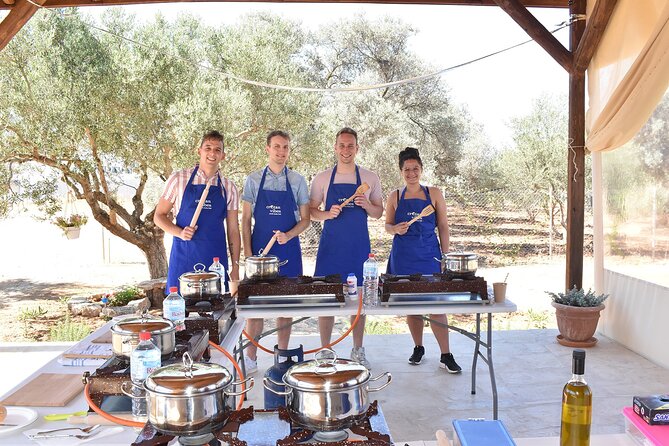
The most memorable part of this experience is likely to be the people. Marianna and Stella welcome participants into the cooking space as if they are joining a family gathering, while still keeping the class organized.
That balance is important. A class can be warm but chaotic, or polished but impersonal. Here, the format combines clear tasks with conversation, humor, and time to ask questions. You are encouraged to participate in every part of the meal, but you are not expected to know what you are doing before you arrive.
The family connection also reaches beyond Marianna and Stella. The experience includes contact with other family members, including a grandmother who helps explain the family’s cheese and recipes. Farm dogs and sunset views may add to the atmosphere, though the cooking and meal remain the main focus.
Dietary needs can be accommodated in some cases. A participant with a dietary restriction received careful attention and an alternative approach. Still, you should communicate any restriction before arriving rather than assume every menu can be changed at the last moment.
What the $114.93 price includes
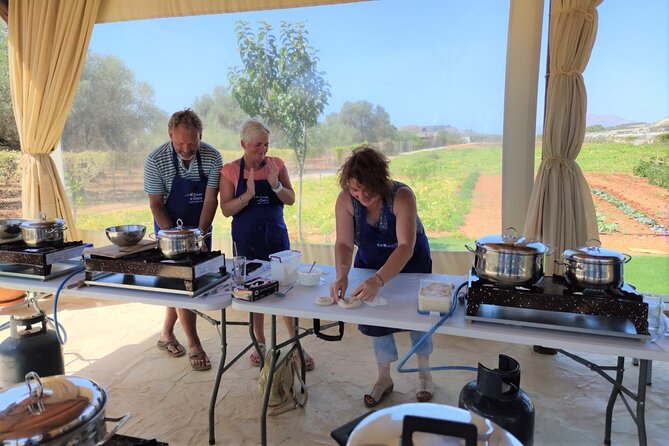
At $114.93 per person, this is not the cheapest food activity in Crete. It is also more than a short demonstration or a tasting with a few bites.
The price includes approximately four hours of instruction, all cooking ingredients, the full meal, local wine, homemade drinks, coffee or tea, premium olive oil tasting, and packed leftovers. You also receive recipes by email and photos of the experience afterward. Those extras make the cost easier to justify, particularly if you value a substantial meal and an activity that takes up much of an afternoon or evening.
The class also replaces several separate experiences. You get a farm visit, cooking lesson, meal, olive oil education, cultural conversation, and a chance to meet a local family in one booking. The value is strongest for people who want participation and personal contact, not just a quick taste of Cretan food.
If you mainly want to eat traditional dishes without cooking, a taverna will cost less and require less time. If you want to understand how the food is made and take the recipes home, this class offers more.
Who should book this Cretan cooking class
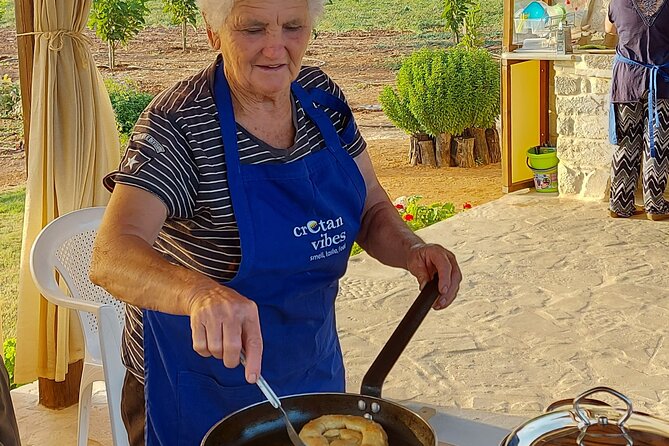
I would choose this experience if you like food, enjoy meeting local people, or want a quieter alternative to organized sightseeing. It is especially suitable for couples, families with older children, multigenerational groups, and solo visitors who enjoy joining a small social group.
It is also a good fit for beginners. The recipes are approachable, and the teaching style is patient. You do not need polished knife skills or a background in Greek cooking.
You may want to think twice if you dislike group activities, have severe dietary restrictions, or want a guaranteed fixed menu. The maximum group size is 12, the menu changes, and the rural setting requires you to handle your own transportation.
Book early if your schedule is tight. The experience is booked an average of 41 days ahead, which suggests that popular dates can fill well before arrival.
Should you book it?
Yes, if you want a personal food experience rather than a quick cooking demonstration. The combination of Marianna and Stella, the farm kitchen, seasonal ingredients, olive oil tasting, family recipes, and a full meal gives the class a clear sense of place.
I would be most likely to book it for an afternoon or evening when I had a car or a reliable transportation plan. Check the menu if you have dietary concerns, and leave room in your schedule for a long meal and leftovers. For a first taste of Cretan food culture near Moires, this is a thoughtful choice with strong value for the time and amount of food included.
FAQ
How long does the Cretan cooking class last?
The experience lasts approximately four hours.
Where does the activity begin and end?
It begins at Cretan Vibes, Ethniki Odos, Moires 704 00, Greece, and ends back at the same meeting point.
Is transportation included?
No. Private transportation is not included, so you need to arrange your own way to and from the meeting point.
How many people can join the class?
The activity has a maximum of 12 travelers. Smaller groups may be scheduled on some dates.
What food and drinks are included?
You receive a full meal after the class, local wine, water, coffee or tea, and homemade refreshments such as Mama Stella’s lemonade. Leftovers are packed for you to take with you.
Can I cancel for a full refund?
Yes. You can cancel at least 24 hours before the experience start time for a full refund. Changes or cancellations made less than 24 hours before the start time are not accepted for a refund. If poor weather or an insufficient number of participants causes cancellation, you are offered another date or a full refund.
More Cooking Classes in Crete
- Chania: Authentic Cooking Class
★ 5.0 · 74 reviews - Rethymno: Traditional Cooking Class in a Cretan Village
★ 5.0 · 58 reviews - Heraklion: Cretan Cooking Lesson with Lunch in Arolithos
★ 4.9 · 54 reviews - Chrysoula’s Traditional Cretan Home Cooking
★ 5.0 · 38 reviews
More Workshops in Crete
- Heraklion: Beginner Scuba Diving Lesson with PADI Instructor
★ 4.9 · 355 reviews - Full-Day Jeep Safari Tour with Cooking Lesson
★ 5.0 · 284 reviews - Moires: Cooking Class and Olive Oil Tasting at a Family Farm
★ 5.0 · 93 reviews - Crete: Sightseeing Day Trip with Cooking Lesson and Lunch
★ 4.8 · 77 reviews
Newest Crete write-ups
- Heraklion – Walking city tour with food tasting★ 4.5 · 25 reviews
- Private Full-Day Elafonisi★ 5.0 · 4 reviews
- Mirabello Luxuries with Spinalonga & Agios Nikolaos from Iraklion★ 4.5 · 7 reviews
- Cretan Flavors – Cooking Lessons and Wine Olive Oil Tasting★ 5.0 · 9 reviews
- Private Trekking Rouvas Gorge★ 4.5 · 4 reviews
- Ecobike All inclusive – 2 Day tour – Discover the real Crete★ 5.0 · 4 reviews
- Truffle Hunting, Culinary & Wine Celebration from Heraklion★ 5.0 · 6 reviews
- Secrets of West Crete & Rethymno Town Private Tour from Heraklion★ 5.0 · 9 reviews
Crete Olive Oil Tours, compared.


Zeus Cave -Old Traditional Villages-Olive Oil Factory
Read our review →

Zeus Cave, Lassithi Plateau, Olive Oil Factory, Kritza, Pottery
Read our review →

Knossos, Lasithi, Lasinthos and Olive Farm Combo Tour
Read our review →
Browse the lists this tour appears in