
Reviewed · CRETE FOOD TASTING TOURS
Food Odyssey, A Historical Culinary Tour of Chania
Chania’s food story comes alive one bite at a time on this four-hour walk. You’ll move from handmade cheese and Byzantine-style bread to bougatsa, Greek coffee, Cretan pies, and a final taverna meal, with the city’s Venetian and Ottoman quarters providing the backdrop. Mariana, an archaeological culinary historian, ties each taste to a different chapter of Crete’s past.
I like the small group limit of eight, which keeps the experience personal, and I like that you visit working food shops and local eateries rather than simply hearing a lecture in the street. The main consideration is the price, about $125.77 per person, though the included tastings, breakfast, lunch, and specialist guide make it easier to judge as a full half-day experience rather than a simple walking tour.
- Ancient recipes on the plate: Taste handmade cheese, Byzantine-style bread, kalitsounia, and other foods linked to older Cretan traditions.
- Bougatsa at its source: Visit a bougatsa factory before eating the city’s famous cheesy or milky pastry.
- Greek coffee with context: Learn how coffee and savory snacks fit into Cretan social life at Chania’s Central Market.
- Two historic quarters: Venetian trade and Ottoman food customs become part of the walk through Chania.
- A real closing meal: Finish at a local taverna with traditional Cretan dishes and a short lesson on ancient cooking.
- Bring your appetite: The morning tastings add up quickly, and breakfast is not something you need beforehand.
Why this four-hour food walk works
This is not just a food sampling outing. It is a walking lesson in how Chania ate, traded, cooked, and adapted over time.
At the start, you meet at 10 a.m. in front of Chania Town Hall, at Kidonias 29. From there, the route leads toward a local coffee shop and then through several central parts of the city. The walking is tied closely to the food, so you are not simply stopping for snacks at random.
Mariana brings an unusual specialty to the experience. Her background as an archaeological culinary historian allows her to explain food through old recipes, trade routes, occupation, religious traditions, and local ingredients. That matters in Crete, where a simple pie or drink can reveal links to Byzantine, Venetian, Ottoman, and older Greek customs.
I also like the scale. With no more than eight people, you can ask questions without shouting across a crowd. The format should suit you if you prefer a thoughtful food walk over a large bus tour or a quick list of restaurant stops.
Starting with Cretan staples at Chania Town Hall
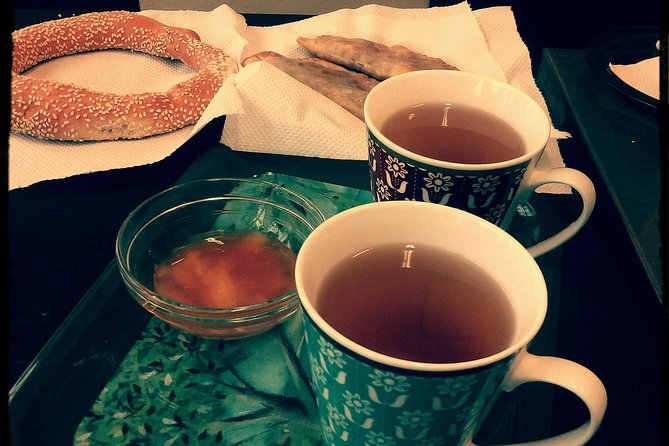
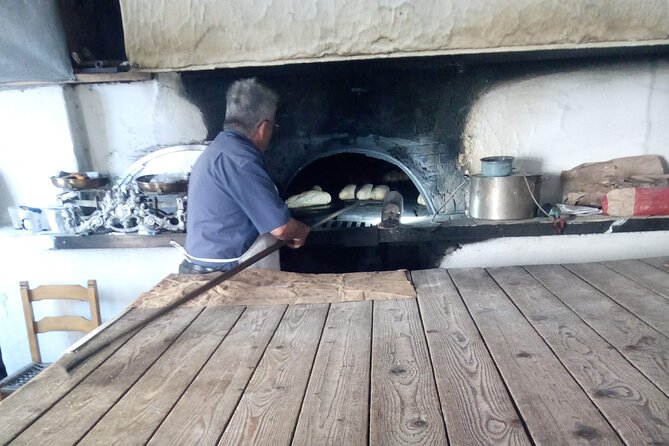
The first food stop introduces the ingredients that shape everyday Cretan cooking. You taste olives, handmade cheese, homemade bread prepared in a Byzantine-style method, and herbal tea served in the Cretan manner.
The guide also explains the herbs and wild greens used in local dishes. This is a useful beginning because it gives you a way to read the foods that appear later in the morning. Cretan cooking often makes strong use of what grows locally, and the herbs and greens help explain why the cuisine can taste fresh and earthy without relying on elaborate sauces.
You then try kalitsounia, the small Cretan pies filled with cheese, wild greens, or both. They can be savory, and their compact size makes them easy to sample alongside other foods. The stop lasts about 40 minutes, so it is long enough for explanation and tasting rather than a quick handoff of food.
A practical warning: this is already a substantial start. The tour includes breakfast, and the opening stop functions as a proper morning meal. I would not schedule a full breakfast before meeting the group.
More Food Tasting Tours in Chania
- Chania: Old Town Highlights Guided Tour with Street Food
★ 4.9 · 407 reviews - Walking “Food tasting tour” in the town of Chania
★ 5.0 · 297 reviews - The Delicious Chania Street Food Tour
★ 5.0 · 138 reviews
Bougatsa and the Ottoman chapter
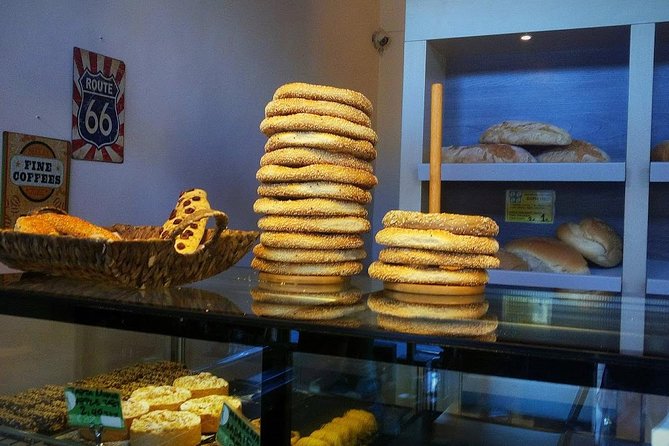
The next stop shifts from broad Cretan ingredients to one of Chania’s most recognizable pastries. You visit a bougatsa factory and then taste the pastry itself.
Bougatsa is a thin pastry filled with a cheesy or milky mixture. The guide explains the skill involved in making it and connects the dish with food consumption during the Ottoman occupation of Crete. That historical link gives the pastry more meaning than it would have if you simply bought one from a bakery.
The visit lasts about 30 minutes. You should expect a focused stop rather than a long cooking class. The factory setting is useful because you get a look at the production side of the food, while the tasting lets you judge the texture and filling for yourself.
The range of pastries is one of the best parts of the morning. You are not limited to one sweet sample. The experience includes savory and sweet morning foods, and the contrast helps you understand how Cretans use pastry for more than dessert.
Chania’s Central Market and Greek coffee
The Central Market adds a visual break from the sit-down tastings. Inside, you encounter stalls and displays filled with cheese, cured meat, fish, vegetables, bread, rusks, pies, olive oil, and honey.
This is where I find the tour especially useful for first-time visitors. A market can be hard to read on your own. You may recognize olives and bread but miss the importance of rusks, local cheeses, or the different uses of olive oil. With Mariana explaining what you are seeing, the market becomes a lesson in the basic pantry of Crete.
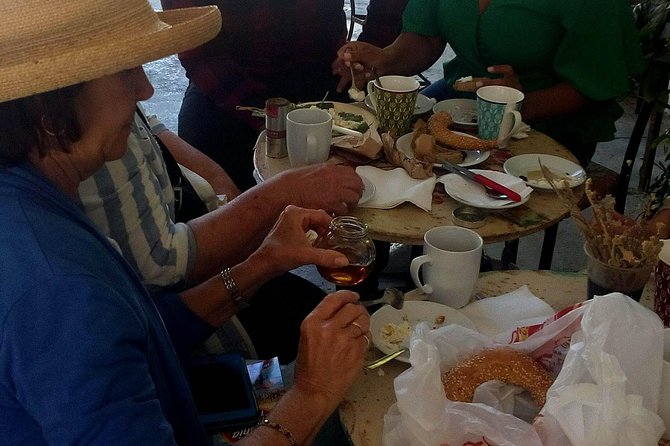
You sample some of the products before visiting a coffee shop within the market. There, you taste Greek coffee and learn about savory accompaniments that were popular in the 19th and early 20th centuries.
Greek coffee is not simply a caffeine stop here. It is tied to social habits and daily routines, and the accompanying foods show how coffee breaks once worked as small meals. If you already know Greek coffee, this gives you historical context. If you have never tried it, the market stop is a low-pressure way to do so.
The market portion lasts about 30 minutes. It is worth remembering that markets can be active places, and the group will be moving through working commercial spaces rather than a quiet museum. Stay close to the guide and wear shoes that are comfortable for standing and walking.
A quick look at phyllo making
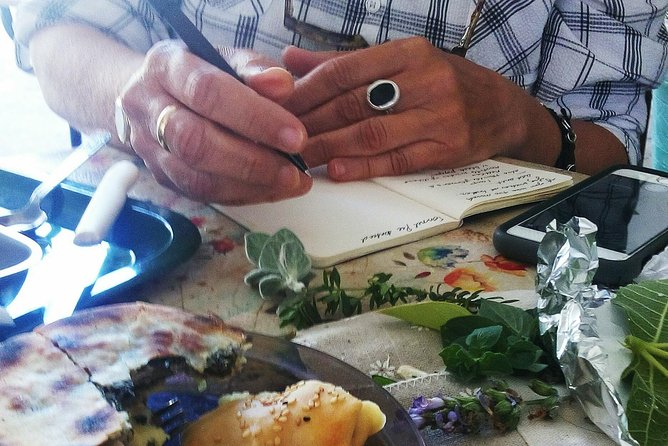
The route includes a short visit to a phyllo factory. At about 10 minutes, this is the briefest stop, but it fills an important gap in the food story.
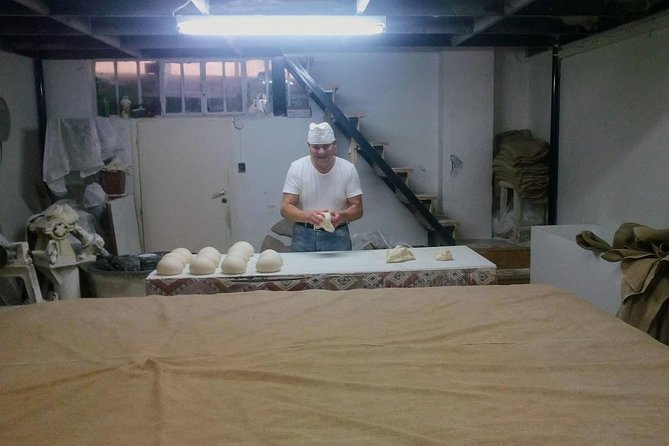
Phyllo appears in several pastries associated with the tour, including bougatsa and other pies. Seeing the production setting helps you connect the crisp pastry on your plate with the work behind it. Do not expect a long demonstration or a hands-on baking lesson. Think of this as a short behind-the-scenes look that keeps the walking route moving.
The visit also helps explain why pastry-making is treated as a skilled craft. Thin dough demands care, and the tour gives you a chance to see that this food is not just a packaged item at the end of a counter.
More Crete food tastings:
- Crete: Full-Day Cretan Wines, Olive Oil, Raki and Food Tour
★ 5.0 · 264 reviews - Heraklion: Food Tastings Walking Tour
★ 5.0 · 136 reviews - Heraklion: Cretan Wine Tasting Tour & Gourmet Lunch
★ 5.0 · 109 reviews - Rethymno Old Town: A Traditional Cretan Food Tour
★ 4.9 · 103 reviews
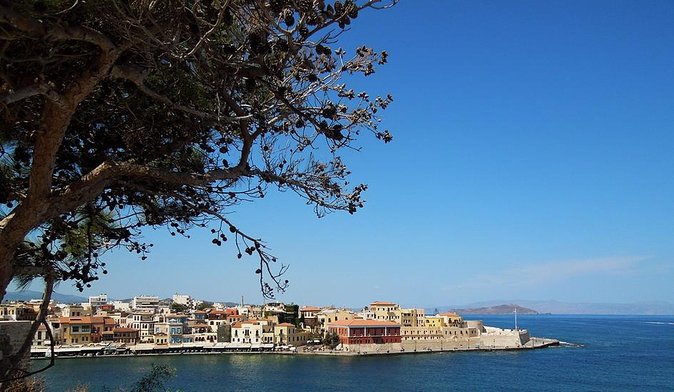
Venetian trade around the Old Harbor
From the market area, the walk continues through the Venetian section of Chania toward the Old Venetian Harbor. Here the guide shifts from ingredients and cooking methods to trade and food policy.
The Venetian period affected what moved through the city and how food security was managed. You learn how trade shaped Cretan gastronomy, including the flow of goods and the pressures that could affect local supplies. This is a valuable part of the experience because it connects food with power. What people ate was influenced not only by what farmers grew, but also by who controlled ports, markets, and trade routes.
The stop includes a short multi-sensory food experience. The supplied details do not specify every element, so you should expect a guided sensory activity rather than a full meal at this point.
You also visit a Cretan knife maker. This adds a craft element to the food walk and shows that the meal involves more than ingredients. Tools, preparation, and local workmanship all belong to the culinary story.
The Venetian Harbor section lasts about 40 minutes. The route is scenic, but its main value is the explanation of how the port shaped the food culture you have been tasting.
Almond drink beneath the plane tree
The next section leads into Splantzia, the former Ottoman part of Chania. Under the shade of a plane tree in Splantzia Square, you taste an almond beverage with Byzantine roots.
This is one of the most distinctive tastings of the morning. It moves beyond the familiar Greek foods many visitors already know and introduces beverages made from flowers and nuts. The drink also creates a direct link between Byzantine traditions and later Cretan food customs.
The stop lasts about 30 minutes, giving the guide time to explain the ingredients and their place in older food traditions. The shaded setting should make this a pleasant pause during the walk, especially in warm weather, though the tour remains subject to suitable conditions.
You finish this part of the route knowing that local drinks are not limited to wine, coffee, or strong spirits. Almonds, flowers, herbs, and nuts have all played a role in the region’s cooking.
Ending with a taverna meal in Splantzia
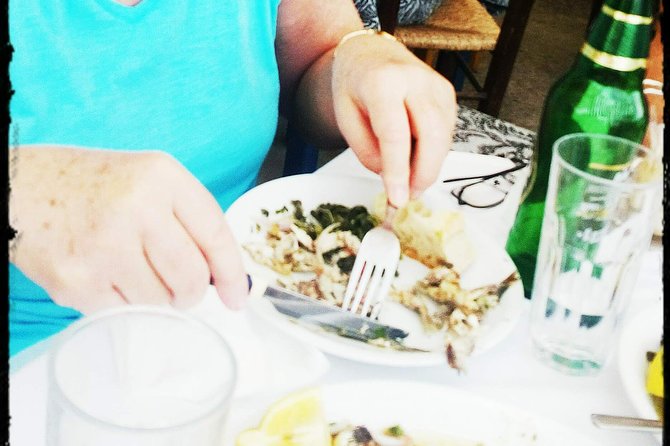
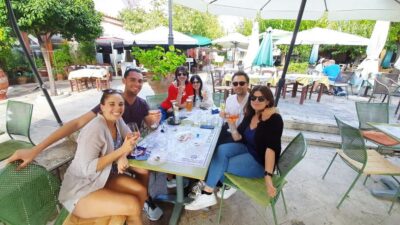
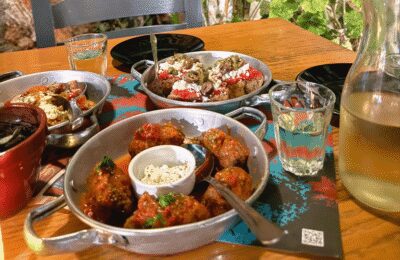
The final stop is a local taverna in Splantzia. Here you receive a short lesson on ancient cooking and eat a selection of traditional and historic Cretan dishes.
This is more than a token snack at the end. Lunch is included, and the taverna gives you the chance to sit down after several walking and tasting stops. The meal also brings the morning’s themes together: local ingredients, old cooking methods, regional dishes, and the ways different cultures influenced Crete.
The exact dishes can change, since food tastings are subject to change without notice. That flexibility is sensible for a food tour, especially when local supplies and seasonal ingredients affect what is available. It also means you should book this for the overall food education rather than for one specific dish.
Alcohol is not included, though you can purchase alcoholic drinks. If you want wine or another drink with lunch, budget for it separately.
What the $125.77 price includes
At about $125.77 per person, this is not a budget food crawl. The price makes more sense when you count everything included:
- A four-hour guided walk
- A specialist food historian
- A small group of no more than eight people
- Breakfast-style tastings
- A wide range of local delicacies
- Historic foods and drinks
- A final meal
- A multi-sensory food experience
- Visits to food businesses and a local taverna
I would compare it with the cost of arranging several separate meals, tastings, and a private history walk. You would also lose the connections between the foods if you visited the shops without a guide.
The value is strongest for someone who wants interpretation along with eating. If your goal is simply to grab a pastry and coffee, the price will feel high. If you want a full morning of food, history, and local context in a small group, it is easier to justify.
Group discounts may be available, which could help if you are booking with family or friends. Hotel pickup and drop-off are not included, so plan your own way to the meeting point and from Splantzia Square at the end.
Who should book this Chania experience
I would recommend this walk to you if you enjoy food with a story. It suits first-time visitors who want an introduction to Cretan cooking, as well as returning visitors who want to understand the city beyond the harbor views.
It is especially useful for:
- People who enjoy markets, bakeries, and small local food businesses
- History-minded eaters interested in Byzantine, Venetian, Ottoman, and ancient influences
- Couples or small groups who prefer a personal guide
- Visitors who want breakfast and lunch combined in one half-day activity
- Vegetarians, provided the request is made when booking
- Anyone willing to try foods beyond the usual Greek restaurant menu
Children must be accompanied by an adult. Most people can take part, and service animals are allowed. You should wear casual clothes and comfortable shoes, since the route combines walking, standing, market visits, and food stops.
Tell the provider about allergies or other food restrictions when you book. Vegetarian food is available with advance notice, but the menu can change, so do not assume every restriction can be handled on the day.
What to know before you go
Arrive hungry. The morning includes bread, cheese, olives, kalitsounia, bougatsa, market samples, coffee, and a later meal. Eating lightly beforehand is the best way to enjoy the full range.
Plan on roughly four hours, but allow a little flexibility in your day. The tour moves between food businesses, historic streets, the market, the harbor, and Splantzia, so the pace is not that of a restaurant meal.
The experience is offered in English. Confirmation is sent within 48 hours of booking, subject to availability. It is commonly booked well ahead, with an average booking lead time of about 18 days, so I would not leave it until the last morning if this is important to your plans.
Free cancellation is available up to 24 hours before the start time. Changes or cancellations inside that window are not accepted for a refund. Bad weather can also affect the walk, but a canceled outing due to weather comes with the choice of another date or a full refund.
Should you book it?
Book this experience if you want Chania explained through what people grow, bake, trade, drink, and serve. The strongest features are Mariana’s archaeological food background, the small group, the mix of working food stops and historic neighborhoods, and the substantial meal at the end.
Skip it if you want a short, inexpensive tasting or if you dislike eating several courses in the morning. At $125.77, the tour asks you to pay for expertise and a full four-hour program, not just samples.
For most food-curious visitors, I think the combination is worthwhile. You leave with more than a list of Cretan dishes. You understand why those dishes exist, how outside cultures changed them, and where they fit into daily life in Chania.
FAQ
How long does the Food Odyssey tour last?
The experience lasts approximately four hours. It begins at 10 a.m.
Where does the tour start and end?
The tour starts at Kidonias 29 in Chania, with the meeting point described as in front of Chania Town Hall. It ends at the Platanos of Splantzias in Splantzia Square.
What food and drinks are included?
Included tastings can include olives, handmade cheese, homemade bread, herbal tea, kalitsounia, bougatsa, Greek coffee, market products, an almond beverage, and a final traditional Cretan meal. Tastings can change without notice.
Is a vegetarian option available?
Yes. A vegetarian option is available, but you should request it when booking. You should also provide details about allergies or other food restrictions in advance.
How large is the group?
The experience has a maximum of eight people per booking and a maximum of eight travelers overall.
Can I cancel for a refund?
Yes. You can cancel at least 24 hours before the local start time for a full refund. Cancellations or changes made less than 24 hours before the start time are not refunded.
More Food Tasting Tours in Crete
- Chania Food Stories Half-Day Tour inc. tastings & drinks
★ 5.0 · 92 reviews - Sunset Craft Beer & Food Tour – Chania Old Port
★ 5.0 · 86 reviews - Chania: Wine, Food, and Sunset Tour with 3-Course Dinner
★ 4.9 · 77 reviews - Chania Walking Food Tours Crete with a local!
★ 4.5 · 61 reviews
More Ancient Sites in Crete
- From Heraklion: Historical Center City Tour & Knossos Palace
★ 4.4 · 340 reviews - Richtis Waterfall, History, Azoria, OliveTasting, NorthCoast
★ 5.0 · 83 reviews - From Chania: Crete World War II History Tour
★ 4.9 · 65 reviews - Heraklion Highlights: Knossos, Museum & Historic City Drive
★ 5.0 · 64 reviews
Newest Crete write-ups
- Heraklion – Walking city tour with food tasting★ 4.5 · 25 reviews
- Private Full-Day Elafonisi★ 5.0 · 4 reviews
- Mirabello Luxuries with Spinalonga & Agios Nikolaos from Iraklion★ 4.5 · 7 reviews
- Cretan Flavors – Cooking Lessons and Wine Olive Oil Tasting★ 5.0 · 9 reviews
- Private Trekking Rouvas Gorge★ 4.5 · 4 reviews
- Ecobike All inclusive – 2 Day tour – Discover the real Crete★ 5.0 · 4 reviews
- Truffle Hunting, Culinary & Wine Celebration from Heraklion★ 5.0 · 6 reviews
- Secrets of West Crete & Rethymno Town Private Tour from Heraklion★ 5.0 · 9 reviews
Crete Food Tasting Tours, compared.

Old Town Highlights Guided Tour with Street Food
Read our review →
Walking “Food tasting tour” in the town of Chania
Read our review →
Full-Day Cretan Wines, Olive Oil, Raki and Food Tour
Read our review →
Rethymno Old Town: A Traditional Cretan Food Tour
Read our review →
Chania Food Stories Half-Day Tour inc. tastings & drinks
Read our review →Browse the lists this tour appears in