
Reviewed · CRETE POTTERY WORKSHOPS
Crete: Cretan Culture Tour and Pottery Workshop
Crete’s inland story comes together nicely on this day out: Arkadi Monastery, ancient Eleftherna, village pottery, olive oil, and Melidoni Cave. You move from religious history to ancient archaeology, then into working traditions that still shape daily life.
I like the mix of major sights and small-scale activities, especially the pottery stop in Margarites and the olive oil tasting. I also like the modest $40 price for transport and a full day of sightseeing. The main caution is important: the pottery activity has sometimes been a demonstration rather than a chance to make your own ceramic.
Key points to know
- Arkadi Monastery: See Crete’s most important monastery, its museum, icons, relics, and weapons, with about an hour to explore.
- Ancient Eleftherna: Visit Crete’s first archaeological site museum, covering a long span from 3000 B.C. to 1300 A.D.
- Margarites pottery: Learn about a village craft with generations of local tradition, but confirm if hands-on work is operating on your date.
- Olive oil tasting: See older and newer production methods, then sample Cretan olive oil.
- Melidoni Cave: Finish among stalactites and stalagmites in a cave once used for religious ceremonies.
- Practical value: Transportation, guiding, pottery-related activities, and tasting are included, but the three main entrance fees cost an additional €10 per person.
A full day beyond Rethymno
This is a broad introduction to central Crete rather than a single-site excursion. You leave your accommodation in Rethymno and spend the day moving through inland villages, archaeological sites, a monastery, a workshop, an olive oil facility, and a cave.
That variety is the tour’s biggest strength. You get more than pretty views from a vehicle window. The day explains how Crete’s religious past, ancient settlements, pottery, and olive farming connect. It is a useful choice if you have limited time and want someone else to handle the driving between scattered places.
The pace is fairly full. You should expect a day of getting in and out of transportation, walking around historic sites, listening to explanations, and fitting in lunch during free time in Margarites. It is not designed for lingering at one attraction for hours.
The tour is conducted in English, although Nicolas, one of the guides associated with the experience, has also led tours in French and other languages. A French-language tour was particularly helpful for one French-speaking participant. If your language needs are important, check what is available before reserving.
More pottery workshops in Crete:
- Zeus Cave, Lassithi Plateau, Olive Oil Factory, Kritza, Pottery
★ 5.0 · 362 reviews - Crete:Zeus & Lassithi Plateau, OliveTasting, Kritza, Pottery
★ 4.8 · 259 reviews - Koumoulia Ceramics / Ceramics courses
★ 4.5 · 33 reviews
Arkadi Monastery: the emotional center of the day
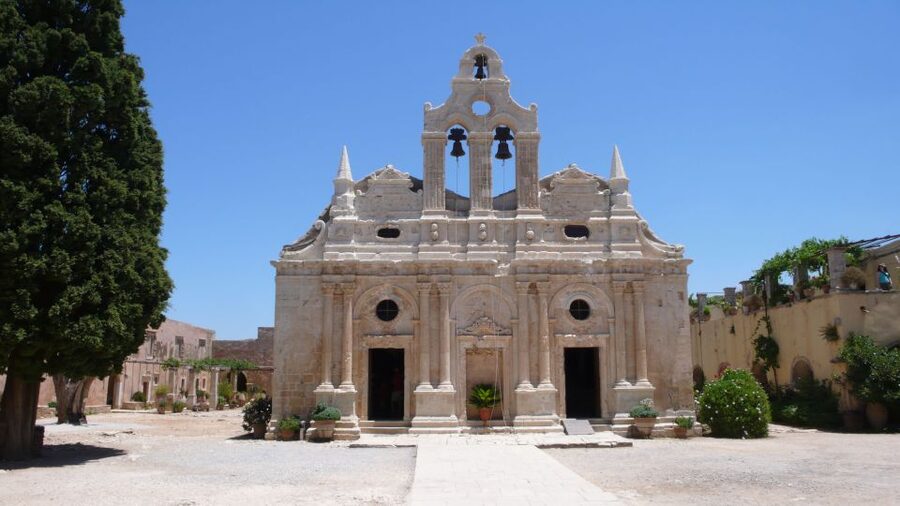
The first major stop is the Monastery of Arkadi, widely regarded here as Crete’s most important monastery. The visit includes the museum, where icons, monastic objects, and weapons help explain the site’s religious and military past.
You have about an hour of free time. That gives you room to look around without being rushed from one room to the next, though it is not an unlimited visit. I would use the first few minutes to orient yourself, then spend time with the museum objects before walking through the monastery grounds.
Arkadi is more than an attractive religious building. Its importance comes from the role it played in Cretan resistance and local memory. The weapons and other objects make that story more concrete than a short spoken explanation alone. Even if you are not especially interested in church architecture, the monastery gives the day emotional weight.
This is also where the tour feels most polished. The setting is historic, the museum adds substance, and the free time lets you explore at your own speed. Bring modest clothing suitable for a religious site, and wear shoes that are comfortable for walking.
Entrance is not included. Budget €3 per person for the monastery. That is a small extra cost, but it is worth adding to your calculation because the tour price does not cover any of the three main site admissions.
Ancient Eleftherna and the long Cretan timeline
Next comes the Museum of Ancient Eleftherna, connected with the ancient settlement of Eleftherna. The museum covers an unusually long period, from 3000 B.C. to 1300 A.D., and presents material connected with the era associated with Homer as well as later stages of Cretan history.
The museum is described as the first archaeological site museum in Crete. That makes it a meaningful stop for anyone who wants context rather than isolated ruins. You are not simply looking at old stones. The displays help place the area within thousands of years of settlement and cultural change.
Still, manage your expectations. This is not a huge museum with endless galleries. One Danish participant found it small and not worth its admission price. I can see why the stop may divide opinion, especially if your main interest is dramatic architecture or large collections.
For you, the value depends on how much you enjoy archaeology. If ancient Crete interests you, the museum adds useful background to the rest of the day. If you prefer active experiences, the pottery workshop and cave will probably be more memorable.
The museum entrance costs €4 per person and is extra. Since the visit is one part of a packed day, ask your guide how much time you have and focus on the displays that interest you most.
Margarites pottery and the hands-on question
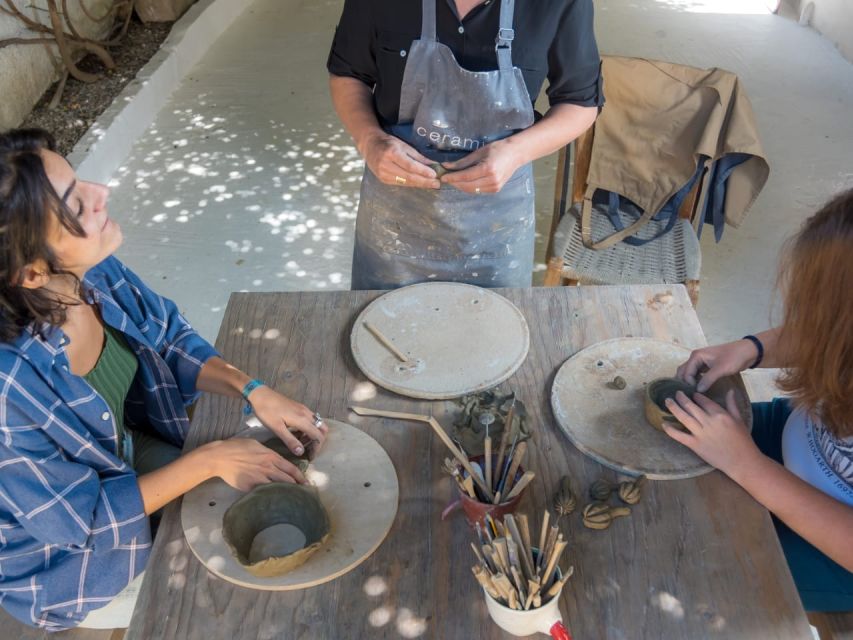
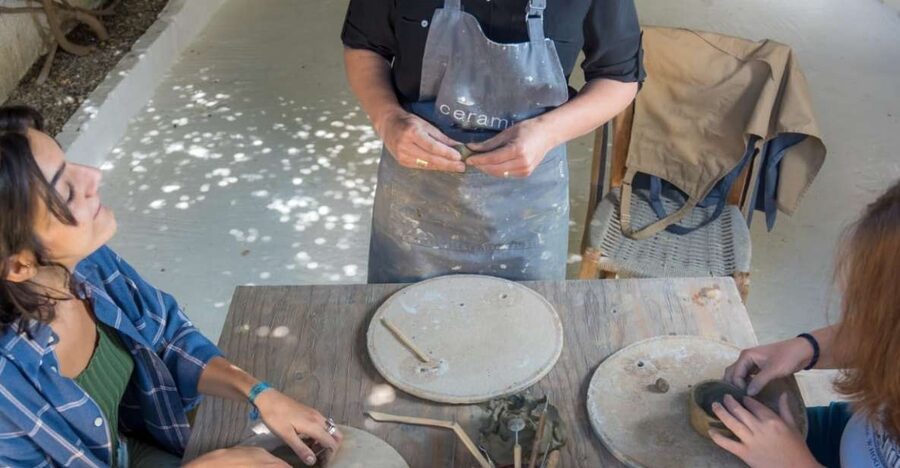
The village of Margarites is known for its pottery tradition, which has been passed through generations. The tour visits the Tsikalario pottery workshop, where you learn how local ceramics are made and are meant to have an opportunity to create your own piece.
This is one of the most appealing parts of the day because it gives you something to do, not just something to see. Pottery also connects neatly with the village itself. You learn about a local craft in the place where that craft remains part of the community’s identity.
But this is the point where you should read the wording carefully. At least two participants found that the pottery stop was a demonstration only, with no chance to make a ceramic. That is a real difference, especially if you are booking the experience for children or choosing it because you want a creative activity.
I would confirm the format before paying. Ask if the workshop includes actual hands-on pottery on your date, or if it is a demonstration of the process. Conditions may vary, but you should not assume that making a piece is guaranteed.
Even as a demonstration, the stop can still be worthwhile. The craft has a clear local connection, and watching a pot take shape gives you a better sense of the skill involved. Just adjust your expectations and do not promise children a pottery lesson unless the provider confirms it.
After the workshop, you have free time in Margarites. This is your chance to walk around the village or find lunch. The tour information does not include lunch, so plan to pay separately. Free time is useful here because it gives the day a breathing space between the museum and the afternoon stops.
More hands-on workshops in Crete:
- Chania: Authentic Cooking Class in the White Mountains
★ 4.9 · 529 reviews - Heraklion: Beginner Scuba Diving Lesson with PADI Instructor
★ 4.9 · 355 reviews - Chania Cooking Class-The Authentic Enjoy traditional Cretan meal
★ 5.0 · 339 reviews - Full-Day Jeep Safari Tour with Cooking Lesson
★ 5.0 · 284 reviews
Olive oil, from old methods to a small tasting
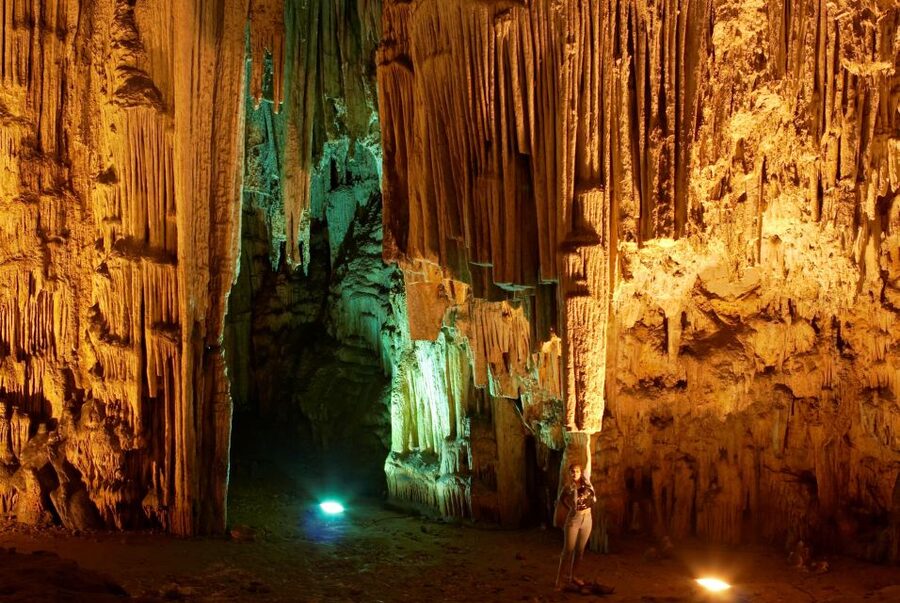
The olive oil visit adds one of Crete’s most recognizable foods to the program. At the olive oil manufactory, you learn how Cretan people produced oil in the past and how the process has changed over time.
The historical comparison is the point. You see the evolution from older methods toward modern production, then take part in an olive oil tasting. That makes this more useful than simply buying a bottle in a shop, since you get some background before sampling the product.
Keep the tasting modest in scale. One participant found that the facility was not operating during the visit and that the tasting amounted to bread with oil. The description of a manufactory should not lead you to expect a full production tour with active machinery every time.
Even so, olive oil is a practical way into Cretan food culture. You can pay attention to the taste and texture, then ask questions about how the oil is made and used. If you want a detailed technical lesson on olive cultivation or pressing, this may feel brief. If you want a simple introduction during a wider sightseeing day, it fits well.
The stop works best when you treat it as a short cultural visit, not a stand-alone tasting session. You may also find products available for purchase, but that is not specified, so do not count on shopping as part of the experience.
Melidoni Cave and the final change of scene
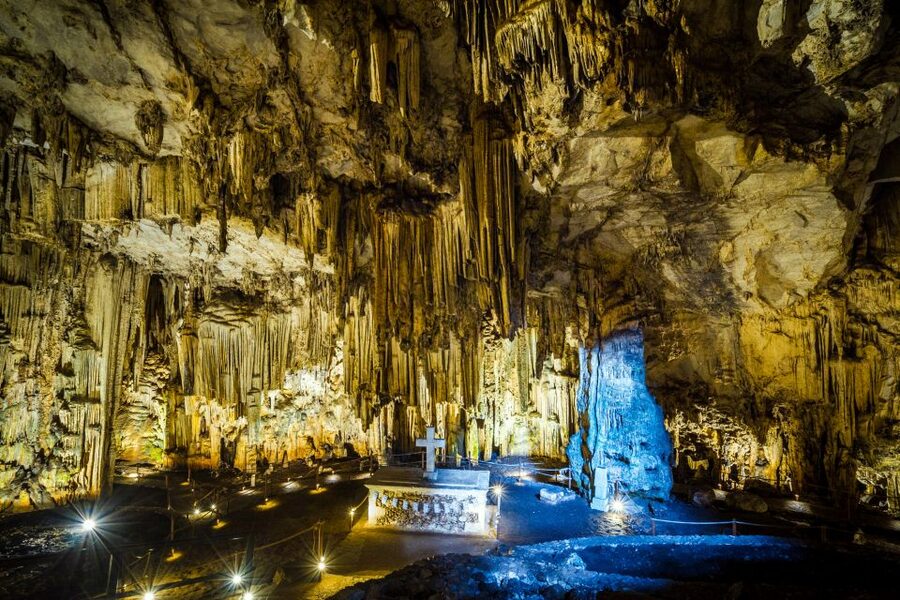
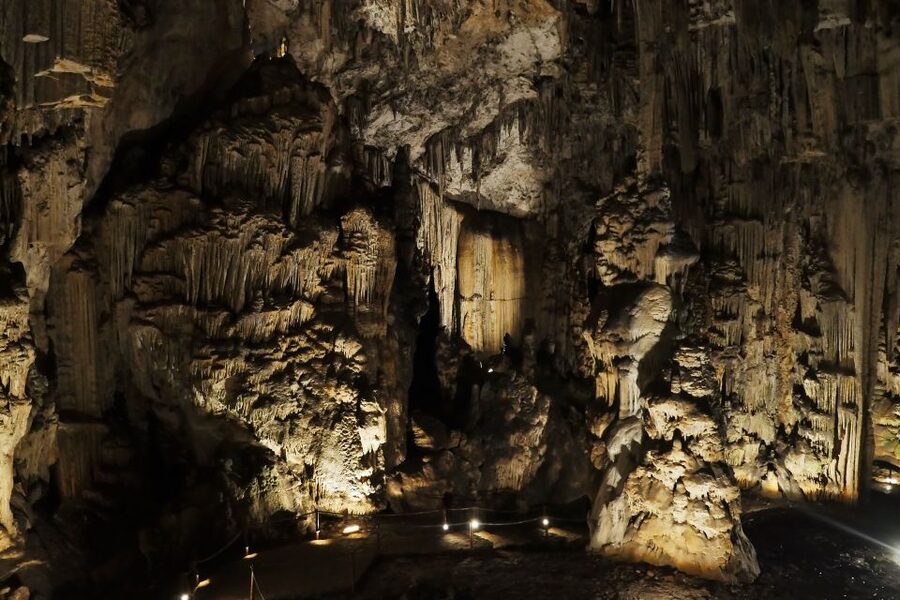
The final attraction is Melidoni Cave, also called Gerodospilios. At an altitude of about 220 meters, the cave contains stalactites and stalagmites and has been used for religious ceremonies and worship.
After open village streets and monastery courtyards, the cave gives the day a strong change of mood. You move underground into a place shaped by geology and human belief. The guide explains its archaeological and historical importance, so the visit is not limited to looking at rock formations.
The cave entrance costs €3 per person. Add that to the €3 Arkadi fee and €4 Eleftherna fee, and you have €10 in required admissions beyond the advertised tour price.
You should be ready for an underground visit with walking. The supplied information does not give details about steps, access conditions, or the length of the cave visit, so ask the operator if mobility is a concern. The cave is not simply a scenic photo stop. Its religious use and archaeological role are central to the experience.
Melidoni is a fitting final stop because it brings together the day’s two main ideas: Crete’s natural features and its human past. You finish with something visually different from the monastery and museum, then return to Rethymno.
What the $40 price really covers
At $40 per person, this is strong value if you want a full day of transport and several stops without arranging a rental car. The price includes the guided tour, transportation, olive oil tasting, and the pottery-related opportunity.
The extra admissions are reasonable but should be included in your budget. Add €10 per person for Arkadi Monastery, the Eleftherna Museum, and Melidoni Cave. Lunch in Margarites is also not included.
The price works because you are buying access to a broad route rather than a long, specialized workshop. You get the convenience of pickup from your Rethymno accommodation or a nearby point, plus a guide who gives the places a shared story.
The value drops if your main goal is guaranteed pottery making or an in-depth olive oil lesson. In that case, check the exact format before booking. If your goal is to see several parts of Crete in one day, the balance is much better.
Transport, pickup, and the realities of a long day
Pickup is arranged from your hotel or a point close to your hotel. The exact pickup time and location arrive with your voucher one day before departure. That late confirmation can be inconvenient, so keep your email handy and check the voucher site using your booking reference if needed.
The vehicle includes air conditioning, but one family found it too cold. Bring a light layer even in warm weather. Another issue involved a toilet that could not be used, so do not assume the vehicle has a working onboard bathroom. Use facilities at stops when possible.
A child seat was available for one family, but the guide was not initially aware that two small children were joining the tour despite the booking information. If you are bringing young children, confirm the number and ages directly with the operator before departure.
These are not reasons to reject the tour, but they are useful reminders that communication matters on a full-day group outing. Send any special requests clearly, then repeat them when the pickup details arrive.
Who will enjoy this Cretan day out?
I would recommend this experience to you if you want a well-rounded first look at inland Crete and prefer guided transport over driving unfamiliar roads. The combination of monastery, archaeology, village craft, food culture, and geology gives you a lot in one day.
It is especially suitable for:
- First-time visitors based in Rethymno
- People interested in Cretan history and local traditions
- Families who want a mix of sightseeing and hands-on activity
- French speakers if a French-speaking guide is confirmed
- Anyone comparing low-cost day tours that include transport
I would be more cautious if you want a slow, quiet day or a serious pottery class. The schedule covers several different places, and the pottery may be a demonstration. You may also find the Eleftherna Museum too small for the extra fee if archaeology is not a priority.
The tour received an overall rating of 4.4 from 18 ratings, with especially strong praise for the scenery, the monastery, the range of stops, and Nicolas’s friendly guiding. A few lower scores focused on the small museum, the limited olive oil presentation, and the gap between the promised pottery activity and what was delivered.
Should you book this tour?
Book it if you want variety, value, and an easy way to reach several inland sights from Rethymno. The monastery is the strongest historical stop, Margarites gives the day a local craft angle, and Melidoni Cave adds a memorable finish.
Before reserving, ask one direct question: will I actually make a ceramic, or will I only watch a demonstration? Also add €10 for entrance fees, budget separately for lunch, and confirm any child-seat or language needs.
If those details suit you, this is a good low-cost day for seeing more of Crete than you could comfortably reach on foot. If you want a guaranteed workshop or a detailed food-production visit, choose a more specialized experience instead.
FAQ
Where does the tour begin?
Pickup is from your hotel in Rethymno or from a location close to your hotel. The exact pickup point and time are provided one day before the tour.
What language is the tour conducted in?
The tour is conducted in English. A multilingual guide such as Nicolas may be able to provide another language, including French, but you should confirm this before booking.
Is pottery making included?
The experience includes the opportunity to create your own ceramic, but actual hands-on work has not always taken place. Some departures have included a demonstration only, so confirm the format for your date.
Are entrance fees included?
No. The Arkadi Monastery costs €3 per person, the Eleftherna Museum costs €4 per person, and Melidoni Cave costs €3 per person.
Is lunch included?
No. You have free time in Margarites for lunch or a walk, but lunch is not included in the tour price.
What is included in the $40 price?
The price includes transportation, a guided tour, the pottery-related activity, and an olive oil tasting.
Can I cancel the booking?
You can cancel up to 24 hours before the tour for a full refund. You can also reserve now and pay later.
Newest Crete write-ups
- Heraklion – Walking city tour with food tasting★ 4.5 · 25 reviews
- Private Full-Day Elafonisi★ 5.0 · 4 reviews
- Mirabello Luxuries with Spinalonga & Agios Nikolaos from Iraklion★ 4.5 · 7 reviews
- Private Trekking Rouvas Gorge★ 4.5 · 4 reviews
- Cretan Flavors – Cooking Lessons and Wine Olive Oil Tasting★ 5.0 · 9 reviews
- Ecobike All inclusive – 2 Day tour – Discover the real Crete★ 5.0 · 4 reviews
- Truffle Hunting, Culinary & Wine Celebration from Heraklion★ 5.0 · 6 reviews
- Secrets of West Crete & Rethymno Town Private Tour from Heraklion★ 5.0 · 9 reviews
Crete Pottery Workshops, compared.
Zeus Cave, Lassithi Plateau, Olive Oil Factory, Kritza, Pottery
Read our review →
Zeus & Lassithi Plateau, OliveTasting, Kritza, Pottery
Read our review →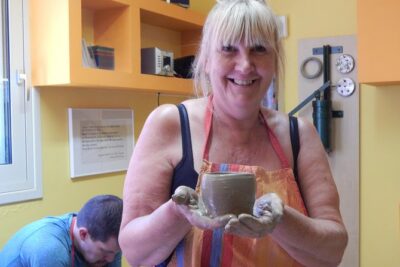
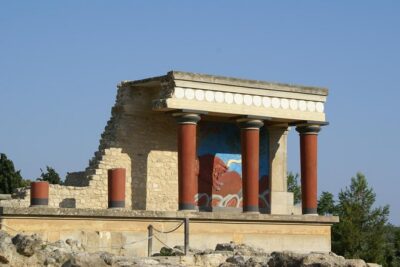
Knossos Palace and Pottery experience (Luxury Adventure)
Read our review →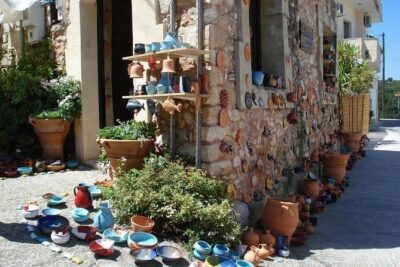
Pottery Village of Margarites – The monastery of Arkadi & The Gorge of Patsos
Read our review →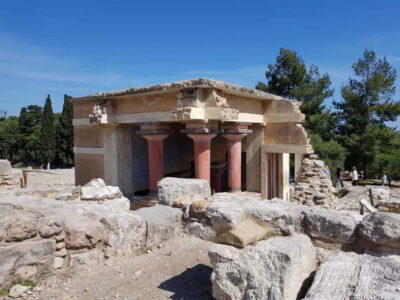
Knossos Palace and Pottery experience. Excursion Safari
Read our review →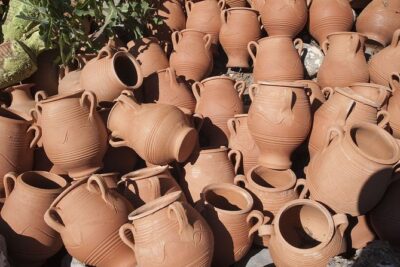
Plateau of Lassithi, Monastery of Kera and Ceramics
Read our review →
Browse the lists this tour appears in