
Reviewed · CRETAN COOKING CLASSES
Heraklion: Cretan Cooking Lesson with Lunch in Arolithos
Arolithos is more than a cooking class. It is a recreated Cretan village where you walk narrow lanes, enter old-style homes, inspect family objects, and then sit down to prepare the food that defines the island. I especially like the pairing of the folk museum tour with the kitchen work, and the final meal on a terrace overlooking vineyards, olive trees, Heraklion, and Mount Giouchtas.
The best part is the friendly, personal teaching. Guides such as Evi, Mary, Christina, Avie, and Alexandra have been praised for their patience and warm manner, especially with children and small groups. The main thing to understand is that the cooking is partly food preparation: some of the longer-cooking meat dishes are demonstrated or prepared by the kitchen team rather than cooked entirely by you.
Key points at a glance
- A recreated Cretan village: Walk cobbled lanes, visit two traditional homes, and see a family collection of old household objects.
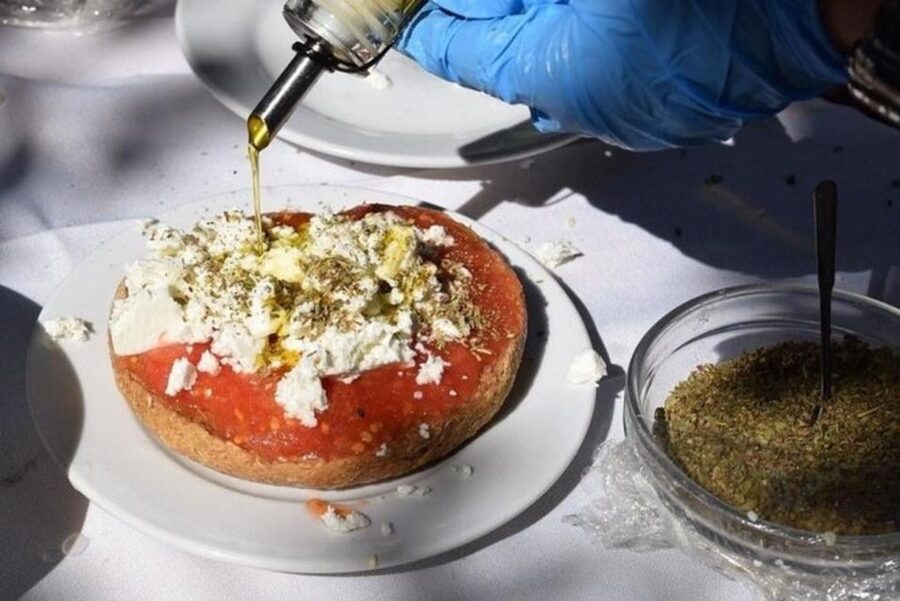
- A hands-on menu: Prepare dakos, tzatziki, dolmades, stuffed vegetables, cheese pies, and other everyday Cretan dishes.
- A large final meal: Your prepared food is served with local wine and mineral water on a terrace with broad countryside views.
- Simple island cooking: The recipes use familiar ingredients and are practical to repeat at home.
- A personal setting: The activity is offered as a private group, with English instruction and plenty of time for questions.
- Plan your ride: Arolithos is outside Heraklion, and hotel transportation is not included unless arranged separately for an extra fee.
Arolithos, a village built to recall older Crete
Arolithos Traditional Cretan Village sits outside Heraklion, about 20 minutes away by car according to one account. It was created in the 1980s by a family who wanted to preserve and present the look of an earlier Cretan settlement.
That context matters. This is not an untouched medieval village, and you should not expect an archaeological site. Instead, it is a purpose-built cultural complex with stone buildings, little lanes, traditional details, a museum, a taverna, and other village features. The result gives you a clear picture of rural Cretan life without requiring a long trip into the mountains.
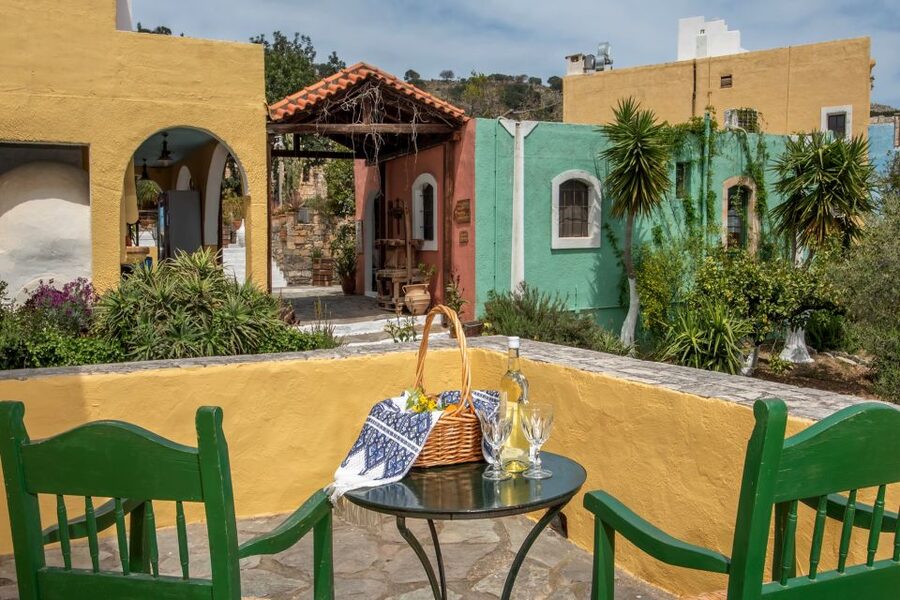
The setting is a major part of the appeal. From the taverna, you can look across vineyards and olive trees toward Heraklion and the holy mountain of Giouchtas. The soundscape may include animal bells, which is a pleasant change from the traffic and hotel zones below.
The village is also a good fit if you want a cultural activity that does not feel like a formal lecture. The guides explain the site, answer questions, and point out details in the old houses and museum. The tone is generally informal and personal.
More Cretan cooking classes in Crete:
- Chania: Authentic Cooking Class in the White Mountains
★ 4.9 · 529 reviews - The Real Cretan Cooking Experience
★ 5.0 · 528 reviews - Chania Cooking Class-The Authentic Enjoy traditional Cretan meal
★ 5.0 · 339 reviews
The museum and two old-style homes
The experience begins with a short walk through Arolithos. You visit the museum, which displays objects from the host family’s collection. These everyday items help show how people cooked, worked, stored food, and managed household life in earlier Cretan homes.
You also enter two traditional houses. The point is not simply to admire stone walls. The homes show how different social groups once lived, giving the visit a useful human scale. You see domestic life through rooms and objects rather than through dates and long historical explanations.
Guides including Mary and Evi have been praised for making this part engaging and easy to follow in English. One guide also taught visitors a few Greek expressions along the way. That sort of small exchange can make the visit feel less like a standard attraction and more like time spent with a local host.
The tour is not especially long, which works in its favor. You get enough background to understand the place, then move on before the information becomes tiring. If your main goal is cooking, you will not spend half the morning in a museum.
What you actually prepare in the kitchen
The cooking session is the heart of the activity, though the amount of hands-on work varies by dish. You may prepare dakos, a Cretan salad built around crisp bread, tomato, cheese, and olive oil. You can also make tzatziki, stuffed tomatoes and peppers, stuffed zucchini, grape leaves, and cheese-filled pastries.
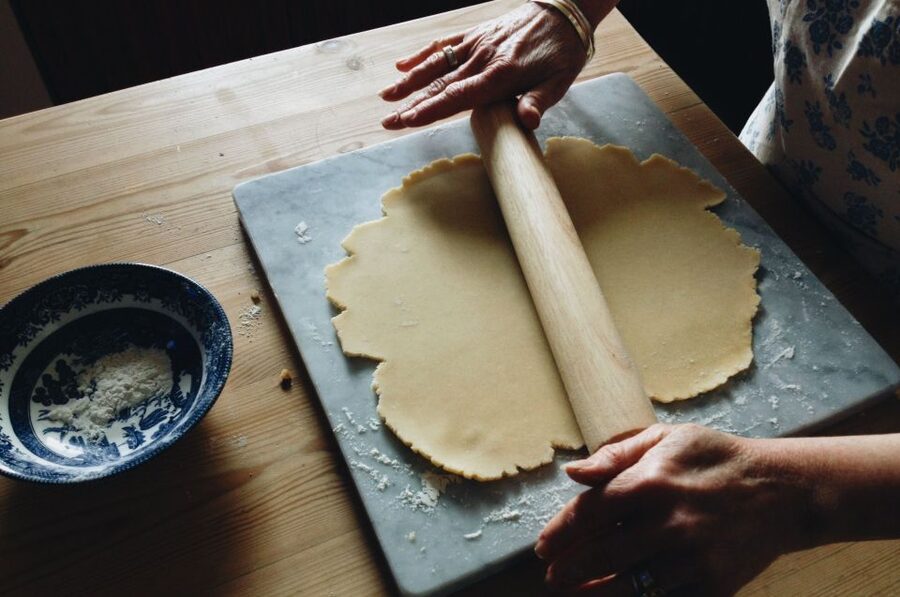
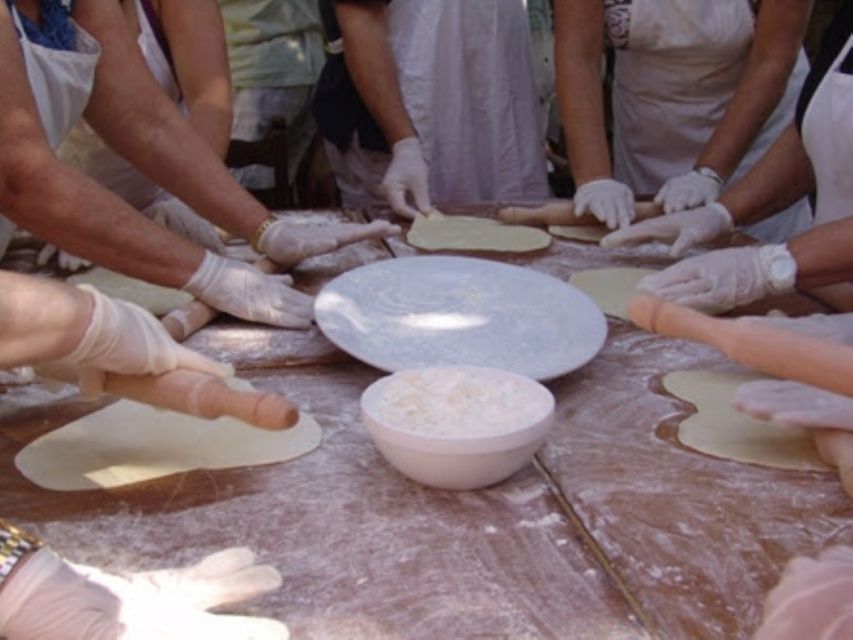
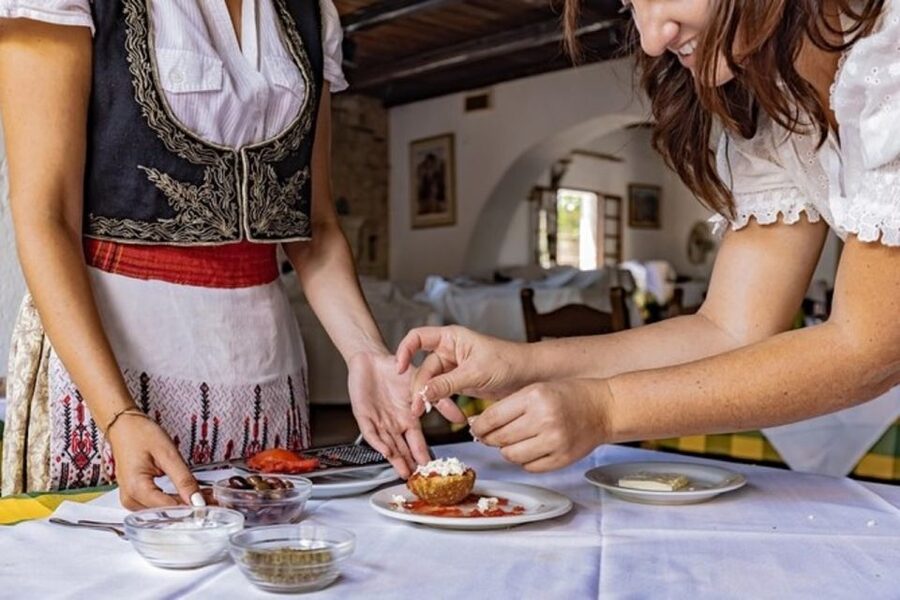
The work is practical rather than fancy. You grate tomatoes, mix fillings, fold grape leaves, shape dough, and prepare vegetables. One chef worked patiently with an 11-year-old, showing her how to hold a knife properly, fold grape leaves, and grate a tomato. That makes the class approachable for families, provided children are supervised.
The recipes are also useful for home cooking. Several are based on only a few ingredients, so you do not need a specialist Greek pantry to try them later. The class gives you recipes to take home, and some sessions have included a certificate as well.
Do not expect to cook every dish from raw ingredients all the way to the table. The meat dishes, such as pork with peppers or wine sauce and lamb with green beans, require more time. The kitchen team may demonstrate these dishes or prepare them elsewhere while you work on the shorter recipes.
That arrangement has a clear benefit: you get to sample a broad Cretan menu within four hours. The trade-off is that this is not a full professional cookery course where you control every pan. It is best understood as a food-preparation class combined with demonstrations and a long lunch.
The menu: simple food, generous portions
The menu can include stuffed vine leaves, stuffed vegetables, pork with wine sauce, lamb with green beans, dakos, tzatziki, and cheese pies. Exact dishes may be adapted to dietary needs, so the selection can change.
The food is described as basic, but that is not a criticism in this setting. Cretan cooking often depends on good vegetables, olive oil, herbs, cheese, bread, and careful seasoning rather than complicated technique. The class shows you how a few ordinary ingredients can make a satisfying meal.
Bring a very empty stomach. Several sessions produced far more food than two or three people could finish comfortably. The meal may include dishes made earlier in the class, along with the meat preparations and other items brought out by the kitchen.
There are also breaks for snacks, wine, cheese, and local products. Greek coffee may be demonstrated, and some sessions have included raki, bread, sheep cheese, and olive oil tasting. Wine and mineral water are included in the price.
One practical suggestion: if you are given an early appetizer during a break, eat it then. Otherwise, you may face a very large final spread at the end. The generous portions are good value, but they can make it difficult to sample every dish.
More hands-on workshops in Crete:
- Heraklion: Beginner Scuba Diving Lesson with PADI Instructor
★ 4.9 · 355 reviews - Full-Day Jeep Safari Tour with Cooking Lesson
★ 5.0 · 284 reviews - Cretan Cooking Class and Olive Oil Tasting
★ 5.0 · 178 reviews - Moires: Cooking Class and Olive Oil Tasting at a Family Farm
★ 5.0 · 93 reviews
Eating above Heraklion
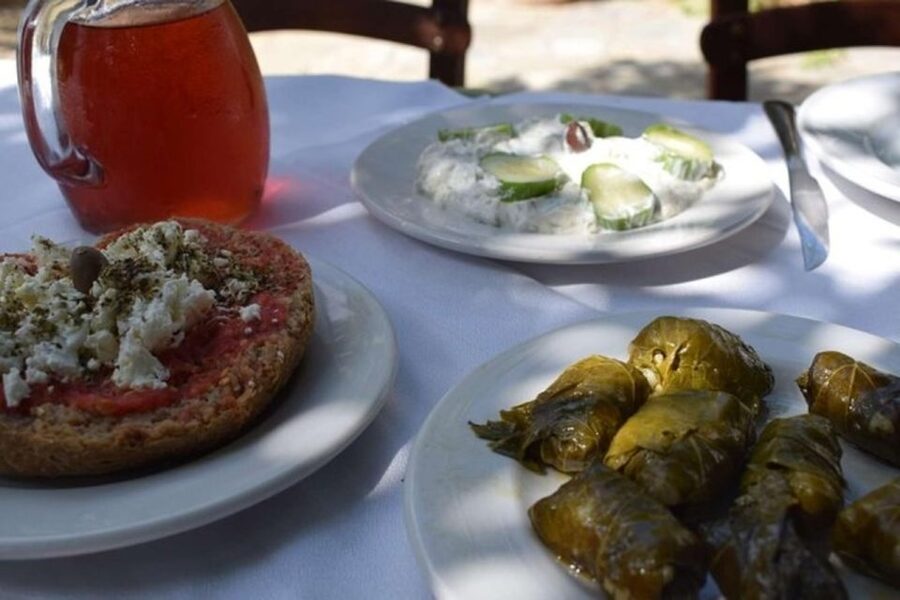
After the preparation, you sit on the taverna terrace and eat the food connected to the class. This is where the activity becomes more than a lesson. You can see the valley, vineyards, olive trees, Heraklion, and Giouchtas while trying the dishes you helped make.
The view also gives the meal a sense of place. You are not simply eating Greek food in a city restaurant. You are eating Cretan dishes in a village setting, with the countryside in front of you and the cooking process still fresh in your mind.
You also have free time to relax in the taverna and, where available, around the swimming pool. The supplied information describes the total visit as four hours, with roughly two and a half hours for the activity and the rest for eating and relaxing.
That timing is useful if you are fitting Arolithos into a larger Crete itinerary. It is long enough to feel substantial but short enough to combine with other Heraklion plans. If you are arriving from a cruise ship, allow extra time for transport and confirm the schedule in advance.
The guides make the difference
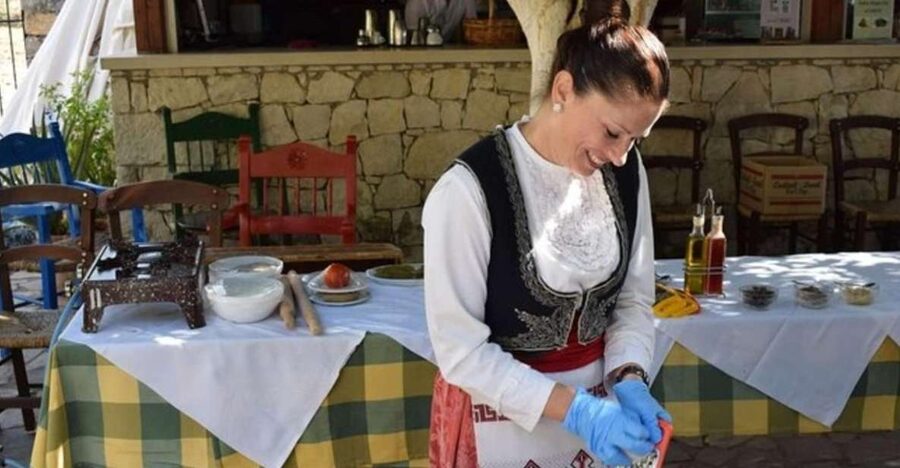
The staff are central to the experience. Evi, Mary, Christina, Avie, and Alexandra have all been singled out for their warmth, patience, and ability to adjust the pace.
Small groups can make the class feel almost private. Some bookings have had only two people, while others included a parent and child or a small family group. The private-group format means you can ask questions and receive more direct help than in a large cooking demonstration.
The teaching style is suited to beginners. You do not need advanced kitchen skills, and the recipes are not presented as difficult projects. Children can take part when accompanied by an adult, though the activity is not intended for children under three.
English is the stated language. If you want a class that explains the food as well as the steps, this is a strong choice. You learn what each dish is for, how it fits into ordinary Cretan meals, and how to repeat it at home.
Price, transport, and practical value
At $129 per person, this is not the cheapest meal near Heraklion. The price includes the museum entrance, village and museum tours, English instruction, food tasting, wine tasting, recipes, and lunch or dinner made from the dishes prepared during the session.
That package gives the price reasonable value if you want several activities in one outing. You are paying for a cultural visit, a private-group cooking lesson, a substantial meal, and a scenic setting. A simple restaurant lunch would cost less, but it would not include the museum or the instruction.
Transport is the main extra cost. Hotel pickup and drop-off are not included. Arolithos is outside central Heraklion, and a taxi or hired transfer is needed unless you have your own car. Transfer service and car hire can be arranged for an additional fee.
If you are staying in Heraklion, confirm the return plan before booking. The village is close enough for an easy outing, but it is not a walk from the center. Cruise passengers should be especially careful with timing and use a prebooked taxi or transfer if the ship schedule is tight.
You can cancel up to 24 hours ahead for a full refund, and the reserve-now, pay-later option keeps the booking flexible. Those policies help if your Crete plans are still shifting.
Dietary needs and access
Tell the organizer about allergies or dietary requirements when you book. Vegetarian food is available, but it must be requested in advance so the menu can be adjusted.
The cooking class itself is wheelchair accessible, but the entire tour is not. The village paths and other parts of the visit may be difficult for people with mobility impairments. The activity is not considered suitable for wheelchair users, visually impaired people, or people with significant mobility limitations.
Children must be accompanied by an adult. The stated restrictions list children under three and babies under one as unsuitable, though one past family booking included a three-year-old who was carefully accommodated. If you are bringing a young child, ask the organizer about the current setup before reserving.
Weapons, sharp objects, outside food and drinks, alcohol or drugs, explosives, and making fire are not allowed. These rules are standard for the site and cooking area.
Who should book this experience?
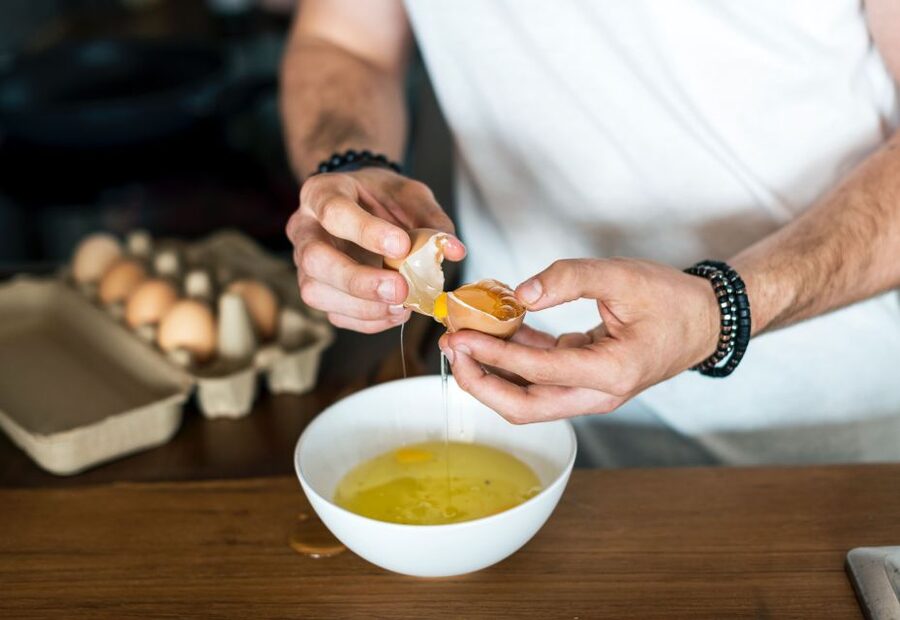
I would choose Arolithos if you want a relaxed cultural outing with food at its center. It suits couples, families with older children, cruise passengers, and anyone who wants to learn a few Cretan recipes without spending a full day in a formal cooking school.
It is also a good choice for people who value an easy pace. The tour includes breaks, conversation, wine, snacks, and time to enjoy the setting. You do not rush from one kitchen station to another.
I would hesitate if you want a serious chef-led course in which you cook every dish from start to finish. The meat courses may be handled by the kitchen team, and much of your work involves preparation rather than complex cooking.
I would also think twice if you dislike recreated attractions. Arolithos offers a village designed to recall older Crete, not an untouched historic settlement. Its appeal comes from the combination of setting, hospitality, museum objects, and food.
Should you book Arolithos?
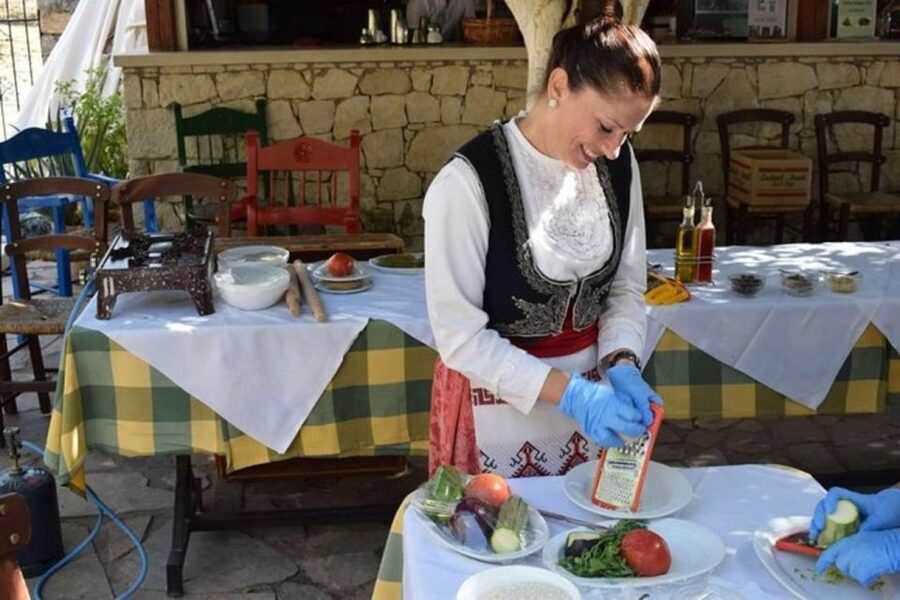
Book it if you want to connect Cretan food with Cretan daily life. The strongest features are the friendly English-speaking guides, the small-group feel, the practical recipes, the generous meal, and the terrace view over the countryside.
The $129 price makes the most sense when you count the museum visit, food, wine, instruction, and lunch together. Arrange transport before you go, report dietary needs early, and arrive hungry.
Skip it if your priority is advanced cooking technique or a fully independent kitchen session. For most visitors seeking a personal half-day introduction to Crete, Arolithos offers a pleasant mix of food, local stories, and a memorable setting.
FAQ
How long does the Arolithos cooking experience last?
The total time is about four hours. The cooking and tour portion takes roughly two and a half hours, followed by lunch and time to relax.
What food can I prepare?
You may prepare dakos, tzatziki, stuffed vine leaves, stuffed tomatoes and peppers, stuffed zucchini, pork with wine sauce, lamb with green beans, and cheese pies. The exact menu may vary.
Do I eat the food I make?
Yes. Lunch or dinner made from the dishes prepared during the experience is included. Local wine and mineral water are also included.
Is the cooking class taught in English?
Yes. The listed instruction language is English, and an English-speaking guide leads the village tour and cooking session.
Is this a private cooking class?
The activity is offered for a private group. Group size can vary, and some sessions have operated with only two participants.
Is transportation from Heraklion included?
No. Hotel pickup and drop-off are not included. Transfer service and car hire can be arranged for an additional charge.
Can vegetarians take part?
Yes. Vegetarian options are available, but you need to request them when booking.
Is Arolithos suitable for wheelchair users?
The cooking class is wheelchair accessible, but the entire tour is not. The activity is listed as unsuitable for wheelchair users and people with mobility impairments.
Can children join the experience?
Children must be accompanied by an adult. The activity is not suitable for children under three, and babies under one are not accepted.
More Lunch Experiences in Crete
- Full-Day Land Rover Safari from Heraklion with Lunch
★ 5.0 · 1,351 reviews - Heraklion: Sailboat Cruise to Dia Island with Drinks & Lunch
★ 4.9 · 1,287 reviews - Heraklion: Finikia Horse Riding Tour with Lunch or Dinner
★ 4.9 · 1,231 reviews - 5Hour Safari Tour in Crete(Heraklion)with Quad,Jeep,Buggy & Lunch
★ 5.0 · 941 reviews
More Cooking Classes in Crete
- Crete: Sightseeing Day Trip with Cooking Lesson and Lunch
★ 4.8 · 77 reviews - Chania: Authentic Cooking Class
★ 5.0 · 74 reviews - Rethymno: Traditional Cooking Class in a Cretan Village
★ 5.0 · 58 reviews - Chrysoula’s Traditional Cretan Home Cooking
★ 5.0 · 38 reviews
Newest Crete write-ups
- Heraklion – Walking city tour with food tasting★ 4.5 · 25 reviews
- Private Full-Day Elafonisi★ 5.0 · 4 reviews
- Mirabello Luxuries with Spinalonga & Agios Nikolaos from Iraklion★ 4.5 · 7 reviews
- Private Trekking Rouvas Gorge★ 4.5 · 4 reviews
- Cretan Flavors – Cooking Lessons and Wine Olive Oil Tasting★ 5.0 · 9 reviews
- Ecobike All inclusive – 2 Day tour – Discover the real Crete★ 5.0 · 4 reviews
- Truffle Hunting, Culinary & Wine Celebration from Heraklion★ 5.0 · 6 reviews
- Secrets of West Crete & Rethymno Town Private Tour from Heraklion★ 5.0 · 9 reviews
Cretan Cooking Classes, compared.
Authentic Cooking Class in the White Mountains
Read our review →
Chania Cooking Class-The Authentic Enjoy traditional Cretan meal
Read our review →
Moires: Cooking Class and Olive Oil Tasting at a Family Farm
Read our review →
Sightseeing Day Trip with Cooking Lesson and Lunch
Read our review →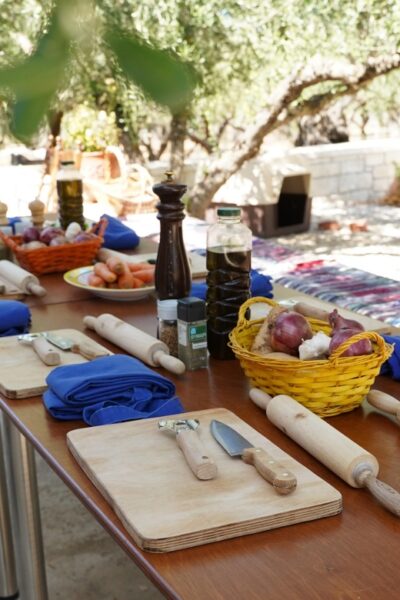
Browse the lists this tour appears in