
Reviewed · CRETE WINE TASTINGS
Chania Area: Food Tasting Tour with Winery Visit & Swim Stop
Crete’s food culture makes the most sense when you see it being made. This seven-hour outing links a 3,000-to-5,000-year-old olive tree with a wood-fired bakery, olive grove, honey and cheese producers, and a family winery. It is a practical way to meet the people behind the food on your plate, not just order another Greek salad.
I like the focus on small family-run producers, and I like the generous tasting spread of bread, rusks, olive oil, tomatoes, olives, cheese, and honey. The final two-hour swim at Nopigia Beach is also smart planning after a morning of food and lessons. The main consideration is the wine stop: some people enjoy the wide range and views, while serious wine fans may find the large-scale production less personal.
What makes this Cretan food tour worth considering
- Vouves’ ancient olive tree: See a living natural monument estimated at 3,000 to 5,000 years old, with a huge, time-shaped trunk.
- Food made in front of you: Visit a traditional bakery, olive grove, and cheese producer, with tastings built into the morning.
- A broad Cretan tasting plate: Expect bread, rusks, olive oil, tomatoes, olives, cheese, honey, and other local delicacies.
- Wine with a family connection: Pnevmatikakis Winery offers a look at Cretan wine making and samples from its own collection.
- A proper beach break: Enjoy free time at Nopigia Beach from about 2:00 to 4:00 in the afternoon.
- Easy transport from Chania: Hotel or nearby pick-up, an air-conditioned bus, guiding in English, and drop-off are included.
A full day built around the Cretan table
This is not a museum-heavy excursion. It is a food-and-country outing, with short visits, tastings, village roads, and time beside the sea. You leave Chania in the morning and return in the late afternoon, so the seven-hour schedule uses your day well without turning it into a rushed evening activity.
Pick-up runs roughly from 8:00 to 9:20, depending on where you stay. Your exact time and meeting point arrive by email the day before. Pick-up is from your hotel or a point close to it, which is useful because you do not need to find a distant bus station before breakfast.
The transport is an air-conditioned luxury bus, though conditions can vary. One account found the ride bumpy and the air conditioning inconsistent on a very hot day. I would sit with water handy, bring a hat, and treat the bus as a practical transfer rather than part of the attraction.
The English-speaking guide gives the day its shape. Linda is specifically praised for being informative, good-humored, and well organized, though the guide assigned to your departure may differ. A good guide matters here because the food stops depend on explanation. Without context, a sample of honey or cheese is simply a snack. With context, it becomes a lesson in how Cretan families eat and work.
More Food Tasting Tours in Chania
- Chania: Old Town Highlights Guided Tour with Street Food
★ 4.9 · 407 reviews - Walking “Food tasting tour” in the town of Chania
★ 5.0 · 297 reviews - The Delicious Chania Street Food Tour
★ 5.0 · 138 reviews
Vouves and its ancient olive tree
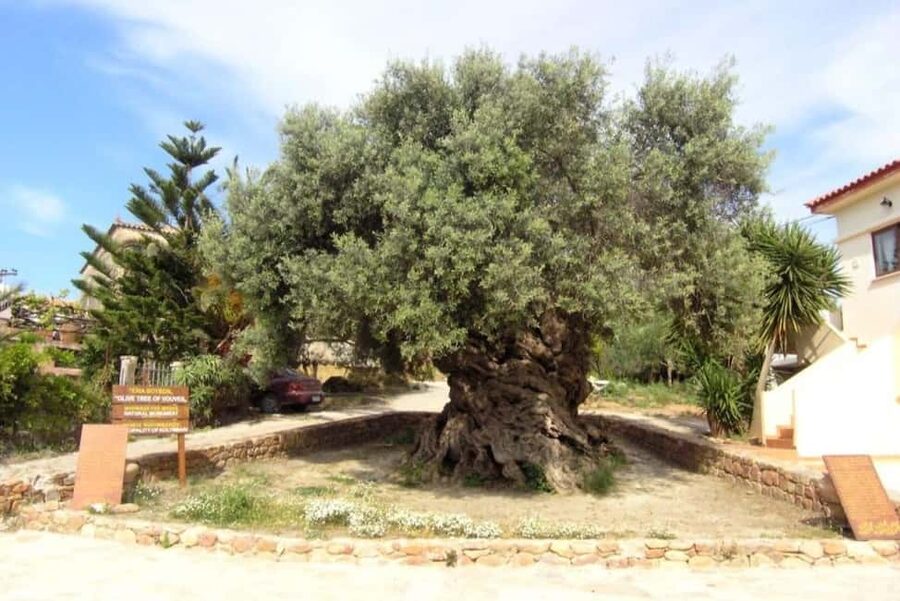
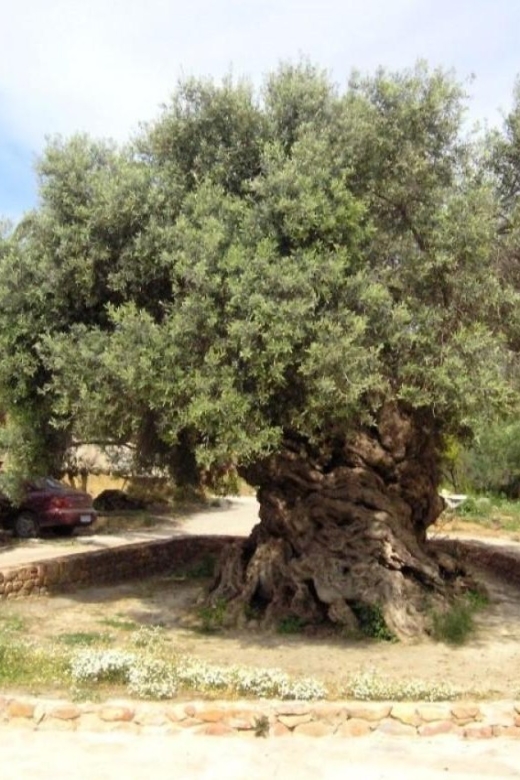
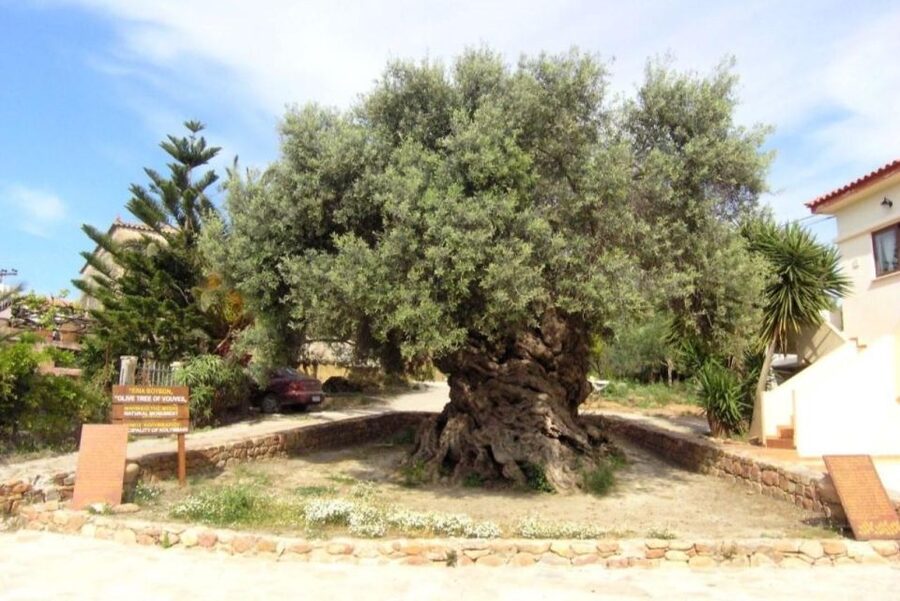
The first major stop is Ano Vouves, reached at about 9:45. The reason to stop here is a remarkable old olive tree that is recognized as a natural monument and described as the oldest recorded olive tree in the world.
Its exact age cannot be confirmed. Estimates place it somewhere between 3,000 and 5,000 years. It began as a wild olive tree and was later domesticated through the Tsounati variety. It still lives and produces fruit, which is a more interesting fact than simply calling it old.
The trunk has a circumference of about 12.5 meters and a diameter of roughly 4.6 meters. Time has hollowed and shaped the bole into something that looks almost carved, though it was formed by nature and centuries of growth. You get a short visit here, from about 9:45 until 10:15, so this is a focused stop rather than a long archaeological visit.
I like this opening because it gives the rest of the day a clear frame. Olive oil is not an abstract product in Crete. It comes from trees that have shaped agriculture, food, and village life for thousands of years. After seeing Vouves, the later olive grove and oil tasting have more meaning.
Bring your camera, but do not expect a large site with many activities. The appeal is the tree itself and the story attached to it.
Perivolakia’s bread, honey, and cheese
Around 10:45, the group reaches Perivolakia Village for the most food-centered part of the morning. This stop combines several local food experiences, so expect to move between a bakery, olive grove, honey lesson, and traditional cheese producer.
The bakery uses a wood oven and makes Cretan staples such as bread and rusks. Rusks are twice-baked pieces of bread with a firm texture, made for keeping and often softened with tomato, olive oil, or other toppings. Watching traditional savouries being prepared gives you a better sense of why Cretan food travels well and wastes little.
The bakery visit is not just a quick bite. It shows the work behind foods that often arrive at a restaurant table looking simple. You can see how basic ingredients become useful daily food, and then taste the result.
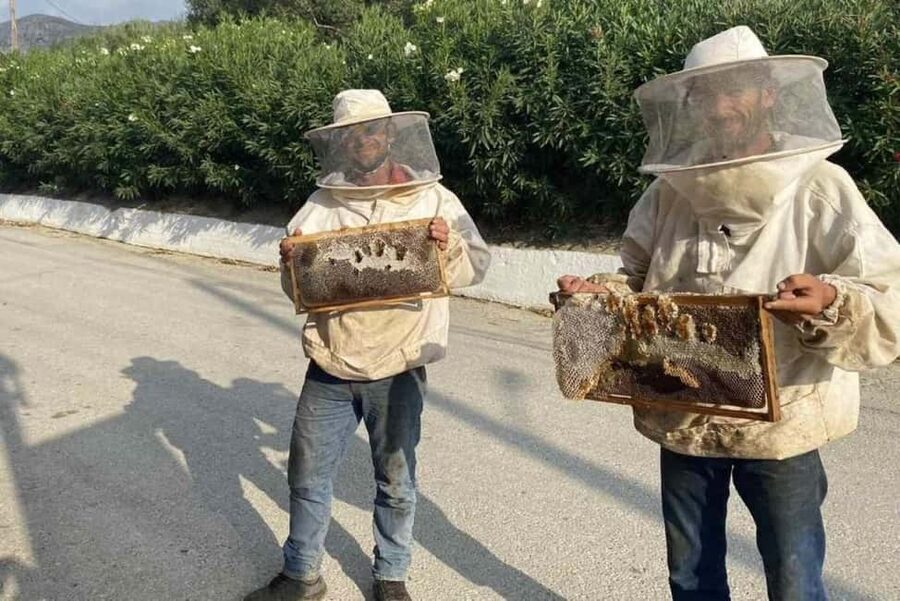
The olive grove visit adds another layer. You examine the trees and learn about Cretan honey and bee keeping. The honey presentation is one of the strongest parts of the day for many people because it connects the grove, the bees, and the final product. You get to taste different honey with bread and other local foods, along with olive oil and related produce.
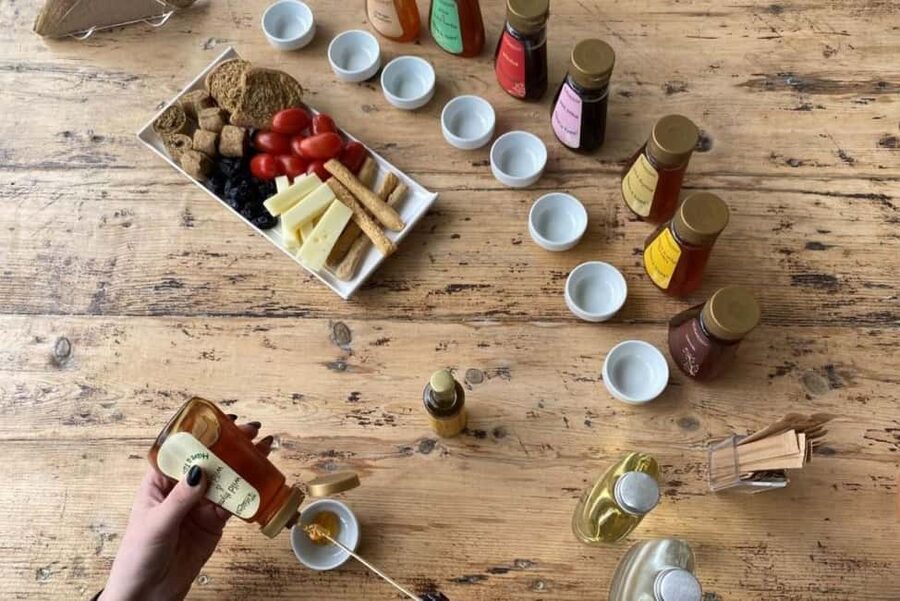
The tasting is designed as a generous platter rather than a formal meal. Expect combinations of olive oil, tomatoes, olives, cheese, honey, and bread, with rusks included among the traditional foods. It should satisfy you for a good part of the day, but this is still a tasting experience, not a restaurant lunch with a menu and individual courses.
The cheese stop is handled with some flexibility. If cheese making is underway, you may be able to enter and see the process. If it is not the production period, the guide explains how the cheese is made before the tasting. That means you should not book this expecting a guaranteed live cheese-making demonstration. You will still receive the food and explanation, but the working factory visit depends on timing.
This section is especially good for anyone who enjoys seeing ordinary food made by hand or in small local businesses. It is also the part most likely to feel genuinely connected to village life. The hosts’ enthusiasm is part of the value, and the tasting gives you enough variety to compare textures and flavors rather than sampling one token item.
The group leaves Perivolakia at about 12:30. Since several activities are packed into this village visit, the schedule can feel active. Wear shoes that are comfortable for short walks, and do not arrive expecting a long, slow lunch.
Pnevmatikakis Winery and the question of wine quality
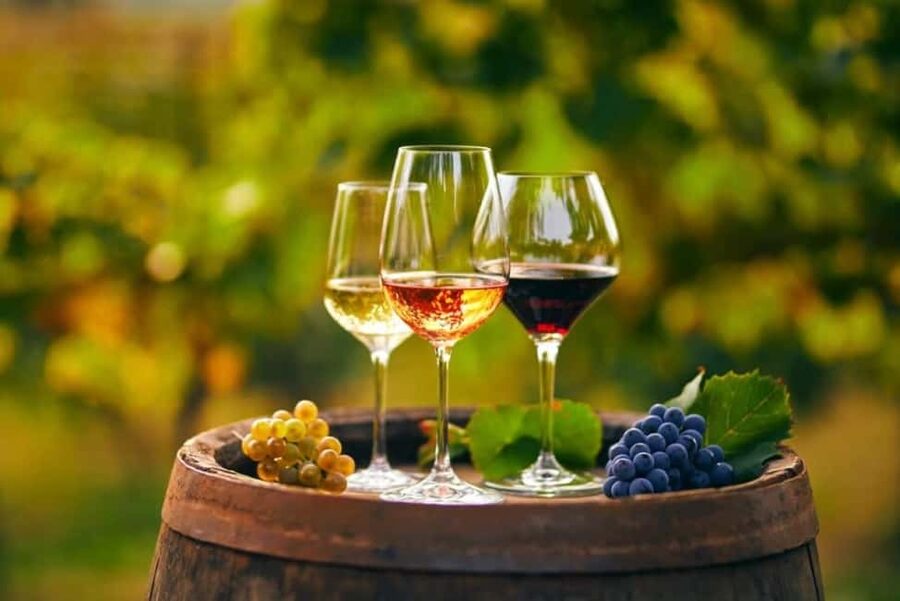
At about 12:45, the tour reaches Pnevmatikakis Winery in Kissamos. This family-run winery has long experience in Cretan wine making and presents several locally produced varieties from its collection.
You learn how wine is made, then taste wines with local foods chosen to accompany them. The setting includes views, and the tasting offers more variety than a single glass of house wine. Children are not left out: the winery provides a special platter and drinks for them, prepared by the family.
The winery visit has a mixed character, and it is best to set your expectations correctly. If you want an introduction to Cretan grape varieties and a chance to sample several wines, this stop adds useful range to the day. If you are a serious wine enthusiast looking for a small cellar, careful barrel work, and a polished estate tour, you may find the operation more industrial than intimate.
One detailed account praised the self-service tasting and the number of wines but found the production area disappointing, with concerns about cleanliness and wines that tasted young and lacking in depth. That experience will not be universal, but it is a fair reason to keep expectations modest. The winery is included as part of a broader food day, not as a specialist wine education.
I would judge this stop by the complete outing rather than by the wine alone. You have already seen bread, honey, cheese, and olive products. The wine provides another piece of the Cretan table, even if it may not satisfy someone planning the whole day around wine.
The winery departure is scheduled for about 1:45. You then head to the coast for the final part of the experience.
More Wine Tastings in Chania
- From Chania: Olive Oil, Wine, Cheese & Honey Tasting Tour
★ 4.6 · 490 reviews - From Chania: Wine and Olive Oil Tasting Tour with Snacks
★ 4.8 · 354 reviews - Crete Wine and Olive Oil Tour
★ 5.0 · 272 reviews - Wine & Olive Oil Tour with Lunch at Milia Mountain Retreat
★ 5.0 · 194 reviews
Two hours at Nopigia Beach
From about 2:00 to 4:00, you have free time at Nopigia Beach. This is a welcome change of pace after the morning’s explanations and tastings.
You can swim, relax, or simply enjoy the coast. Sunbeds are not included, so budget separately if you want one. Bring your own towel, swimsuit, sunscreen, sunglasses, and sun hat. The beach stop is not a guided activity, and the schedule gives you enough time to enjoy it without treating the swim as a rushed photo stop.
I like this ending because food tours can become tiring when every hour is another explanation. Nopigia gives you room to cool off and digest. It also means you should pack for two different days in one: comfortable clothing and shoes for village visits, plus beach gear for the afternoon.
The sea stop may be especially welcome during hot weather. One outing took place on an extremely hot day, but the timing of the itinerary still worked well. Keep water with you, especially if you plan to swim and sit in the sun.
The return journey begins after the beach, with arrival at your hotel roughly between 4:20 and 5:20. The wide return window reflects different hotel locations and road conditions.
What the price represents
No price is provided here, and the amount can change by date and booking conditions, so I would compare the current fare with what you would spend arranging the same day independently.
The value comes from the number of moving parts included: hotel or nearby pick-up, transport, an English-speaking guide, the Vouves visit, bakery and village stops, food tastings, winery tasting, beach time, and hotel drop-off. You are paying for access, transport, coordination, and explanation as much as for the food itself.
A self-drive version could cost less in fuel, but you would need to find the producers, arrange parking, avoid tasting and driving, and fit the stops together. The bus also removes the need to navigate unfamiliar roads after wine tasting. For a visitor without a car, that convenience is a major part of the deal.
The outing looks particularly useful if you want several Cretan tastes in one day rather than a single dedicated winery or olive-oil visit. It is less compelling if you already have a rental car, prefer to spend hours at one producer, or care mainly about high-end wine.
Practical details that affect your day
The tour lasts about seven hours, but pick-up and drop-off times depend on your hotel area. Check the starting time when booking, then watch your email the day before for the exact pick-up point.
The tour is conducted in English. Guiding, transport, tasting package, and full liability insurance are included. Sunbeds are not included.
You can cancel up to 24 hours before departure for a full refund, and the reserve-now, pay-later option keeps your plans flexible. Those terms are useful if your Crete schedule is still shifting.
Bring:
- Swimwear and a towel
- Sunscreen, sunglasses, and a sun hat
- A camera
- Water for the bus and outdoor stops
- Comfortable clothing for food visits and beach time
The tour is suitable for families, since the winery prepares a separate platter and drinks for children. It also suits couples, solo visitors, and anyone who wants a guided introduction to Cretan food without planning several rural stops alone.
Who should book this experience
I would choose this tour if you want a broad, easy introduction to Cretan food culture. The strongest parts are the family producers, the hands-on explanations, the generous tasting plate, the ancient olive tree, and the swim at Nopigia.
It is a good match for first-time visitors to the Chania area, people without a car, and anyone who wants a day with both food and scenery. The guide helps connect the stops, and transport lets you taste wine without worrying about driving back.
I would think twice if your main goal is a serious wine tour. Pnevmatikakis Winery may feel more like a working production facility than a small boutique cellar, and the tasting may not satisfy a specialist palate. The bus ride can also be warm or bumpy on some days, so this is not a luxury experience in every detail.
For most people, the strongest reason to book is the mix. You see one of Crete’s oldest living olive trees, learn how local staples are made, eat a varied platter, taste wine, and finish by the water. That is a lot of Cretan life in seven hours, with enough flexibility to keep the day enjoyable.
FAQ
How long does the Chania food and winery tour last?
The tour lasts about seven hours, though the exact pick-up and return times depend on your hotel location and the scheduled departure.
What time does the tour start?
The timetable shows pick-up beginning around 8:00, with the full pick-up window running to about 9:20. Check availability for the exact starting time.
Where does the tour visit?
The route includes Vouves Ancient Olive Tree, Perivolakia Village, a traditional bakery, an olive grove, a cheese producer, Pnevmatikakis Winery, and Nopigia Beach.
Is hotel pick-up included?
Yes. Pick-up and drop-off from your hotel or a nearby point are included. Exact details arrive by email the day before the tour.
What language is the tour conducted in?
The live tour guide provides the tour in English.
What food is included in the tasting?
The tasting includes traditional Cretan foods such as bread, rusks, olive oil, tomatoes, olives, cheese, honey, and other local delicacies.
Will I see cheese being made?
You may enter the cheese production area if cheese making is taking place. If it is outside the production period, the guide explains the process before the tasting.
Is wine tasting included?
Yes. You learn about wine making at Pnevmatikakis Winery and taste several locally made wines with accompanying local foods.
Can children join the winery tasting?
Yes. The winery provides children with a special platter and drinks.
What should I bring to the beach stop?
Bring swimwear, a towel, sunscreen, sunglasses, a sun hat, and a camera. Sunbeds are not included.
Can I cancel the booking?
You can cancel up to 24 hours in advance for a full refund. A reserve-now, pay-later option is also available.
Newest Chania write-ups
- Private transfer from Heraklion airport to Chania★ 5.0 · 5 reviews
- From chania : Knossos Palace & Archeological Museum Tour★ 4.0 · 4 reviews
- Highlights of Crete -2 Days Tour Knossos Lasithi Rethymno&Chania★ 5.0 · 3 reviews
- CHANIA RETHYMNON KOURNAS, full day professional guided coach tour★ 3.5 · 8 reviews
- Private tasting of 6 cretan wines in Fres village, Chania★ 5.0 · 4 reviews
- Wine Tasting Walking Tour in Old Town Chania★ 5.0 · 20 reviews
- Small-Group Wine Tasting Activity in West Chania★ 5.0 · 4 reviews
- Chania Area: Cooking Class at a Farm in Stylos Village (organic)★ 5.0 · 19 reviews
Crete Wine Tastings, compared.

Land Rover Safari with Sunset Viewing, Dinner, & Wine
Read our review →
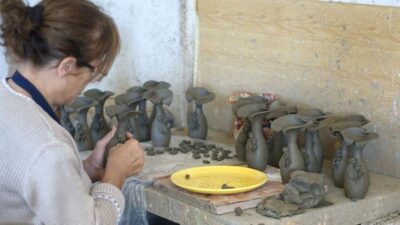
Full-Day Cretan Wines, Olive Oil, Raki and Food Tour
Read our review →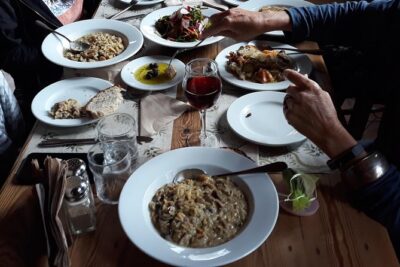
Wine & Olive Oil Tour with Lunch at Milia Mountain Retreat
Read our review →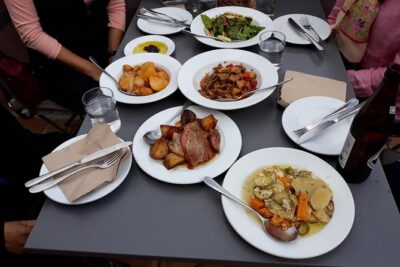
Wine & Olive Oil Tour with Lunch – Semi Private Safari Tour
Read our review →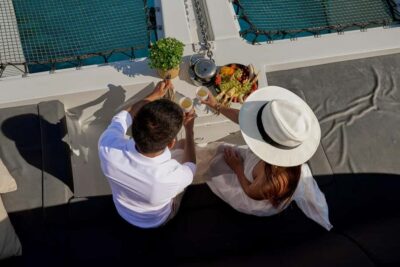
Dia Island Catamaran Cruise with Dinner and Wine
Read our review →Browse the lists this tour appears in