
Reviewed · CRETAN COOKING CLASSES
Cooking experience in the most beautiful garden near Rethymno
The best part of this four-hour evening is that you do not simply watch a chef cook. You make dakos, tzatziki, stuffed vegetables, bread, and other Cretan dishes yourself, then sit down to eat them in a spacious garden near Pigi. Maria, Rebecca, and Michael bring a friendly, personal touch, with plenty of help along the way.
I like the small maximum group of eight, which keeps the lesson social without turning it into a cooking-school assembly line. I also like the setting: you can visit the vegetable and herb garden, and there is even a swimming pool for a little pre-class relaxation. The main point to consider is transport. A hotel transfer from Rethymno may cost extra, so check this before booking.
Key points at a glance
- Cook a full Cretan meal: Prepare dakos, gemista, tzatziki, mizithropitakia, bread, and chicken with red sauce.
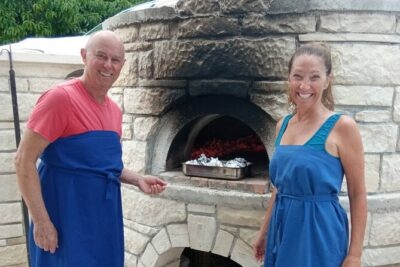
- Use a traditional wood oven: Your meal is cooked in the same kind of oven that gives village dishes their smoky, home-style character.
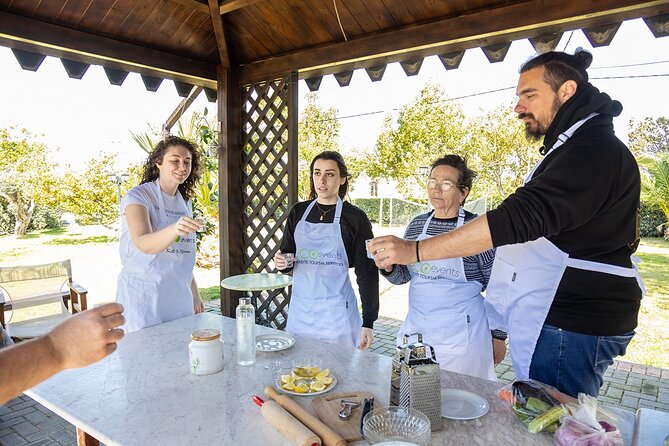
- Spend the afternoon in a private garden setting: Visit the herbs and vegetables, relax near the pool, and cook under a covered outdoor area.
- Keep the group small: The activity accepts no more than eight people, with English or French guidance.
- Eat and drink generously: Full lunch, vegetarian options, local wine, and plenty of raki are included.
- Plan for the weather: The class depends on good conditions and may be held outdoors under a covered pavilion.
A Cretan cooking class that feels like a shared meal
This is less about mastering restaurant technique and more about learning how Cretan families put a generous meal on the table. You arrive at Euphoria Homes in Pigi, a village close to Rethymno, at 5:00 pm. The garden becomes your kitchen, dining room, and waiting area while the wood oven heats up.
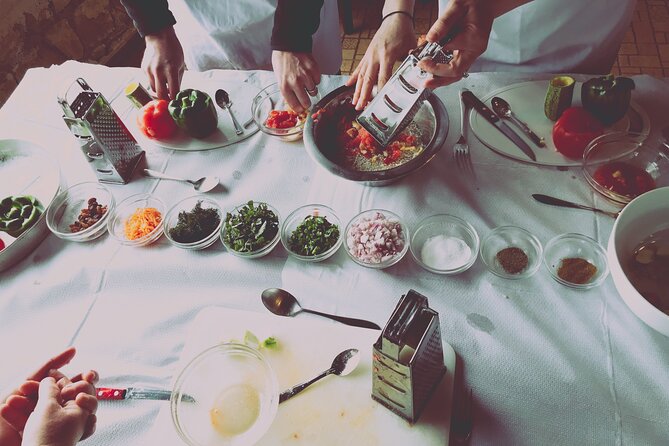
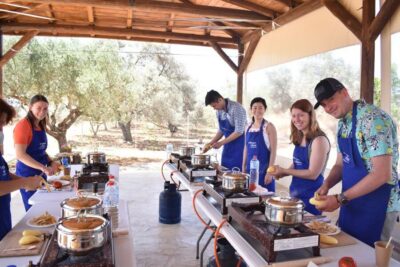
The setting matters. You are not working in a commercial cooking studio with rows of identical workstations. You have access to a home garden, local ingredients, cooking utensils, and a traditional oven. That gives the lesson a relaxed, practical feel. You can ask questions, watch how each dish comes together, and see how several simple ingredients become a large meal.
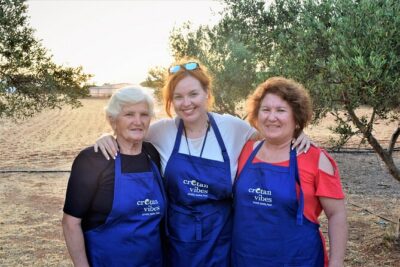
Maria has guided guests through the recipes step by step, while Rebecca has helped with the hospitality and practical details. Michael has also served as guide, translator, and sous-chef. The exact host team may vary, but you can expect English or French assistance and hands-on instruction rather than a formal lecture.
The class is suitable for people with little cooking experience. You are given an apron, and the hosts provide the utensils and ingredients. You do not need to arrive with special equipment or bring hard-to-find products from home.
More Cretan cooking classes in Crete:
- Chania: Authentic Cooking Class in the White Mountains
★ 4.9 · 529 reviews - The Real Cretan Cooking Experience
★ 5.0 · 528 reviews - Chania Cooking Class-The Authentic Enjoy traditional Cretan meal
★ 5.0 · 339 reviews
Arriving at Pigi and settling into the garden
Pigi is close to Rethymno, but it is not in the center of the city. The listed meeting point is Euphoria Homes, on the road between Platanes and Moni Arkadiou. The activity starts at 5:00 pm and ends back at the same meeting point after roughly four hours.
Transportation deserves careful attention. A hotel transfer can be arranged, but the information provided specifies an extra charge for transport from Rethymno to the meeting point. Do not assume that pickup is included in the $114.02 price. Confirm the arrangement when you book, especially if you are not renting a car.
Once you arrive, you have time to look around before the cooking begins. The property includes a vegetable and herb garden, which gives you a direct connection to the ingredients used later. You can also enjoy the swimming pool, so bring a swimsuit if that appeals to you.
The pool is a useful bonus, but it should not become the main reason you book. The class begins at 5:00 pm, and the central activity is cooking and eating. Think of the pool as an option for your arrival period, not as a full pool day.
Building the meal one Cretan dish at a time
The cooking begins when you feel ready, with an apron and guidance from your host. The recipes are familiar Cretan staples, but each one teaches you something about the region’s everyday food.
Dakos, also called koukouvagia
You begin with dakos, a Cretan starter made from tomatoes and xinomyzithra cheese. The cheese may also be paired with feta and anthotyros, then finished with oregano.
Dakos is a good introduction because it shows how much flavor can come from a short list of ingredients. The dish is not complicated, but the quality and balance of the tomatoes, cheese, herbs, and crisp base matter. You learn a food that is easy to recreate after your holiday, provided you can find suitable cheese.
Same island, a completely different kind of day:
- From Kissamos Port: Boat Cruise to Balos Lagoon & Gramvousa
★ 4.2 · 6,755 reviews - Crete: Day Trip to Agios Nikolaos and Spinalonga Island
★ 4.6 · 4,416 reviews - From Chania: Full-Day Samaria Gorge Trek Excursion & Guide
★ 4.6 · 3,191 reviews - Agios Nikolaos: Boat Trip to Spinalonga with Swim Stop
★ 4.4 · 3,031 reviews
Fresh bread in the wood oven
Making your own bread gives the class a hands-on task before the larger dishes go into the oven. The hosts provide the ingredients and show you how to prepare it, then the wood-fired oven does the baking.
The oven is one of the most appealing parts of this experience. You may have an oven at home, but you probably do not have a traditional wood-fired model waiting in a Cretan garden. It is also a practical lesson in timing, since several dishes need to be prepared and cooked as part of one large meal.
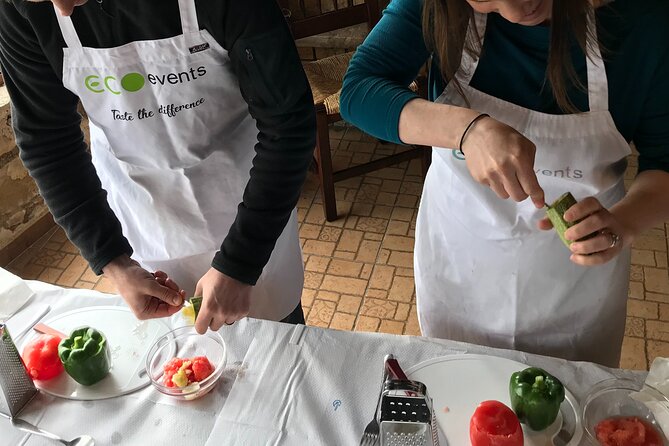
Gemista, stuffed vegetables
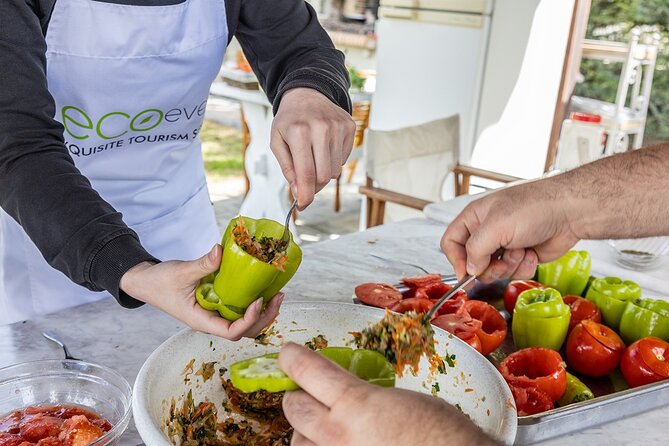
Gemista consists of vegetables filled with a seasoned mixture and cooked until tender. The recipe is healthy, colorful, and closely tied to home cooking across Greece.
This is the dish where you see the value of having instruction. Stuffed vegetables look simple, but preparation, seasoning, and cooking time all affect the result. The hosts guide you through the process, so you can pay attention to the feel of the filling and the way the vegetables soften in the oven.
Mizithropitakia with honey
Mizithropitakia are small pastries made with sweet mizithra cheese and served with honey. They bring a sweet note to a meal that otherwise leans heavily toward savory food.
I like that this recipe adds contrast to the class. You are not preparing four versions of the same kind of dish. Instead, the menu moves from tomatoes and cheese to bread, stuffed vegetables, pastries, chicken, and a cool yogurt sauce.
Chicken with red sauce and potatoes
The main course includes chicken with red sauce and potatoes. It is a hearty dish that works well for a group meal, particularly after everyone has been cooking for several hours.
The menu is generous. One practical consequence is that you may have food left over. The hosts are known to cook large quantities, and a doggie bag may be offered. That is excellent if you have access to a refrigerator, but it can be awkward if you are staying in a hotel and eating out for every meal. Bring a plan for leftovers, or simply ask how much food will be packed for you.
Tzatziki and Greek salad
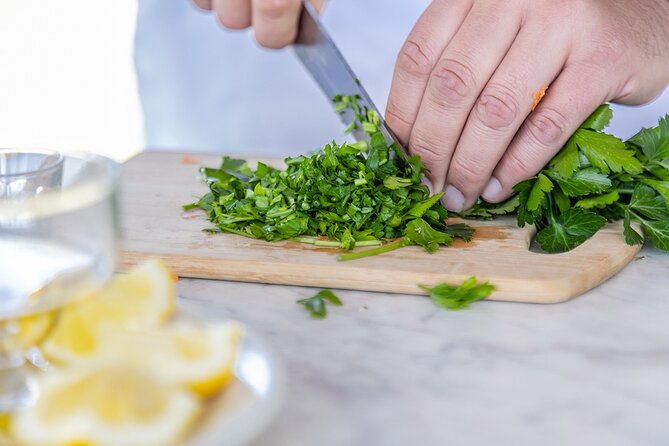
Tzatziki brings together yogurt, cucumber, and garlic in a cool sauce served with many Greek meals. You also prepare Greek salad, adding another fresh element to the table.
These recipes are among the easiest to repeat at home, so the class has value beyond the evening itself. You leave with techniques and flavor combinations that do not require expensive tools. You also learn how much garlic, herbs, cheese, and olive oil can shape a meal.
The wood-fired meal is the real payoff
After the preparation, the food is cooked in the traditional wood oven and served outside in the garden. This is the moment when the class shifts from work to a long, relaxed meal.
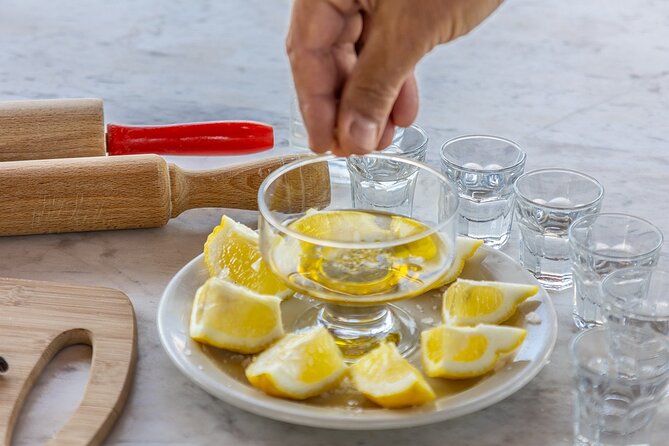
Your lunch, although served in the evening, includes the dishes you helped prepare. Vegetarian options are available, and all ingredients are included. Local wine and raki accompany the meal, with alcoholic drinks described as free-flowing.
Raki is a strong Cretan spirit, so pace yourself. The wine and raki are part of the social side of the class, but you can enjoy the food without treating the drinks as a challenge. If you do not drink alcohol, confirm what alternatives are available before booking, since the supplied information only specifies wine and raki.
The outdoor setting is a major part of the appeal. You eat what you made, in the same place where you prepared it, surrounded by the garden. That connection makes the meal feel more personal than a restaurant dinner where someone else handles every step.
The cooking area is not guaranteed to be fully open to the sky. The class can take place under a covered pavilion, and the hosts have continued in chilly or rainy weather when conditions allow. Dress for the forecast, especially after sunset. A light jacket is sensible even in warmer months.
What the small group size changes
The maximum is eight people, and a smaller group can make the evening feel almost like a private family meal. You have more time to ask questions, handle the ingredients, and follow the recipes without waiting behind a large crowd.
A group of six is still large enough for conversation and shared tasks. A group of four can feel especially personal. The class may not always fill to eight, but you should book it for the small-group format rather than assume you will receive a private lesson.
The hosts also appear attentive to practical needs. Food allergies noted at reservation time have been accommodated, and a warm jacket was provided to a child when the weather turned cold. Still, you should clearly list allergies or dietary requirements when booking and remind the host at the start.
Families can enjoy this activity, particularly if children like mixing, shaping, or assembling food. The four-hour length means young children may tire, so consider your child’s patience before booking. The cooking is active, but it is not presented as a children’s program.
Is $114.02 a fair price?
At $114.02 per person, this is not the cheapest meal in Crete. It is also more than the price of a standard restaurant dinner. The value comes from what is included: a four-hour activity, instruction, apron, cooking equipment, all ingredients, a full meal, vegetarian options, wine, raki, and the garden setting.
The price makes the most sense if you want an evening activity rather than only food. You are paying for the preparation, the host’s time, the use of the property and oven, and the chance to make dishes you may not otherwise learn during a short stay.
The value is stronger for food lovers, couples, families, and small groups who would enjoy eating together after working together. It is less compelling if you dislike group activities, do not drink, or only want a quick cooking demonstration.
The possible extra transfer cost also affects the final price. If you are staying in Rethymno, ask for the exact pickup fee before committing. If you can reach Pigi on your own, the base price is easier to judge.
Practical details before you book
The activity is offered in English, with French-speaking guidance also available. Confirmation is provided at booking, and service animals are allowed.
The experience requires good weather and a minimum number of participants. If poor weather cancels the class, you can receive a full refund or choose another date. The same applies if the minimum number is not reached.
Free cancellation is available up to 24 hours before the 5:00 pm start time. Cancellations or changes made less than 24 hours before the activity are not accepted for a refund. The cutoff uses local Crete time.
Wear clothes that can handle a little flour, tomato, oil, or sauce. Bring a swimsuit if you plan to use the pool, and bring a light layer if the forecast is cool. If you are staying in a hotel, think ahead about leftovers, since the meal may be generous enough to produce them.
Who should book this Cretan cooking experience?
You should book it if you want to do more than photograph Greek food. The class gives you a real role in preparing the meal, and the garden, wood oven, local drinks, and small group create a strong sense of place.
It is especially well suited to:
- Couples looking for a relaxed evening near Rethymno
- Families who enjoy cooking together
- Food lovers interested in Cretan home recipes
- Small groups wanting a shared activity
- Visitors who prefer a personal setting to a large commercial class
You may want to skip it if you need a fully indoor activity, dislike long meals, or have strict transport needs that make the extra transfer charge inconvenient. You should also check the menu carefully if you have serious allergies, even though the hosts have accommodated dietary concerns when informed in advance.
Should you book it?
I would book this class for the setting and the generous, personal format, not simply for the recipes. Dakos, tzatziki, stuffed vegetables, bread, and chicken are all useful dishes to learn, but the real appeal is preparing them with a small group and eating them outdoors from a traditional wood oven.
Book ahead if your dates are fixed. The experience is often reserved well in advance, with an average booking lead time of about 76 days. Confirm transport, mention allergies, check the weather, and bring a light jacket. If those details work for you, this is one of the better ways to turn a meal near Rethymno into a memorable part of your Crete visit.
FAQ
Where does the cooking class take place?
The class takes place at Euphoria Homes in Pigi, a village close to Rethymno, at Epar.Od. Platanon-Moni Arkadiou, Pigi 741 50, Greece.
What time does the activity start?
The cooking class starts at 5:00 pm and lasts about four hours.
Is hotel pickup included?
A transfer from Rethymno to the meeting point may be available for an extra charge. Confirm the pickup cost when booking.
What food will I prepare?
The menu includes dakos or koukouvagia, bread, gemista, mizithropitakia, chicken with red sauce and potatoes, tzatziki, and Greek salad. Vegetarian options are included.
Are drinks included?
Yes. Local wine and raki are included with the meal, and the experience specifies lots of raki and free-flowing alcoholic drinks.
What happens if the weather is bad?
The experience requires good weather. If it is canceled because of poor weather, you can choose another date or receive a full refund.
Newest Crete write-ups
- Heraklion – Walking city tour with food tasting★ 4.5 · 25 reviews
- Private Full-Day Elafonisi★ 5.0 · 4 reviews
- Mirabello Luxuries with Spinalonga & Agios Nikolaos from Iraklion★ 4.5 · 7 reviews
- Cretan Flavors – Cooking Lessons and Wine Olive Oil Tasting★ 5.0 · 9 reviews
- Private Trekking Rouvas Gorge★ 4.5 · 4 reviews
- Ecobike All inclusive – 2 Day tour – Discover the real Crete★ 5.0 · 4 reviews
- Truffle Hunting, Culinary & Wine Celebration from Heraklion★ 5.0 · 6 reviews
- Secrets of West Crete & Rethymno Town Private Tour from Heraklion★ 5.0 · 9 reviews
Cretan Cooking Classes, compared.
Authentic Cooking Class in the White Mountains
Read our review →
Chania Cooking Class-The Authentic Enjoy traditional Cretan meal
Read our review →
Moires: Cooking Class and Olive Oil Tasting at a Family Farm
Read our review →
Sightseeing Day Trip with Cooking Lesson and Lunch
Read our review →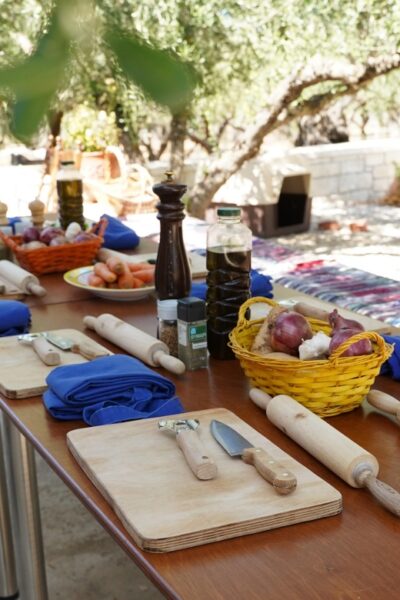
Browse the lists this tour appears in