
Reviewed · CRETE FOOD TASTING TOURS
Food Tour in Heraklion – Discover Cretan Flavors
Heraklion reveals itself best between bites. This four-hour walk links Cretan food with the city’s landmarks, from bougatsa and strong Greek coffee to meze at a traditional taverna. You also visit the central market, a leather boot workshop, churches, the Venetian harbor, and the Pastry History Museum.
I like the small-group format, which should make it easier to ask questions and keep the walk personal. I also like the mix of food and history: this is not just a string of tastings, but a look at how local trade, religion, craft, and daily life shape Heraklion.
The main caution is the pace. You cover many stops in four hours, and one booking note says background noise made the guide hard to hear without a microphone. Wear good walking shoes and stay near the host during busy street sections.
Key points to know before you book
- Bougatsa starts the food trail: You pair this beloved pastry with strong Greek coffee at a local café.
- The route covers major Heraklion sights: Expect the Morosini Lions Fountain, Venetian Loggia, Agios Titos Church, Agios Minas Cathedral, the central market, and Rocca a Mare Fortress.
- You taste more than sweets: Local honey, Cretan pastries, coffee, raki, and a spread of meze are part of the food program.
- A stivania workshop adds local character: You see how traditional leather boots for Cretan shepherds are made.
- The four-hour walk is full: The route begins near the Heraklion Archaeological Museum and ends at the Pastry History Museum.
- The price is $106 per person: That is a fair amount if you value a guide, several tastings, and a city walk in one booking.
Why food is the right way to meet Heraklion
Heraklion can feel like a city of separate pieces at first. You have the archaeological museum, Venetian buildings, Orthodox churches, the old harbor, narrow shopping streets, and a market full of everyday goods.
This tour ties those pieces together through food. You do not simply pause at a monument, take a photo, and move on. You learn how a morning pastry, a spoonful of honey, a cup of coffee, or a small glass of raki fits into life on Crete.
That makes the experience useful early in a stay. You get an introduction to Heraklion’s center, a few local foods to look for later, and enough historical context to make the streets easier to read.
The route is also a good match for anyone who wants more than restaurant recommendations. Your English-speaking host explains local customs and stories while you walk, so the city becomes the setting for the meal rather than a backdrop between courses.
More Food Tasting Tours in Heraklion
- Heraklion: Food Tastings Walking Tour
★ 5.0 · 136 reviews - Heraklion: Cretan Wine Tasting Tour & Gourmet Lunch
★ 5.0 · 109 reviews - Crete: Olive, Wine, & Raki on a Flavorful Culinary Journey
★ 4.7 · 56 reviews
Starting near the Archaeological Museum
The meeting point is by the statue in the square outside the Heraklion Archaeological Museum. The tour then moves through the city center, so you should arrive ready to walk rather than expecting a seated introduction.
The nearby Plateia Eleftherias gives the host a chance to orient you to Heraklion. From there, the route passes along Dedalou, one of the central streets, with time for photos and commentary.
One practical point matters here: the supplied meeting information refers to the statue in the square, while the tour description places the start outside the museum. Confirm the exact statue and meeting instructions when you book. That small check is worthwhile in a busy central area.
The early portion helps you settle into the rhythm of the walk. You move through public squares and shopping streets before the first substantial food stop, so comfortable shoes and a little room for tasting are more useful than dressing for a formal meal.
Churches, Venetian buildings, and the city center
The first historic stops include the Basilica of Saint Mark, the Morosini Lions Fountain, the Venetian Loggia, and Agios Titos Church. These sites show how different periods of Heraklion sit close together.
The Basilica of Saint Mark is tied to the Venetian presence in the city. The building gives the walk a strong architectural pause before you return to the streets.
At the Morosini Lions Fountain, you get one of the city’s best-known meeting points and a natural photo stop. The fountain also helps you understand how public water and civic design mattered in Venetian Crete.
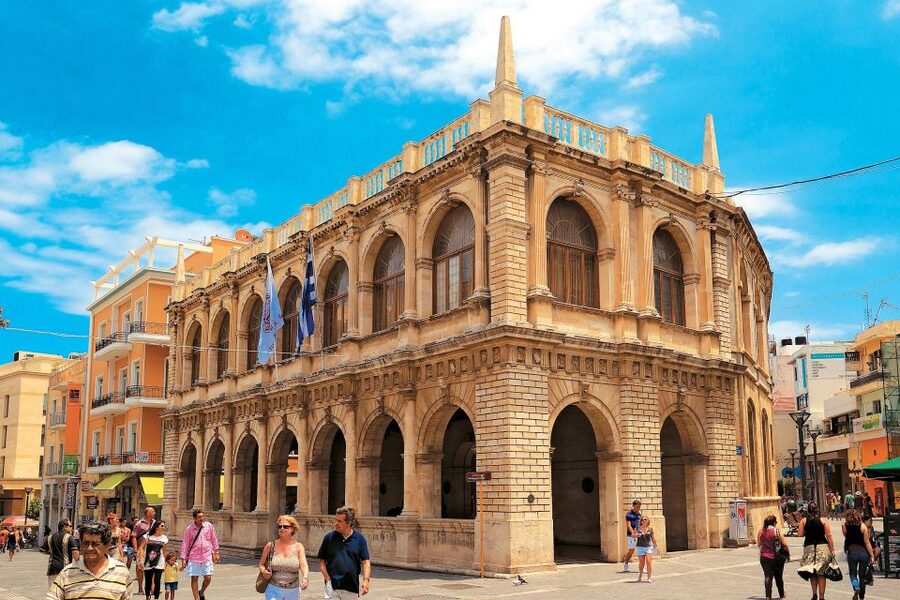
The Venetian Loggia adds another look at the old administrative center. The route does not treat these buildings as isolated museum pieces. Your host connects them to the streets, squares, and commercial life around them.
Agios Titos Church brings a different religious tradition into the picture. Along with Agios Minas Cathedral later in the tour, it shows the importance of Orthodox Christianity in Heraklion’s identity.
The route also includes 25th Avgoustou Street, another strong location for photos and city views. Since several stops are close together, you can see a lot without spending time on transport.
Bougatsa, coffee, honey, and Cretan sweets
The first clearly defined food stop is a local café. Here you try Cretan bougatsa with strong Greek coffee, a classic pairing that gives the tour an easy start.
Bougatsa is a pastry often associated with northern Greece, but the Cretan version has its own place in Heraklion’s food culture. The tour uses it as a simple way to introduce local habits: breakfast pastries, coffee, and the pleasure of taking a short break during a city walk.
You also taste local honey and traditional Cretan sweets. These samples matter because Crete’s food identity depends heavily on local ingredients and straightforward preparation. Honey, pastry, and sweets offer a gentler introduction than beginning with a large meal.
The café stop includes time to sit, take photos, and enjoy the tasting. That pause is welcome because the rest of the route contains many walking sections and several historic stops.
The food portions are designed as tastings, not as a full breakfast or lunch. If you arrive hungry, keep that in mind. The final taverna meal is more substantial, but the schedule is spread across the entire four hours.
More Heraklion food tastings:
- Heraklion Food Stories Walking Tour with 8 local-favorite stops
★ 4.5 · 30 reviews - Heraklion: Ecobike Tour with Food tasting
★ 5.0 · 30 reviews - Heraklion – Walking city tour with food tasting
★ 4.5 · 25 reviews - Street food walking Heraklion tour
★ 5.0 · 14 reviews
Rocca a Mare and the old Venetian harbor
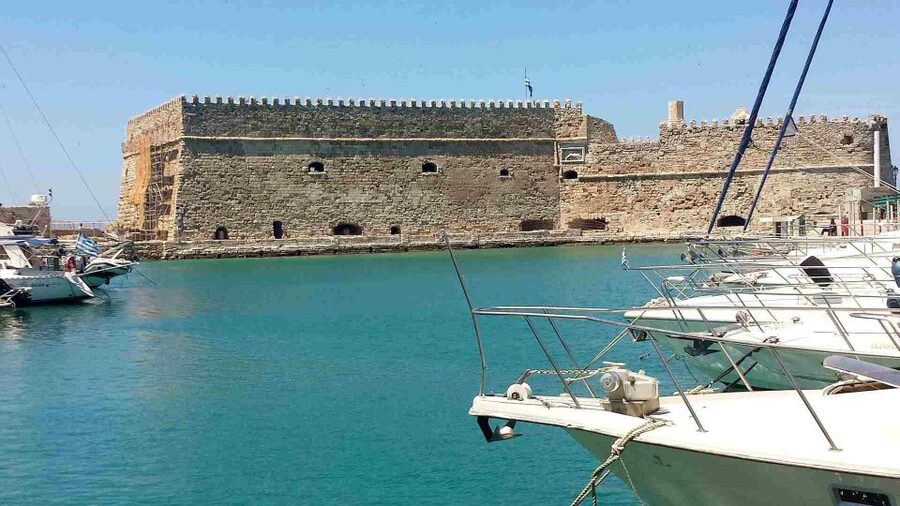
The walk continues toward Rocca a Mare Fortress, also called Koules Fortress or Castello del Molo. This large stone fort guards the entrance to Heraklion’s old harbor and gives the tour one of its most memorable settings.
You have time for sightseeing, photos, and a guided visit. The fortress is especially useful for understanding Heraklion’s position on the sea. Its location explains why the harbor mattered so much for defense, shipping, and trade.
The Venetian harbor adds a change of pace. After the close streets and inland squares, you get open views around the water and the fort. The route does not require a separate transfer to reach this area, which keeps the experience focused and simple.
The harbor section may also be where hearing becomes harder. One booking note praised the varied stops but suggested a microphone or headset because street noise made the guide difficult to hear at times. Stay close to the host, especially near the harbor and other busy public spaces, and ask for a repeat if you miss a point.
Agios Minas Cathedral and the central market
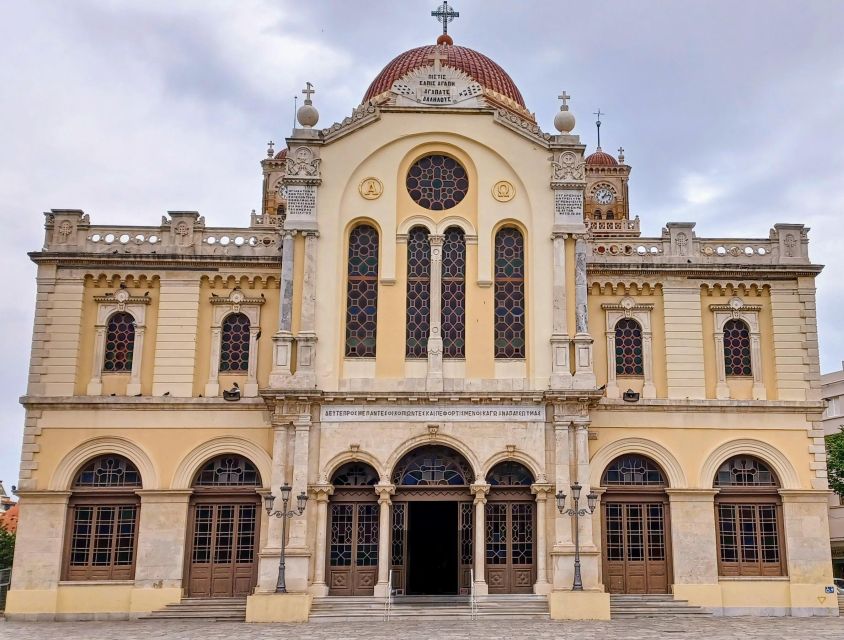
From the harbor, the route turns back toward Agios Minas Cathedral. This is one of the most important religious buildings in Heraklion and a useful contrast to the Venetian monuments earlier in the walk.
The cathedral stop gives you time to look at the building and hear about its place in the city. You do not need to be an expert in church architecture to appreciate the shift from fortress and civic buildings to an active religious center.
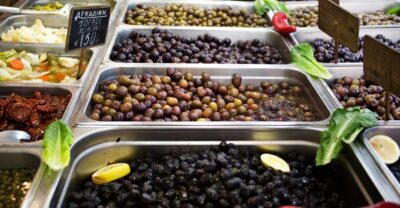
Next comes the Central Market of Heraklion. This is one of the strongest parts of the tour for seeing everyday food culture rather than only tasting prepared dishes.
Markets reward attention. Look at the products, notice the smells, and watch how the host identifies local ingredients and traditions. The market visit gives context to the foods served later at the café and taverna.
Because the route includes both a market and restaurants, you see food at different stages. At the market, ingredients and local shopping habits take center stage. At the taverna, those ingredients become shared plates meant for lingering and conversation.
The market can also be crowded and noisy. It is a place to keep your belongings close and remain aware of the group. The walk is more rewarding if you treat the market as a living part of Heraklion rather than just a quick photo stop.
The stivania workshop and Cretan craft
Food is only part of the story here. A visit to a family-run workshop introduces you to stivania, traditional leather boots associated with Cretan shepherds.
This stop adds something that a standard food walk often misses. You learn about the handmade process and the cultural meaning of the footwear, connecting the tour to rural Crete and local craft.
The workshop is valuable because it gives you a physical object to think about. Honey and pastries tell you about taste. Stivania tell you about work, clothing, shepherd life, and the skills passed through families.
Do not expect a large museum display or a long craft lesson. The information provided describes a visit and an explanation of the process, so the length and level of demonstration may depend on the day and the workshop schedule.
Still, this is one of the more distinctive elements of the experience. It helps the tour move beyond the familiar sightseeing loop and gives you a direct look at a traditional trade.
Meze at a traditional taverna
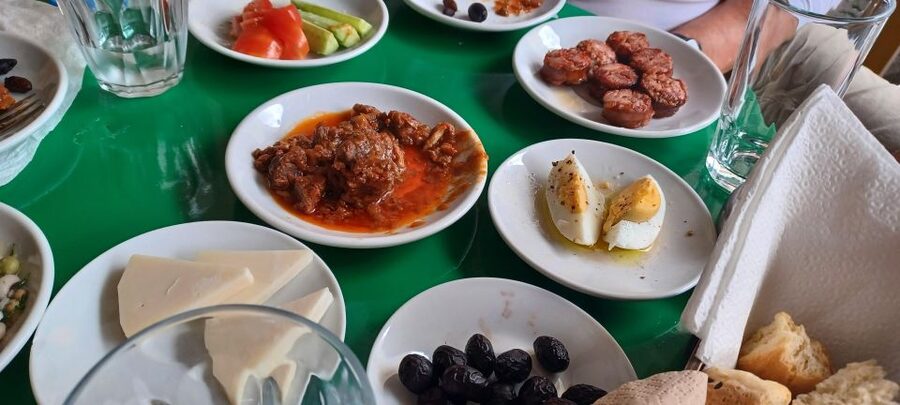
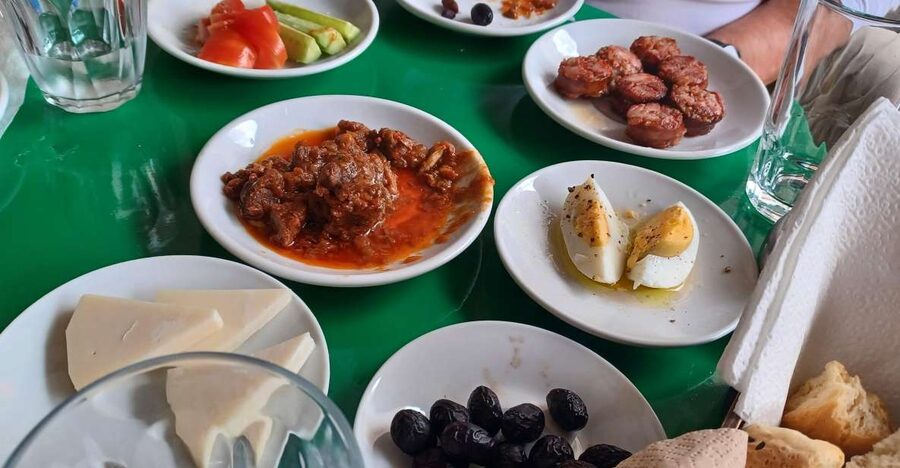
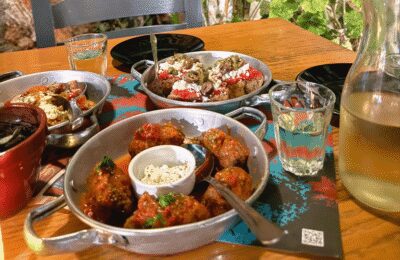
The main savory meal comes at a traditional local restaurant. Here you share a selection of classic Cretan meze in a setting built around hospitality and small plates.
Meze suits a group food tour well. You can try several tastes instead of committing to one large dish, and shared plates make it easier to compare flavors and talk with the people around you.
The description does not provide a fixed menu, so you should not book expecting a precise list of dishes. The selection is described as classic Cretan meze, with multiple food and drink tastings included.
Raki is part of the experience described for the tour. If you do not drink alcohol, check with the host about alternatives before accepting a pour. The available information does not specify nonalcoholic substitutions.
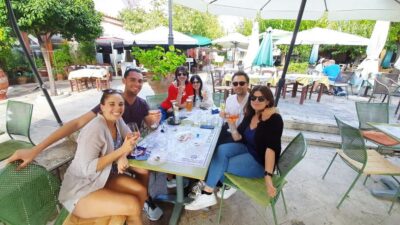
The taverna is also where the tour’s social side becomes strongest. After walking through streets, churches, and the market, you can sit down and let the meal take its time. This ending gives the four-hour route a satisfying shape, moving from coffee and pastry to a fuller shared meal.
Ending at the Pastry History Museum
The final stop is the Pastry History Museum, where the walk ends. This keeps the closing theme tied to the food traditions introduced earlier.
The museum visit gives you one last cultural stop after the restaurant. You can expect a guided look at pastry history rather than simply another tasting, though the supplied details do not specify the museum’s displays or the exact length of the visit.
Ending here also makes practical sense. You finish in central Heraklion rather than returning to the starting point, so plan your next destination from the museum. The tour does not include transportation between stops.
The route has a clear food-and-history pattern: public square, old street, church, café, Venetian landmarks, harbor, cathedral, market, restaurant, and pastry museum. That variety is the reason the tour feels broader than a basic eating walk.
What $106 gets you
At $106 per person, this is not the cheapest way to eat in Heraklion. You could spend less by visiting a café, market, and taverna on your own.
The value comes from combining several services in one four-hour experience:
- An English-speaking local host
- A guided walk through central Heraklion
- Multiple food and drink tastings
- Visits to major landmarks
- Time at the central market
- A traditional workshop visit
- A restaurant stop with Cretan meze
- A pastry-focused museum visit
For me, the price makes the most sense if you want structure and context. You are paying for the route, explanations, local introductions, and tastings, not only for the food itself.
It is also a practical first-day activity because it helps you understand the city center without arranging several separate visits. If you already know Heraklion well and prefer to choose every meal yourself, the price may feel high.
The rating is 5 from the available booking feedback, including a note that praised the mix of local food, restaurants, and antiquities. That praise matches the strongest feature of the route: it avoids making you choose between sightseeing and eating.
Who should book this Heraklion walk?
I would recommend it to first-time visitors who want a guided introduction to the city. It suits people who like to walk, taste several small portions, and learn the story behind a place.
It is also a good fit for solo visitors and couples who want local guidance without signing up for a large coach outing. The small-group setup should help keep the conversation more direct.
Food-focused visitors will appreciate the range from bougatsa and coffee to honey, sweets, raki, and meze. History fans get enough churches, Venetian buildings, and harbor sights to keep the walk from feeling like a restaurant crawl.
The tour may be less suitable if you need a slow pace or have trouble hearing in street noise. The itinerary contains many stops in four hours, and one direct booking note raised the issue of amplification. Ask the host to repeat details when needed and stay close during explanations.
Comfortable shoes are essential. This is a walking tour through streets, squares, market areas, and the harbor, not a seated tasting with short transfers.
Should you book it?
Book this tour if you want Heraklion explained through both its food and its streets. The strongest reason to choose it is the balance: you get major sights, local tastings, a market, a craft workshop, and a traditional taverna in one half-day.
Skip it if you prefer independent wandering, a fixed restaurant menu, or a very slow sightseeing pace. At $106, the experience earns its price through variety and guidance, not through one large meal.
For most first visits, I would place it near the start of your Crete trip. You will leave with a better sense of the city center, a list of foods to try again, and a clearer idea of how Heraklion’s Venetian, Orthodox, commercial, and culinary sides fit together.
FAQ
Where does the Food Tour in Heraklion begin?
It begins near the Heraklion Archaeological Museum, at the statue in the square. Confirm the exact statue and meeting instructions when booking.
Where does the tour finish?
The tour finishes at the Pastry History Museum.
How long does the experience last?
The walking food tour lasts four hours.
What language does the host speak?
The host or greeter speaks English.
What food and drinks are included?
The experience includes multiple food and drink tastings, including bougatsa, Greek coffee, local honey, traditional Cretan sweets, raki, and Cretan meze.
Does the tour include a restaurant stop?
Yes. The walk ends with food tastings at a traditional local restaurant.
Which Heraklion sights are visited?
The route includes the Morosini Lions Fountain, Venetian Loggia, Agios Titos Church, Rocca a Mare Fortress, Agios Minas Cathedral, the central market, and other central landmarks.
Does the tour visit a local market?
Yes. You visit the Central Market in Heraklion.
What should I bring?
Bring comfortable shoes because the experience involves walking through the city for four hours.
Can I cancel for a refund?
You can cancel up to 24 hours in advance for a full refund. You can also reserve now and pay later.
Newest Heraklion write-ups
- Heraklion – Walking city tour with food tasting★ 4.5 · 25 reviews
- Private Full-Day Elafonisi★ 5.0 · 4 reviews
- Mirabello Luxuries with Spinalonga & Agios Nikolaos from Iraklion★ 4.5 · 7 reviews
- Cretan Flavors – Cooking Lessons and Wine Olive Oil Tasting★ 5.0 · 9 reviews
- Private Trekking Rouvas Gorge★ 4.5 · 4 reviews
- Ecobike All inclusive – 2 Day tour – Discover the real Crete★ 5.0 · 4 reviews
- Truffle Hunting, Culinary & Wine Celebration from Heraklion★ 5.0 · 6 reviews
- Secrets of West Crete & Rethymno Town Private Tour from Heraklion★ 5.0 · 9 reviews
Crete Food Tasting Tours, compared.

Old Town Highlights Guided Tour with Street Food
Read our review →
Walking “Food tasting tour” in the town of Chania
Read our review →
Full-Day Cretan Wines, Olive Oil, Raki and Food Tour
Read our review →
Rethymno Old Town: A Traditional Cretan Food Tour
Read our review →
Chania Food Stories Half-Day Tour inc. tastings & drinks
Read our review →Browse the lists this tour appears in