
Reviewed · CRETE OLIVE OIL TOURS
Wine, Olive Oil, and Honey Tour with Winemaker
The best part of this Crete food tour is how quickly it moves beyond the usual tasting-room visit. You follow mountain roads to a family olive oil mill, learn how bees and vines fit into local farming, taste wine from the barrel, then sit down to a home-style Cretan meal among the vineyards. Vasilis leads the day, with help from Anna Maria for trip arrangements.
I like the private, small-group format, capped at eight people, because it gives you room to ask questions and adjust the conversation to your interests. I also like the food focus: olive oils, vinegars, olives, sweets, honey, wine, and a generous meal that may include Cretan salad, dolmas, bread, cheese, honey, and pork.
The main consideration is the six-and-a-half-hour length and mountain travel. This is not a quick tasting near town, and the price of $217.23 per person makes the most sense if you want a full day built around farming, food, and local people rather than only a glass of wine.
Key points at a glance
- Family olive oil mill: See how local olives become oil, then taste several oils with vinegars, olives, sweets, and other Cretan products.
- Wine from the barrel: Visit the mountain vineyards and learn practical language for ordering the style of wine you like.
- Traditional vineyard lunch: Expect a substantial meal with local dishes, bread, cheese, honey, salad, and pork.
- Small private group: The tour has a maximum of eight participants, giving the day a personal feel.
- Cretan farming traditions: The experience covers olive growing, winemaking, beekeeping, and the people who keep these practices going.
- Pickup and English service: Pickup is offered, the start time is 9:30 a.m., and the tour is conducted in English.
A full day in the Cretan countryside
This experience is best understood as a food-and-farming day, not a standard winery tour. You begin at 9:30 a.m. and spend roughly six hours and 30 minutes moving through the countryside, with several stops tied to everyday Cretan production.
The setting matters. Crete is famous for olive oil and wine, but a supermarket shelf cannot show you how much work sits behind those products. Here, you get a look at the farms, mills, vineyards, and family methods that give the food its character.
I also appreciate the pace. The day has enough time for explanations, tastings, and a proper lunch. You are not simply handed a small sample, rushed through a shop, and sent back to town.
Pickup is offered, and the tour is near public transportation. The exact pickup details are not provided here, so confirm the meeting point when you book. That small step matters, especially for a morning departure and a trip into the mountains.
More honey and beekeeping visits:
- From Chania: Olive Oil, Wine, Cheese & Honey Tasting Tour
★ 4.6 · 490 reviews - Small-Group Honey & Extra Virgin Olive Oil Tasting Tour in Crete
★ 5.0 · 85 reviews - Crete Private Tour: The Secrets of Wine, Olives & Honey
★ 4.5 · 59 reviews
Inside the family-owned olive oil mill
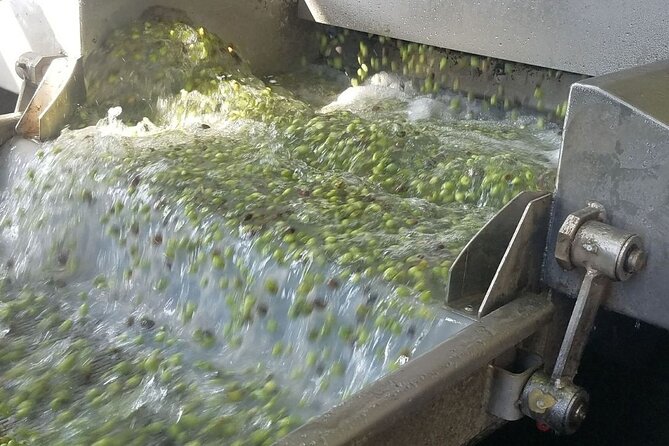
The first major stop is a family-owned olive oil mill. You learn how olives are processed and how the finished oil reaches the bottle. The visit gives you useful context before the tasting, so you can pay attention to aroma, texture, and flavor instead of treating every oil as the same.
The tasting includes several different oils, along with vinegars, olives, and sweets. That wider range is useful because olive oil rarely appears alone in Cretan cooking. Vinegar, olives, bread, honey, and other preserved foods all form part of the local table.
I would take notes on the oils you prefer. Some may taste sharper or more peppery, while others may feel softer and more rounded. You do not need expert vocabulary, but this is a good place to ask what makes one oil different from another.
The mill visit also gives you a better way to judge olive oil later in your trip. Instead of buying the prettiest bottle, you can think about flavor, production, and how you plan to use it. If you enjoy food shopping, this stop may be one of the most useful parts of the morning.
One practical point: tastings can add up. By the time you reach the wine and lunch, you will have sampled several strong flavors. Take your time, especially if you want to remember the differences between the oils.
Mountain roads and views across Crete
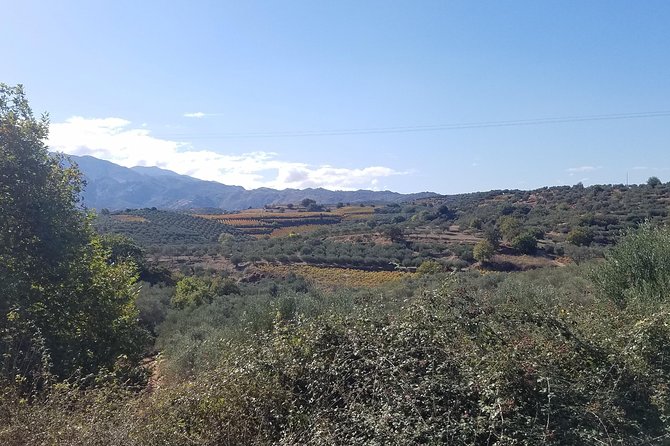
After the mill, the route heads into the mountains. The scenery is part of the reward, but the ride also shows you a side of Crete that beach-based visitors can miss.
You see the island through its farms and growing areas rather than only through historic towns or coastal resorts. The mountain setting helps explain why wine, olives, herbs, and honey remain so important to Cretan food.
The road portion is also the main drawback for anyone who prefers a compact outing. You spend part of the day in transit, and the route is designed to connect several rural stops. If you want a tour that stays close to a town center, this will feel too spread out.
For me, the travel time is worthwhile because the stops are connected by a clear theme. The point is not simply to collect tastings. You are seeing how the products relate to the land and to family-run work.
Learning the language of Cretan wine
At the vineyard, you taste wine from the barrels. This is a more direct experience than sampling only finished bottles, and it gives you a chance to ask how the wines develop and how to describe the style you prefer.
One especially useful part of the day is learning the right language to use when ordering wine. You may not leave as a sommelier, but you can become more comfortable describing what you like. That is practical knowledge you can use at restaurants and wine shops during the rest of your time in Greece.
The vineyard is also where the tour shifts from olive oil to wine and food. The products are different, but the same idea continues: you are meeting the people and processes behind what appears on the table.
The tour description does not list specific grape varieties, wine labels, or the number of pours. Do not book it expecting a formal technical tasting with a fixed flight. Think of it as a guided introduction to local wine, set in the place where it is produced.
More olive oil mills and tastings around Crete:
- Crete: Quad Safari, Olive Mill with Tasting & Ghost Village
★ 4.9 · 1,004 reviews - Knossos-Zeus Cave -Old Traditional Villages-Olive Oil Factory
★ 5.0 · 694 reviews - Crete: Road-trip to Lasithi Plateau & Olive Mill Farm
★ 4.4 · 420 reviews - Zeus Cave, Lassithi Plateau, Olive Oil Factory, Kritza, Pottery
★ 5.0 · 362 reviews
Honey, bees, and the work behind the food
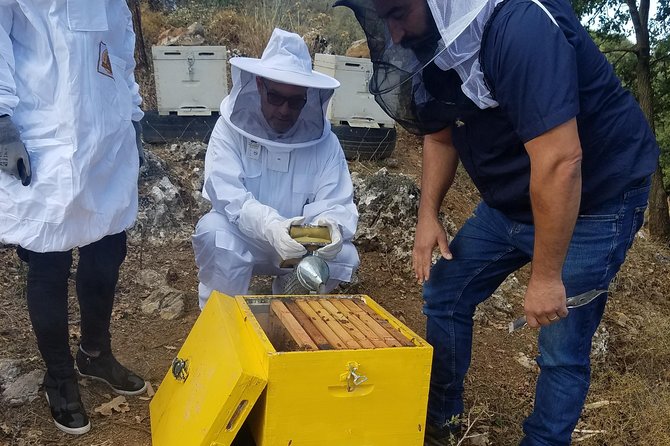
Beekeeping is another part of the day. You learn about bee keeping and get a firsthand bee encounter as part of the farm visit. This adds a useful layer to the tour because honey is not just a sweet extra at the meal. It is another product tied to the island’s plants, farms, and seasonal work.
The honey served with the meal includes local varieties such as heather and cardamom honey and thyme honey. If those are available for purchase, they would make distinctive food souvenirs, especially if you want something lighter and easier to carry than a bottle of olive oil or wine.
The bee portion may be especially interesting for families and anyone curious about farming. It is also a reminder that rural food production depends on more than the crops you see in a field.
The supplied details do not describe protective equipment, the length of the bee visit, or how close you get to the hives. If you have a serious bee allergy or strong concern about being near bees, ask the operator for current safety details before booking.
A generous Cretan lunch in the vineyards
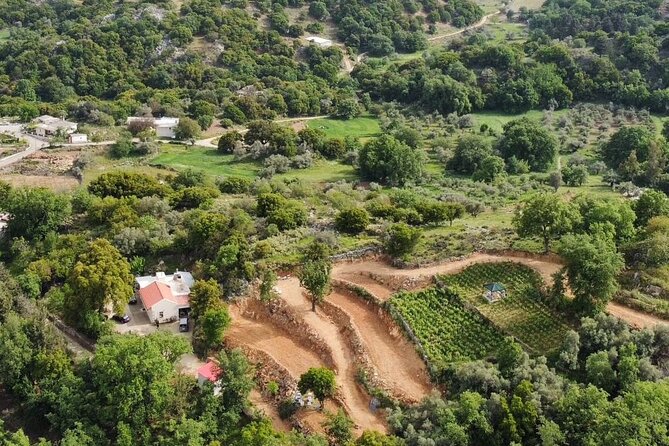
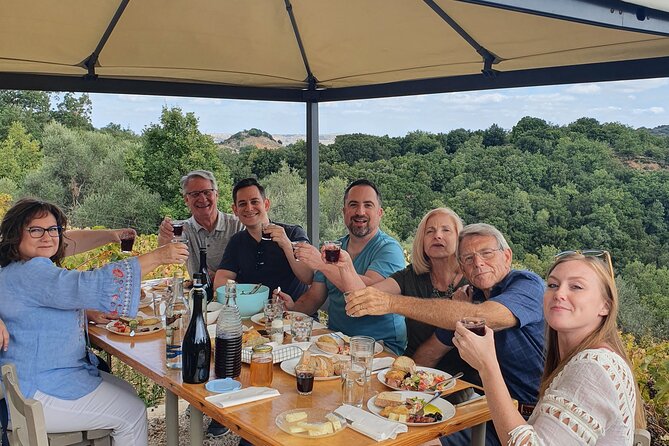
The meal is a major reason to choose this tour. You eat a traditional Cretan lunch in the vineyard, with wine included as part of the setting and experience.
The meal may include Cretan salad, dolmas, bread, cheese, honey, and pork. That combination gives you a broad taste of the local table, from fresh vegetables and stuffed leaves to meat, dairy, and sweet honey.
The food is not treated as a short break between activities. You may help make the meal in the vineyard, which makes the lunch feel connected to the place instead of simply served at a restaurant. That hands-on element is one of the most appealing details for anyone who wants to understand how local food is prepared.
Portions appear to be generous, so arrive ready for a real midday meal rather than a few small plates. The tour is a strong choice if lunch is one of your priorities. It is less ideal if you want a light tasting or need a highly controlled meal plan.
The tour description does not give vegetarian, vegan, allergy, or other dietary details. If you have restrictions, contact Chania Wine Tours before booking and ask what can be arranged. Do not assume the listed dishes can be altered on the day.
What the private format changes
The maximum group size is eight. That is small enough for a more relaxed exchange with Vasilis and the producers, without the feel of a large coach excursion.
A private or very small group also helps when the subject is food. You can ask why one oil tastes sharper, how honey differs by plant source, or how to order a wine with more confidence. Those questions are harder to fit into a crowded group schedule.
The guide is another important part of the experience. Vasilis is described as kind and well versed in the region, the people of Crete, olive growing, processing, beekeeping, and wine. Anna Maria is available by text to help the day run smoothly, which is useful if you need clarification before pickup.
Names matter here because the experience depends on personal contact. You are not simply following an audio guide through a production site. You are spending time with people who can explain how their work fits into local life.
Is $217.23 a fair price?
At $217.23 per person, this is not a budget food stop. The value comes from the number of elements packed into one day: transport or pickup, a family olive oil mill, multiple tastings, mountain scenery, wine from the barrel, beekeeping, vineyard time, a traditional lunch, and a small group.
The price is easier to justify for someone who would otherwise book separate food, wine, and countryside outings. You also avoid spending the day arranging transport between rural locations.
It is harder to justify if your main goal is simply to taste wine. A shorter winery visit would likely fit that purpose better, but this tour offers far more than wine. The meal and the olive oil mill are central parts of the value.
I would compare the price with your priorities rather than with the cost of a basic tasting. If you want a full Cretan food experience with personal guiding, it is a reasonable splurge. If you are watching every euro or already have several food tours planned, choose carefully.
Who will enjoy this experience most?
This tour suits you if you like learning where food comes from and prefer meeting small producers to visiting polished commercial attractions. It is also a good match for couples, families, and small groups of friends who want a shared day outside the main resort areas.
Food-focused visitors will get plenty to enjoy. You taste oils, olives, vinegars, sweets, honey, and wine, then sit down to a substantial meal. The day also gives you useful ideas for what to order during the rest of your trip.
Wine fans will enjoy the barrel tasting and the practical advice about describing wine. Still, this is not a wine-only program. The olive mill, honey, farm setting, and lunch take equal billing.
The tour may not suit you if you dislike long outings, mountain roads, rural settings, or large meals. It also requires some flexibility, since the available details do not provide a minute-by-minute schedule or a full menu.
Booking, timing, and cancellation details
The tour starts at 9:30 a.m. and lasts about six hours and 30 minutes. It is offered in English, includes a mobile ticket, and has a maximum of eight participants.
Confirmation is received at booking. Pickup is offered, and the area is near public transportation, but you should confirm the exact meeting arrangement before the morning of the tour.
Free cancellation is available if you cancel at least 24 hours before the start time. Cancellations or changes made less than 24 hours before the start time are not accepted for a refund. The cut-off follows local time, so check the clock in Crete rather than relying on your home time zone.
The tour currently has a five out of five rating from 55 reviews, with 100 percent recommending it. That record supports the idea that the guide, meal, and personal contact are the strongest parts of the day, but your own choice should still depend on the pace, price, and rural setting.
Should you book the wine, olive oil, and honey tour?
Book it if you want one substantial day devoted to Crete’s food traditions, with a guide who can connect olive oil, wine, honey, farming, and local cooking. The combination of a family mill, mountain vineyard, barrel tasting, bee-related learning, and a full lunch gives the tour a clear sense of place.
I would especially recommend it for a first visit to Crete when you want more than beaches and archaeological sites. The day gives you practical food knowledge, memorable scenery, and a meal that can become one of the highlights of your trip.
Skip it if you want a short tasting, a formal wine course, or a low-cost excursion. At $217.23, the tour earns its price through its length, meal, personal format, and range of stops. For the right kind of visitor, that is a fair trade.
FAQ
Where does the tour take place?
The experience takes place in Crete, Greece, with visits to a family-owned olive oil mill, mountain areas, and vineyards.
What time does the tour start?
The tour starts at 9:30 a.m.
How long does the experience last?
The tour lasts approximately six hours and 30 minutes.
How much does the tour cost?
The listed price is $217.23 per person.
Is pickup offered?
Yes, pickup is offered. Confirm the exact pickup details when booking.
Is the tour available in English?
Yes, the tour is offered in English.
How many people can join the tour?
The activity has a maximum of eight travelers.
What will I taste at the olive oil mill?
You will taste several olive oils along with other Cretan products, including vinegars, olives, and sweets.
Is lunch included?
The experience includes a traditional Cretan lunch in the vineyards, served with wine. The meal may include Cretan salad, dolmas, bread, cheese, honey, and pork.
Can I cancel for a full refund?
Yes. You can cancel for a full refund up to 24 hours before the experience starts. Cancellations or changes made less than 24 hours before the start time are not accepted for a refund.
More Wine Tastings in Crete
- Crete: Land Rover Safari with Sunset Viewing, Dinner, & Wine
★ 4.9 · 395 reviews - From Chania: Wine and Olive Oil Tasting Tour with Snacks
★ 4.8 · 354 reviews - Crete Wine and Olive Oil Tour
★ 5.0 · 272 reviews - Crete: Full-Day Cretan Wines, Olive Oil, Raki and Food Tour
★ 5.0 · 264 reviews
Newest Crete write-ups
- Heraklion – Walking city tour with food tasting★ 4.5 · 25 reviews
- Private Full-Day Elafonisi★ 5.0 · 4 reviews
- Mirabello Luxuries with Spinalonga & Agios Nikolaos from Iraklion★ 4.5 · 7 reviews
- Cretan Flavors – Cooking Lessons and Wine Olive Oil Tasting★ 5.0 · 9 reviews
- Private Trekking Rouvas Gorge★ 4.5 · 4 reviews
- Truffle Hunting, Culinary & Wine Celebration from Heraklion★ 5.0 · 6 reviews
- Ecobike All inclusive – 2 Day tour – Discover the real Crete★ 5.0 · 4 reviews
- Secrets of West Crete & Rethymno Town Private Tour from Heraklion★ 5.0 · 9 reviews
Crete Olive Oil Tours, compared.
Zeus Cave -Old Traditional Villages-Olive Oil Factory
Read our review →
Zeus Cave, Lassithi Plateau, Olive Oil Factory, Kritza, Pottery
Read our review →
Knossos, Lasithi, Lasinthos and Olive Farm Combo Tour
Read our review →
Browse the lists this tour appears in